



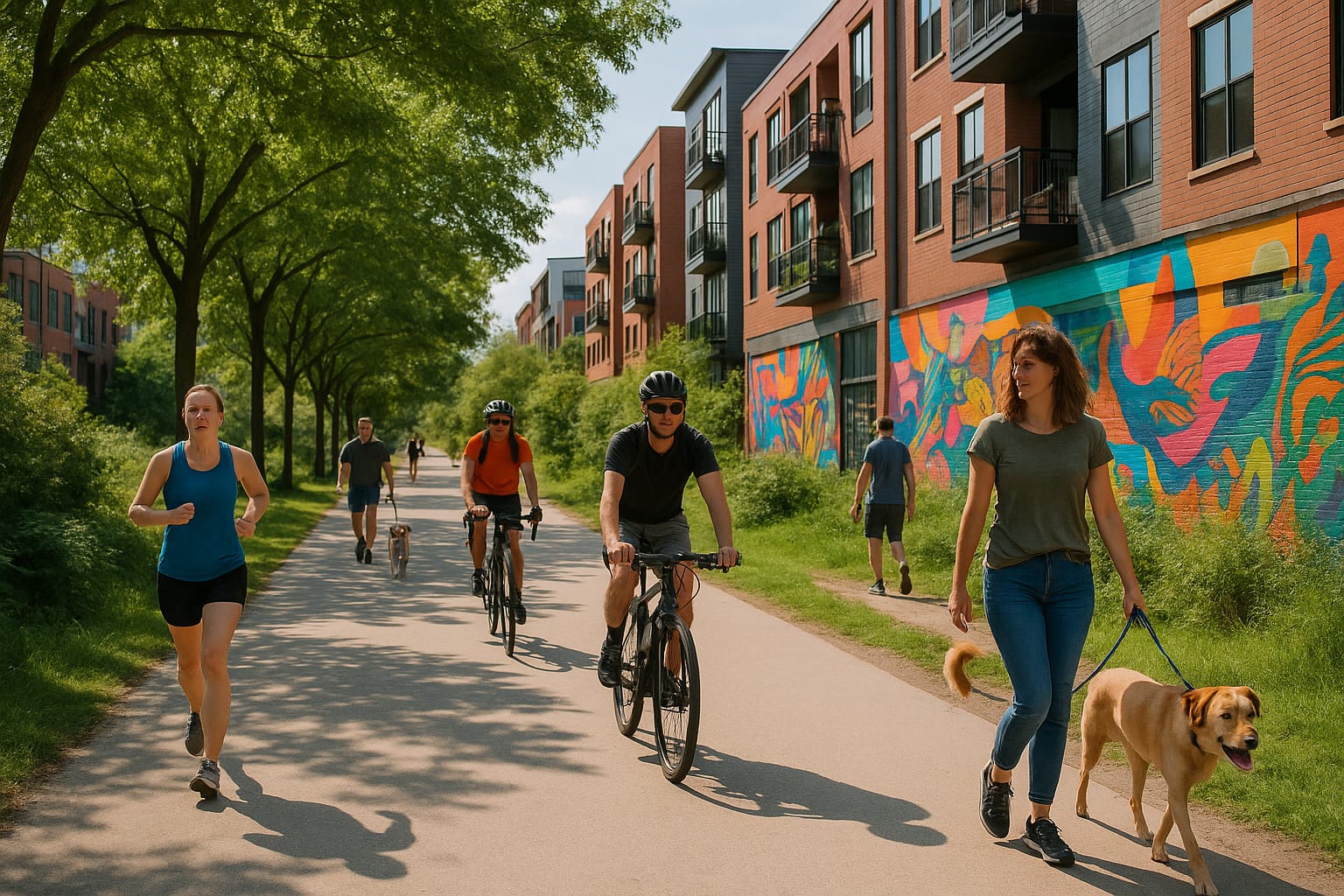
Since the BeltLine concept was proposed in the mid‑2000s, Atlanta’s BeltLine project has converted former rail rights‑of‑way into trails, parks, and mixed‑use development, dramatically reshaping neighborhoods across the city. What began as a visionary planner’s thesis has become a multi‑decade infrastructure and economic development program.
Spearheaded in public conversation by Ryan Gravel and formalized through the Atlanta BeltLine Partnership and city planning in the 2000s, the project leveraged federal, philanthropic, and private investment to build trail segments, parks, and targeted density. The BeltLine catalyzed new housing, retail, and transit‑oriented projects while also fueling debates over affordability and displacement in adjacent neighborhoods. Its incremental construction continues to influence real estate and transportation planning across metro Atlanta.
Why it matters: The BeltLine has become a national example of urban reuse that simultaneously drives economic development and raises urgent questions about equitable growth. Its outcomes will shape Atlanta’s neighborhoods for generations.