



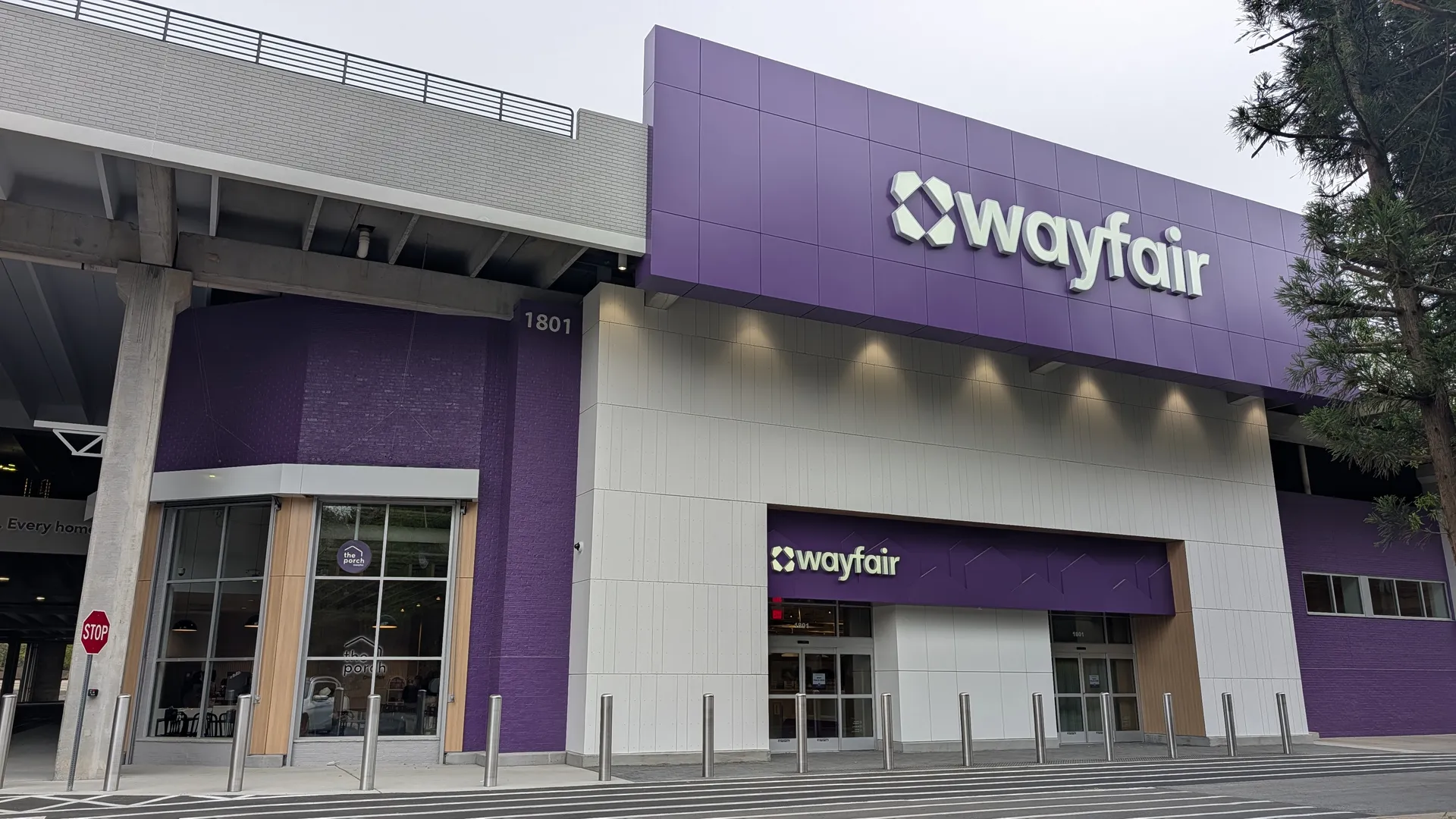
One of the world’s largest online furniture retailers has made a bold, physical move in metro Atlanta. Wayfair has opened a 150,000‑square‑foot showroom‑style store in the city, giving Atlantans a tactile way to shop furniture and home ideas—while sending a clear signal that investment, retail innovation, and jobs momentum remain strong in the region. [hoodline.com], [investor.wayfair.com]
Atlanta has long been where scale meets systems: global air connectivity, deep logistics talent, industrial real estate, and creative industries that shape how people live and work. Wayfair’s arrival in physical form fits naturally into that ecosystem, translating digital convenience into an in‑person experience that reflects how the city actually buys, moves, and lives.
A Showroom Designed for Atlanta Living
Wayfair’s Atlanta store sits at The District at Howell Mill, occupying a long‑vacant former Walmart building at 1801 Howell Mill Rd. NW—a visible Upper Westside corridor bordering West Midtown and Buckhead. The company officially opened the doors March 31, 2026, with a grand‑opening weekend planned for April 17–19, 2026. [hoodline.com], [ajc.com] [investor.wayfair.com]
Rather than rows of boxed inventory, the store bridges browsing and buying by letting customers walk through fully styled rooms. Shoppers can sit on sofas, test mattresses, feel fabric swatches, flip light switches, and see how materials read at full scale—an important shift for a city where housing ranges from Midtown apartments to East Atlanta bungalows and Northwest Atlanta townhomes.
For longtime Wayfair customers, the store addresses a familiar friction point: items that look perfect online can feel different in real life. Here, shoppers can explore in person and then order digitally, with larger pieces delivered through Wayfair’s nearby fulfillment network in metro Atlanta. [hoodline.com]
What You’ll Find Inside
The Atlanta location is arranged into roughly 18 departments, reflecting the breadth of Wayfair’s online catalog while keeping the experience curated and navigable. According to early walkthroughs and reporting, shoppers can expect:
- Furniture and décor for living, dining, bedroom, and office spaces
- A dedicated sleep center for mattresses and bedding
- Kitchen appliances and cookware
- Bath fixtures and home‑improvement displays
- Rugs, lighting, outdoor furniture, storage, and wall art
- Wayfair private labels such as Birch Lane, AllModern, and Joss & Main, alongside national brands [businessinsider.com]
Many smaller items are available for same‑day pickup, while larger furniture is ordered in‑store and shipped from fulfillment centers, including a major hub in Henry County, roughly 40 miles away. The store also features The Porch, Wayfair’s all‑day café, reinforcing the space as a place to linger rather than rush through. [hoodline.com]
Why This Matters for Atlanta
Retail coverage often focuses on store closures. A project of this size—supported by nearly $22 million in renovations, according to building permits—represents a different narrative: reinvestment in large‑format retail that adapts to how consumers actually shop. [ajc.com]
From an economic standpoint, the impact shows up in several ways:
- Jobs: Floor staff, design assistance roles, operations teams, and café workers
- Logistics and delivery: Expanded demand for last‑mile services and regional fulfillment
- Commercial revitalization: Re‑anchoring a long‑empty big‑box space in a busy retail district
- Design economy growth: Reinforcing Atlanta’s role as a place where home, lifestyle, and creative services intersect
While Wayfair has not publicly released a precise local hiring number, even a single large showroom creates dozens of permanent roles and supports surrounding service businesses. [investor.wayfair.com]
Neighborhood Ripple Effects
Large showrooms don’t exist in isolation. They reshape daily patterns—bringing lunchtime traffic, evening appointments, and weekend crowds that spill into nearby cafés, independent retailers, and service spots along Howell Mill Road and adjacent corridors.
Urban planners and neighborhood advocates will likely watch how the store integrates with parking, transit access, sidewalks, and pedestrian flow. In other cities, Wayfair’s physical locations have emphasized clear wayfinding and accessible layouts, small details that help ensure benefits extend beyond the store’s walls.
What Shoppers Should Know Before Visiting
If you’re planning a trip, going in prepared will make the experience smoother:
- Measure your space and bring photos or floor plans
- Ask about delivery windows, assembly options, and return policies
- Expect that some finishes, colors, or sizes may be online‑order only
- Use in‑store QR tools and staff expertise to compare options efficiently
Store hours, per Wayfair’s announcement:
- Monday–Saturday: 10 a.m.–8 p.m.
- Sunday: 11 a.m.–7 p.m. [investor.wayfair.com]
A Broader Signal for Atlanta Retail
Wayfair’s Atlanta opening is part of a larger shift: digital‑first brands building physical spaces that emphasize discovery and confidence, not just transactions. For Atlanta, it’s a vote of confidence—proof that the region can support large, experiential retail that complements rather than replaces local shops.
More importantly, it shows how hybrid models—online scale paired with in‑person engagement—are becoming the next chapter of retail. In a city built on connection and movement, that blend feels right at home.
Before publication, final checks should confirm: current promotions, pickup and return capabilities, and any Atlanta‑specific events tied to the grand opening. But the headline is already clear: Wayfair has chosen Atlanta to anchor its next phase of physical retail.
Atlanta keeps building. And now, some of that building starts at Howell Mill.