



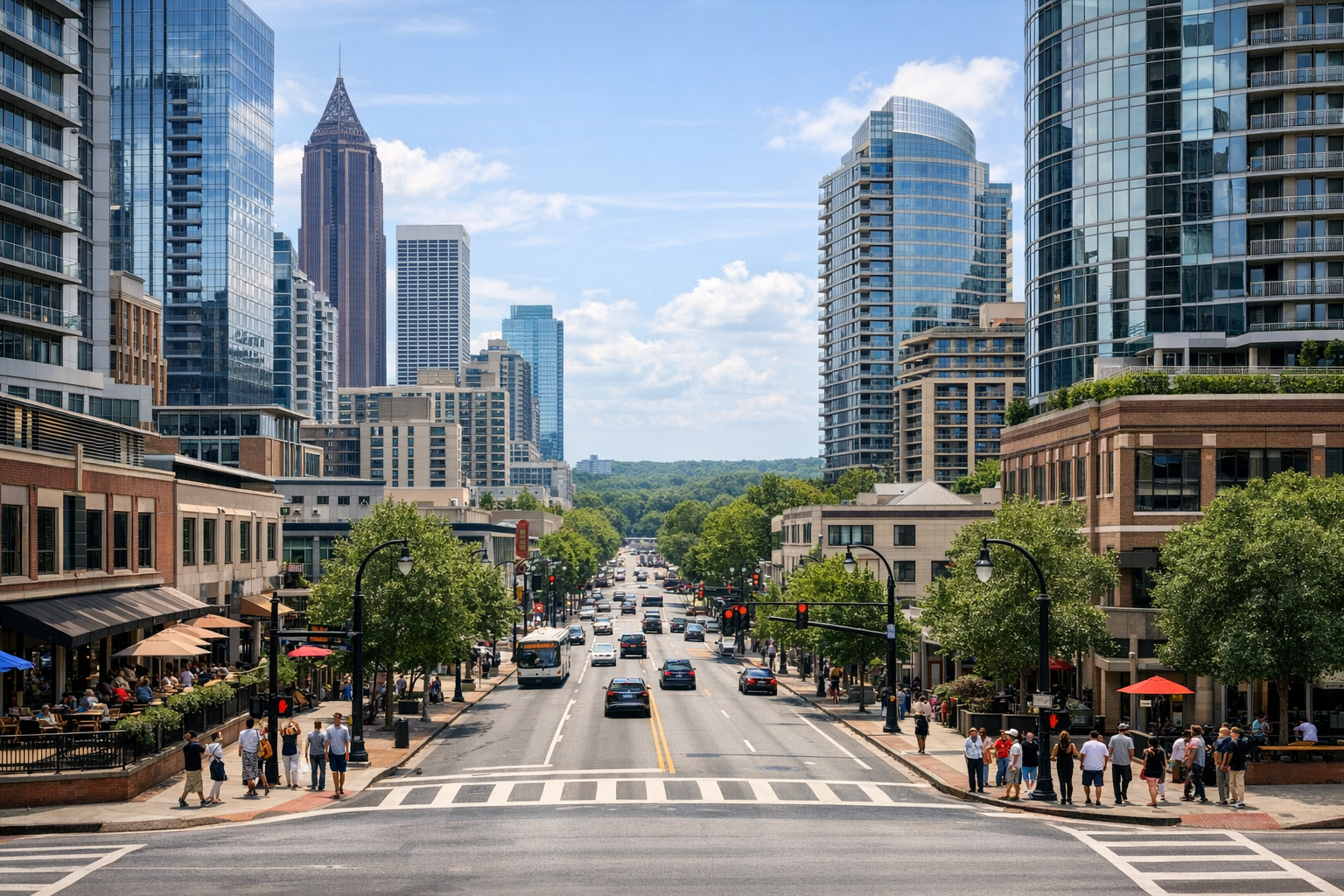
Midtown sits at the center of Atlanta’s urban rhythm, where transit corridors, office towers, apartments, museums, and green space overlap in a district built for moving between work, culture, and the sidewalk.
Midtown is where Atlanta’s city layers stay close together. Offices rise beside apartments, arts venues sit within a short walk of restaurants, and major green space is never far from the street grid. Georgia Tech, the Woodruff Arts Center, and Piedmont Park each shape the neighborhood in a different way, giving Midtown a mix that feels practical as much as cultural. For people who live here, work here, or pass through, Midtown often functions less like a single destination and more like a central piece of the city’s daily movement.
Fast facts
- Midtown blends work, home, and culture in a compact district. The neighborhood brings together offices, apartments, arts venues, parks, and restaurants in a tight urban pattern. That mix gives Midtown a steady daytime and evening pulse, with different uses stacked close enough that the area feels active beyond a single business hour.
- Georgia Tech gives Midtown a strong academic and engineering presence. The campus adds a large student population, research energy, and a direct tie to Atlanta’s innovation economy. Its edges blend into the neighborhood, helping Midtown function as both an institutional district and a lived-in city neighborhood.
- The Woodruff Arts Center anchors Midtown’s cultural side. As a major arts institution, it helps define the neighborhood’s identity around performances, exhibitions, and public gatherings. Its presence makes Midtown an easy base for people planning an evening around theater, music, or visual art.
- Piedmont Park gives Midtown a major green escape in the middle of the city. The park offers open space close to dense streets and tall buildings, which changes the feel of the neighborhood block by block. For residents and visitors, it adds room to walk, sit, exercise, and reset without leaving central Atlanta.
- Peachtree Street ties Midtown to the rest of central Atlanta. The corridor runs through the neighborhood and connects Midtown with other key parts of the city. That makes it an important route for commuting, getting around without a car, and understanding how Atlanta’s central districts link together.
The Atlanta angle
Midtown’s shape comes from how closely the city’s functions sit together. A person can move from a station area or office block to a restaurant, then on to an arts venue or park without leaving the neighborhood’s core. That density is why Midtown reads as one of Atlanta’s most walkable urban districts: the sidewalks carry real purpose, not just foot traffic. In a city spread across many distinct centers, Midtown stands out as a place where the distance between daily tasks is short enough to change how the day feels. It is a neighborhood built for transitions, from work to dinner to a late walk home.
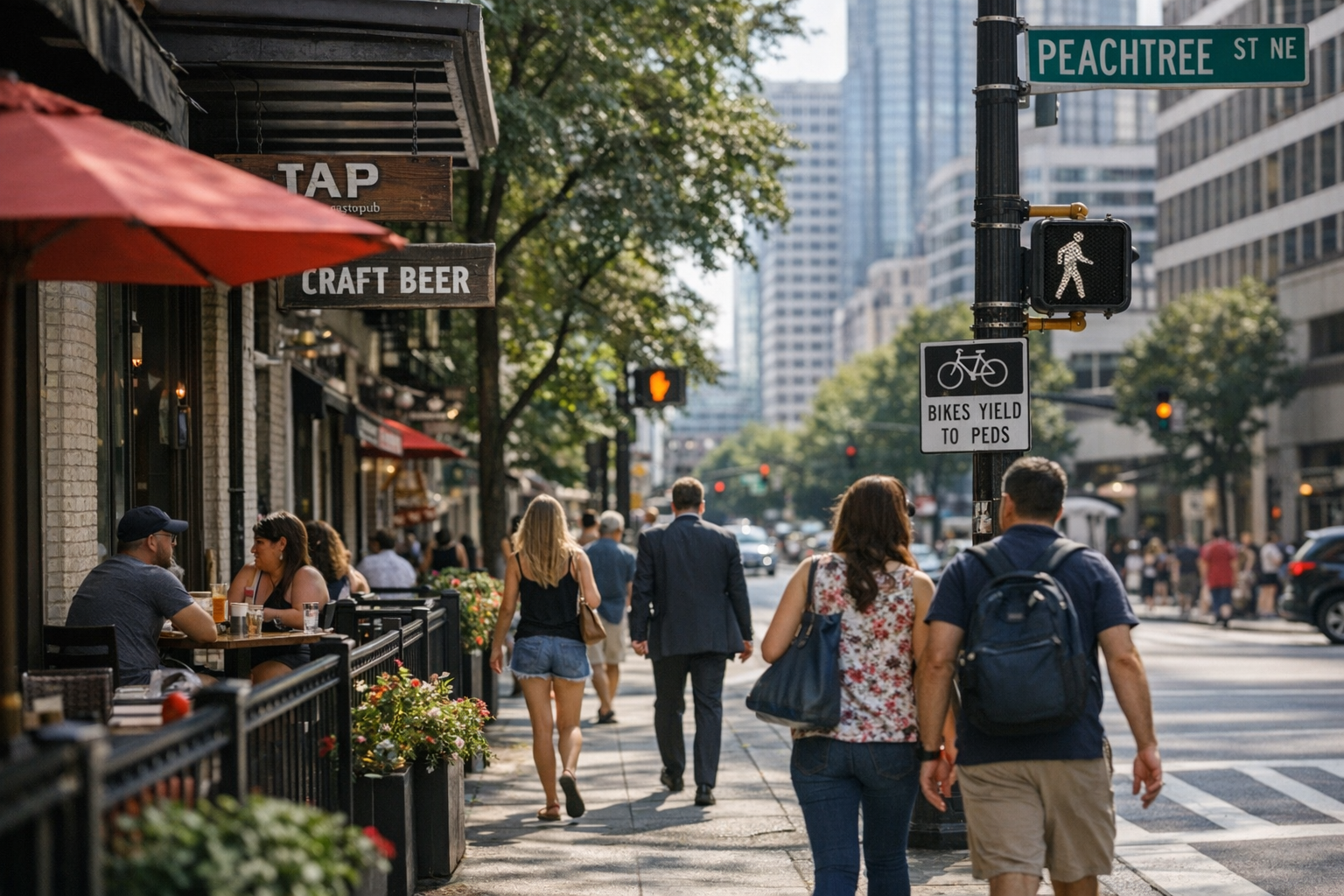
For visitors, Midtown often works as a base because it keeps several Atlanta experiences within easy reach. Arts programming, nightlife, business meetings, and park access all sit inside the same neighborhood frame, so a stay here can move naturally from a gallery visit to a meal to an evening in the city. That convenience matters in Atlanta, where neighborhood boundaries often shape the rhythm of a trip. Midtown’s location along Peachtree Street also helps explain its role: it is not just a destination, but a connector. The neighborhood shows how Atlanta organizes itself through corridors, campuses, parks, and shared public space.
Keeping You In The Know