



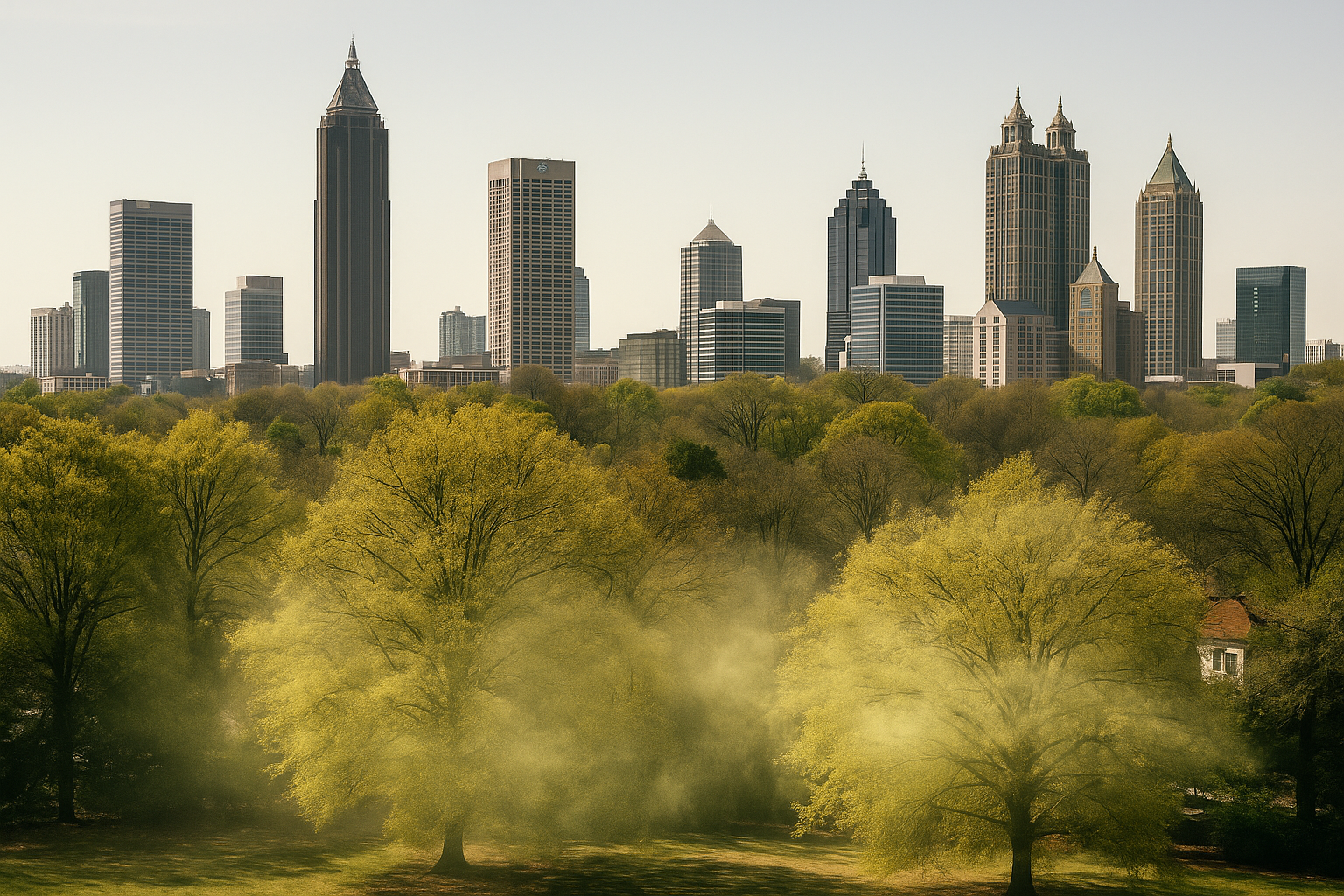
In April, Atlanta wakes up covered in gold.
It’s there on car hoods and café tables, clinging to patio chairs, tracing fingerprints across windowsills. It floats through crosswalks in the morning light and settles into the cuffs of joggers circling the block. The pollen arrives whether you invited it or not, announcing—loudly—that winter has finally lost its grip.
In Atlanta, pollen isn’t subtle. It doesn’t flirt. It shows up all at once, coats the entire city, and asks you to acknowledge it. And in its own irritating, eye‑itching way, it is a sign of life.
Why Atlanta’s pollen feels different
Every city has spring allergies. Atlanta has a season.
The metro’s dense tree canopy—one of the largest urban tree covers in the country—means spring doesn’t bloom quietly. Southern hardwoods, pines, magnolias, and ornamental trees all take their turn, often overlapping rather than politely passing the baton. What begins as pine pollen melts into oak, then maple, then understory plants, creating a long, layered experience that stretches across weeks.
Warm days followed by dry breezes send pollen drifting across neighborhoods. Mornings are usually the worst; by mid‑afternoon things calm, only to rise again with the next clear day. Then comes the relief only Atlanta knows well: a hard rain that rinses the city clean, briefly returning cars to their original color and granting noses a short‑lived truce.
Pollen, here, is not a flaw in the system. It is the system—proof that the canopy is alive, expanding, breathing.
How pollen quietly reshapes daily life
Spring pollen changes how Atlantans move.
Morning runners adjust their routes. Dog walkers carry tissues instead of sunglasses. Patio diners choose shaded tables not just for temperature, but for airflow. Window‑opening becomes a strategic decision rather than a reflex. Even weekend errands shift—car washes follow storms and grocery runs get paired with allergy medication.
It’s also when neighborhood rhythms change. Parks fill again. Trails see traffic. Sidewalk cafés dust off outdoor furniture almost weekly. The city leans into its extroverted season, even as eyes water.
Practical survival—without giving up spring
You don’t have to hide indoors to coexist with pollen.
Time it right.
Pollen counts typically peak in the morning. Yard work, walks, and workouts are easier in late afternoon or after a rainstorm.
Contain the mess.
A simple habit—changing clothes after long outdoor stretches or showering before bed—keeps pollen from embedding itself into sheets, sofas, and pillows. Your sinuses will notice.
Clean the air where you sleep.
Run HVAC systems with the highest compatible MERV filter. Consider a portable HEPA air purifier in bedrooms or home offices, especially during high‑count weeks.
Treat your car kindly.
If you can, park in a garage. If not, rinse windshields and wiper blades before heat dries pollen into a yellow paste that smears instead of clears.
Use medicine when needed.
Over‑the‑counter antihistamines and nasal sprays help many people, but persistent symptoms may call for personalized care. Reliable medical guidance can be found through the https://www.aaaai.org or local providers such as https://www.emoryhealthcare.org.
Where to enjoy the bloom without drowning in it
Not all outdoor spaces feel the same during pollen season.
Large, open areas like Piedmont Park tend to ventilate better, making them friendlier for walks and low‑key picnics even during peak weeks. Wide lawns and breezeways disperse pollen more quickly than enclosed trails.
For curated spring beauty with options to duck indoors, the Atlanta Botanical Garden provides seasonal guidance and indoor exhibits when counts spike. And for movement without total exposure, paved sections of the Atlanta BeltLine offer airflow and space, especially compared to narrower wooded paths.
Choosing where you spend time matters as much as when.
The small rituals we all recognize
Pollen is woven into Atlanta’s collective memory.
The magnolia petals dusted yellow at the edges. The way a parked car glows like it’s been gilded overnight. The faint outlines left by hands on café tables. Gardeners sweeping porches daily, knowing it’s temporary.
It’s the sound of sneezing laughed off at outdoor brunch. The runner’s pause at a stoplight to rub tired eyes. The mutual nod between neighbors, both dusted in the same shade of spring.
If you listen closely, pollen is Atlanta clearing its throat.
Tracking the invisible
For those managing schedules or symptoms closely, real‑time pollen forecasts can be useful. Tools like https://www.pollen.com provide daily outlooks that help plan yard work, workouts, and open‑window days. If pollen is interfering with sleep, work, or quality of life, checking in with a healthcare provider is a smart next step.
Why pollen belongs in an Atlanta love letter
Atlanta’s growth is often measured in cranes and population counts, but seasonal pollen is a quieter metric of success. Trees were preserved. Canopies were planted. Green space still wins.
Yes, it’s inconvenient. Yes, it stains everything. But pollen reminds us that Atlanta is not just concrete and glass—it is alive, layered, and stubbornly green.
Spring here is not pristine. It’s messy. Generous. Inescapable. Just like the city itself.
So wipe down the table, rinse the car, take the antihistamine if you need it—and step outside anyway. The city is awake, and it’s glowing.
Indakno — Keeping You In The Know.