



A 21st‑century infrastructure project that became a backbone for trails, parks, development—and contested change across the city.
Fast facts
- The Atlanta BeltLine is a roughly 22‑mile loop of multi‑use trails, parks, and planned transit linking dozens of neighborhoods around the city’s core. The project stitches together former rail corridors into continuous public space and a future circumferential transit route.
- Atlanta BeltLine, Inc. (ABI), formed in 2005, coordinates construction, fundraising, and public programming for the project and has opened major trail segments since the early 2010s. Signature openings like the Eastside Trail (2012) and the Westside Trail (2019) set the pattern for phased delivery and public-private partnerships.
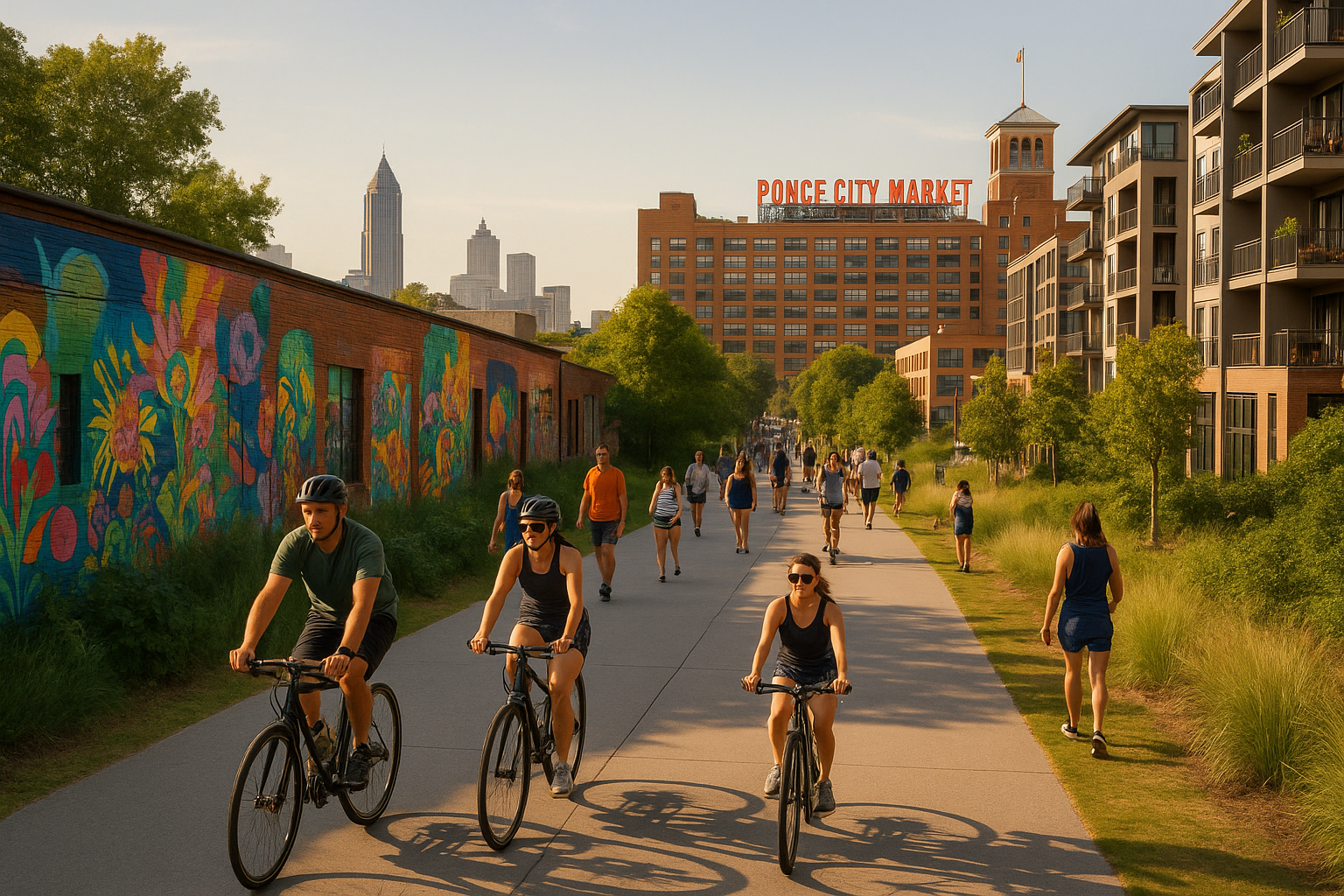
- The BeltLine has been a powerful economic engine, catalyzing billions of dollars in private development while also accelerating property value increases in adjacent corridors. That boom produced landmark projects such as Ponce City Market and triggered intense debates about displacement and housing affordability.
- Beyond infrastructure, the BeltLine functions as a cultural platform—hosting public art, festivals, and community programs that draw residents and visitors year‑round. Initiatives like rotating murals, sculptures, and the annual Art on the Atlanta BeltLine turn the trails into outdoor galleries and gathering places.
The Atlanta BeltLine arrived as an audacious idea and has grown into one of the city’s most visible experiments in urban transformation. In under two decades it turned unused railroad space into trails, parks, and a staging ground for new development—and in the process reshaped who gets to live, work, and play near Atlanta’s core.
Walk the Eastside Trail on a sunny afternoon and you see what the BeltLine set out to do: joggers, strollers, murals, coffee shops and the distant sweep of the skyline. That everyday vibrancy is the product of deliberate phases of design and delivery managed by Atlanta BeltLine, Inc., with funding from the city, philanthropic partners, and private developers. The approach favors incremental wins—park openings, trail sections, public art—that accumulate into a continuous public realm while planners continue to pursue the longer ambition of looped transit.
But the BeltLine’s promise has come with friction. The same proximity to parks and trails that made neighborhoods desirable has also driven up rents and property values, prompting policy responses from the city and advocates for affordable housing. Looking ahead, the project’s next chapters—expanding trail connections, delivering equitable housing, and realizing a transit ring—will determine whether the BeltLine is remembered mainly as a connector of places or as a clue to how the city chose who benefits from urban renewal.