



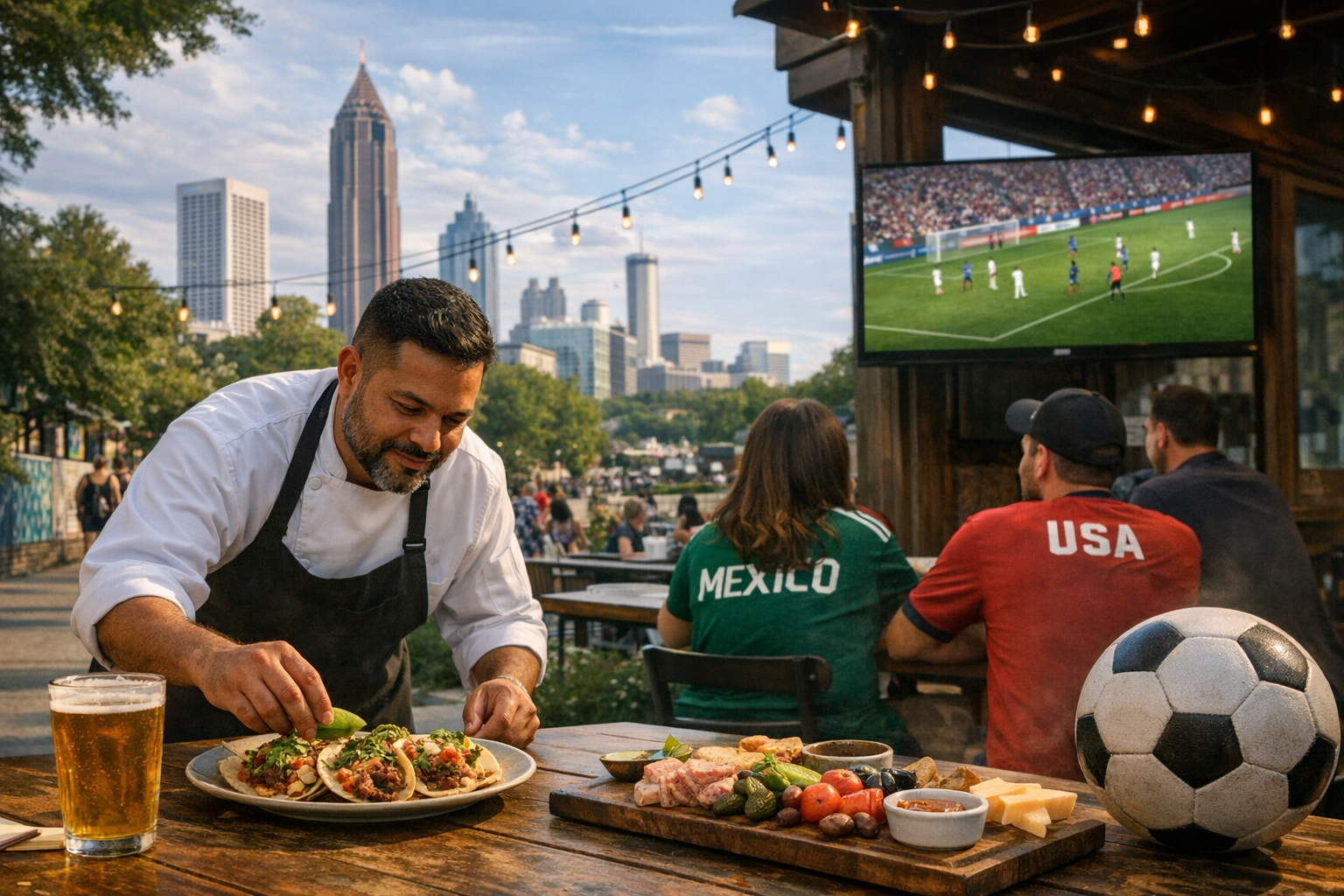
The loudest World Cup moment in Atlanta might not be a goal inside Mercedes‑Benz Stadium. It might be a shout in a Buford Highway dining room as a server in a Messi jersey slips between bubbling hot pots, or on a Summerhill patio when a last‑minute winner flashes across a muted TV. In a city where a night can run from dumplings in Doraville to a glass of natural wine off the Eastside BeltLine, eating the tournament the way chefs do means treating every match like service: paced, intentional, and full of big flavor.
When games land at Mercedes‑Benz Stadium, fan zones and hotel lobbies will swell. To eat like the people cooking your food, step out of the stadium glare and into the neighborhoods where the city actually eats: late‑night counters, strip‑mall landmarks, and barstools that fill with line cooks after service.
The Know
Build your World Cup eating plan around snackable plates, late-ish kitchens, and corridors where the energy is high but not swallowed by stadium traffic.
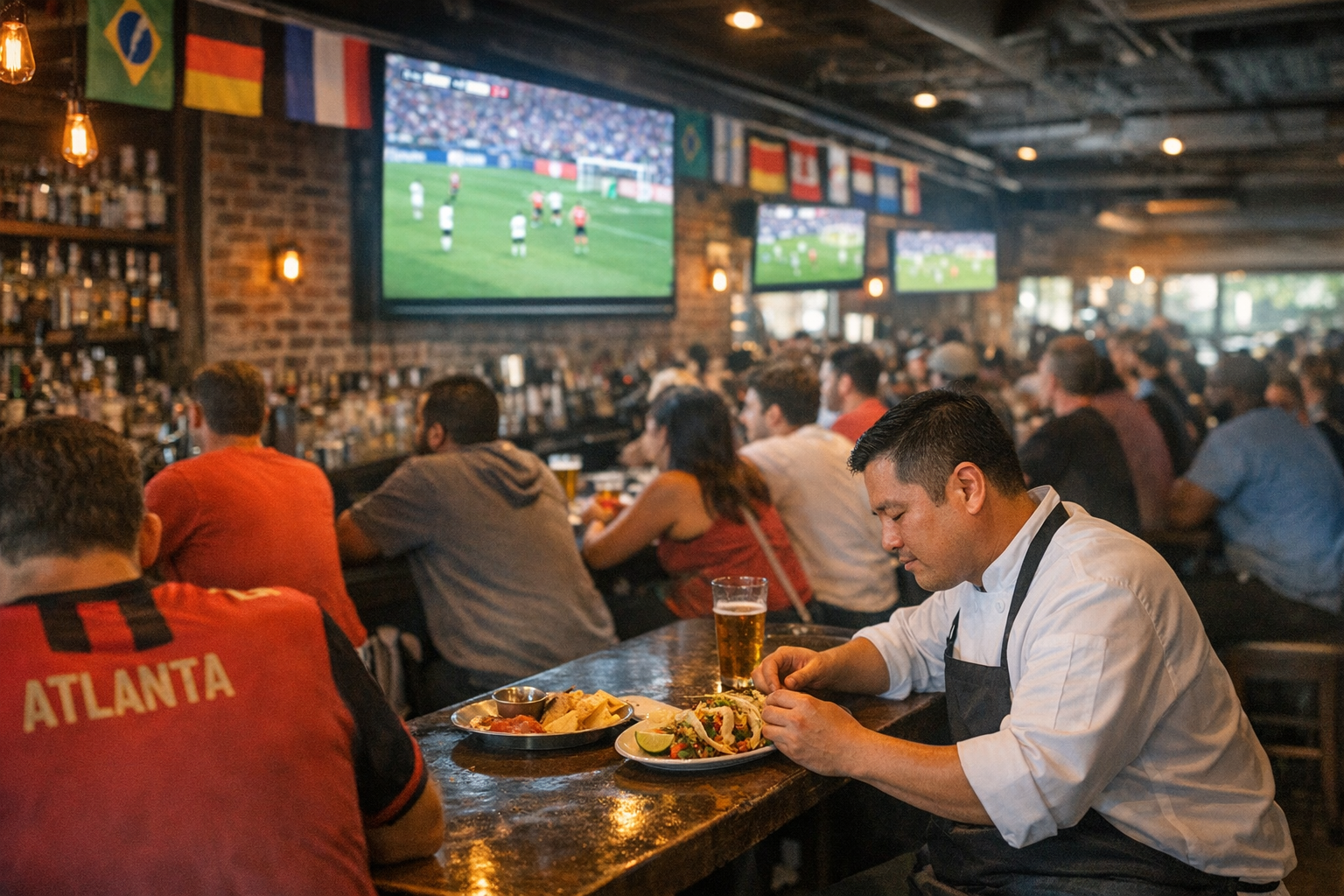
- Think grazing, not “big entrée.” Skewers, crudos, noodles, and bar snacks stretch easily over 90 minutes. Order in waves instead of locking into a single heavy main.
- Stick to food corridors. Summerhill, Buford Highway, the Westside, Decatur, Duluth, and the Eastside BeltLine give you multiple options within a short walk or drive—useful when extra time outlasts your first round.
- Shift your timing. Skip pre‑ and post‑game gridlock. Hit late‑night noodle shops, taquerias, and neighborhood pubs once the streets around the stadium clog.
- Match the menu to the matchup. Let the bracket dictate dinner: Korean fried chicken for Korea, regional taco joints for Mexico, grilled skewers when an African powerhouse plays, Neapolitan‑style pies when Italy is on.
Where to Eat the Tournament
Atlanta’s defining dining trait is sprawl. The best meals rarely sit next to the biggest attractions. During the World Cup, treat the metro as a string of food neighborhoods instead of one scrum around the stadium.
On the Westside, industry folks slide into bars and tight‑menu spots along Howell Mill—cocktail rooms and compact grills where buns, skewers, and raw fish quietly turn into a full meal. A bar seat lets you order in rounds to match the game: crisp and salty for kickoff, richer before halftime, something cold and sharp if it goes to penalties.
Summerhill and the Georgia Avenue strip are a post‑service hang for in‑town kitchens and a quick hop from the stadium without feeling like an annex of it. Before a match, grab tacos, a smashburger, or a frozen drink on a patio, then drift back onto the sidewalk to check scores. After the final whistle, kitchen crews—still half in uniform—wind down over wings and whatever’s on draft.
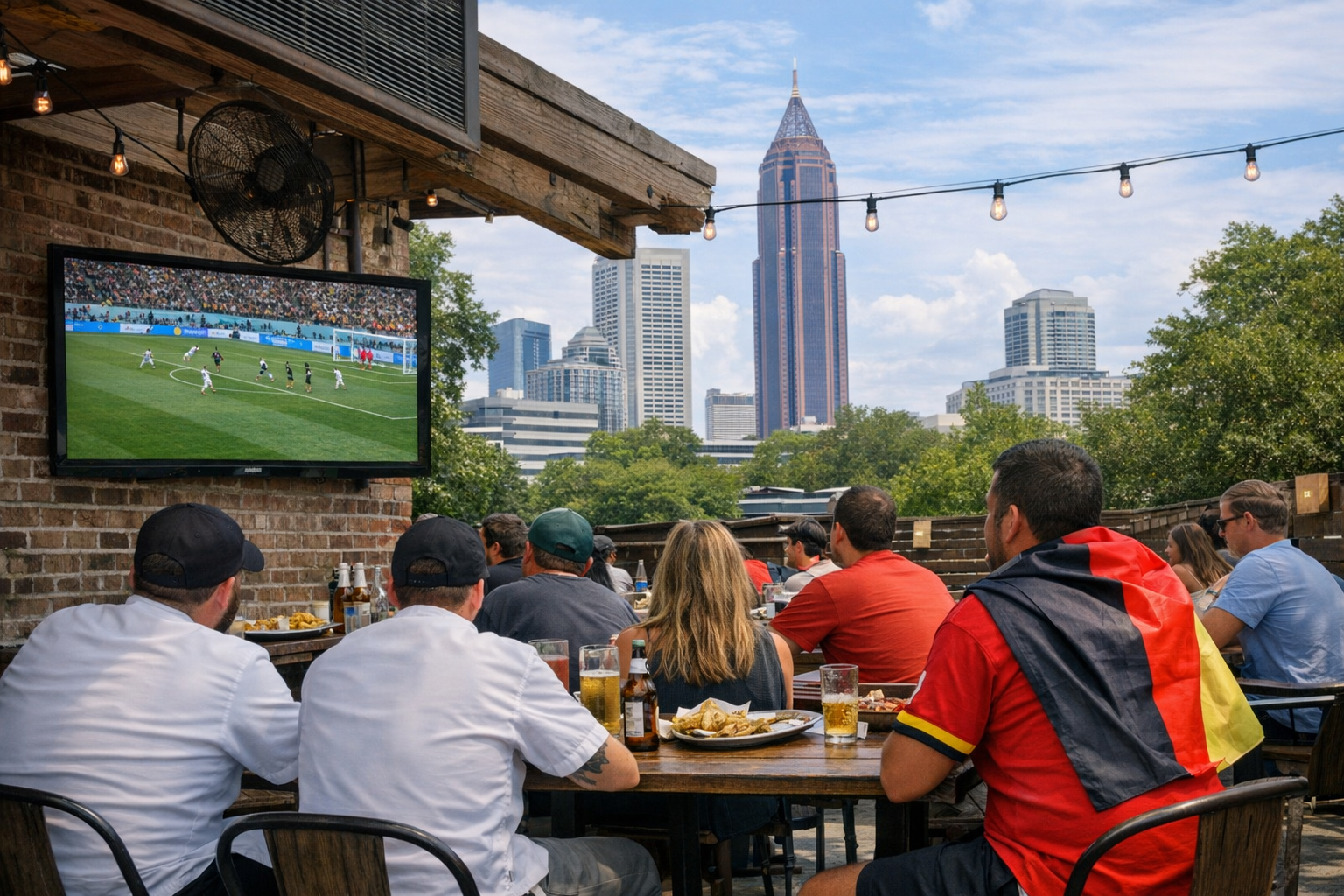
North on Buford Highway, the chef playbook comes into focus. This is the city’s global pantry: roast chicken with bright green sauce for a South American matchup; Brazilian‑leaning skewers and cocktails; Korean fried chicken with pitchers of beer and tables buried in banchan for an East Asian showdown; Vietnamese late‑night pho and bun under humming fluorescent lights. Spend one group‑stage weekend eating along this corridor and you understand why visiting cooks treat Buford Highway like required study.
Farther out in Duluth, the match rhythm runs past midnight: Korean barbecue grills going late, K‑town bars tuned to international feeds, bubble tea and dessert shops crowded with families and kitchen staff catching the late kickoffs.
On the Eastside BeltLine and in Inman Park, menus lean into sharing: vegetables, house charcuterie, grilled meats, handmade pastas. Patios and high‑tops double as casual viewing areas; the real game is the order—two or three small plates per person, a shared main, something fried at halftime.
Decatur is quieter but essential. Neighborhood pubs pour local beer and turn out burgers, fish and chips, or a solid curry from the same line. This is where cooks go when they want comfort without spectacle: laminated menus, no dress code, a room focused on the match and the plate.
Eat Like the People Cooking Your Food
Cooks want big flavor without fuss, rooms where no one performs at them, and hours that respect late services and late matches. Borrow their habits.
- Chase staff favorites. If a bartender mentions they just got off a shift, ask where they eat after work. Line cooks and servers are walking World Cup guides.
- Skip the view; follow the playlist. Dining rooms with a mix of soccer jerseys, service industry regulars, and good soundtracks are more likely to keep the match on and the kitchen open.
- Build a neighborhood plan. Pick one corridor per day—Summerhill, Westside, Buford Highway, Duluth, Decatur, or the Eastside BeltLine—so you’re walking between bars and restaurants instead of fighting stadium traffic for every meal.
- Use transit and rideshares. Ride MARTA to the stadium, then take a short rideshare hop to dining neighborhoods instead of driving between lots. It buys you an extra drink or snack round and keeps you out of gridlock.
- Watch local calendars. Neighborhood and arts listings flag World Cup‑themed watch parties, pop‑ups, and late‑night food events that plug you into how Atlanta actually celebrates big tournaments.
Treat the World Cup as an excuse to eat along the city’s real sidelines. Follow the chefs’ routes, and every match day turns into a neighborhood tour—one plate, one corridor, one extra‑time snack at a time.