



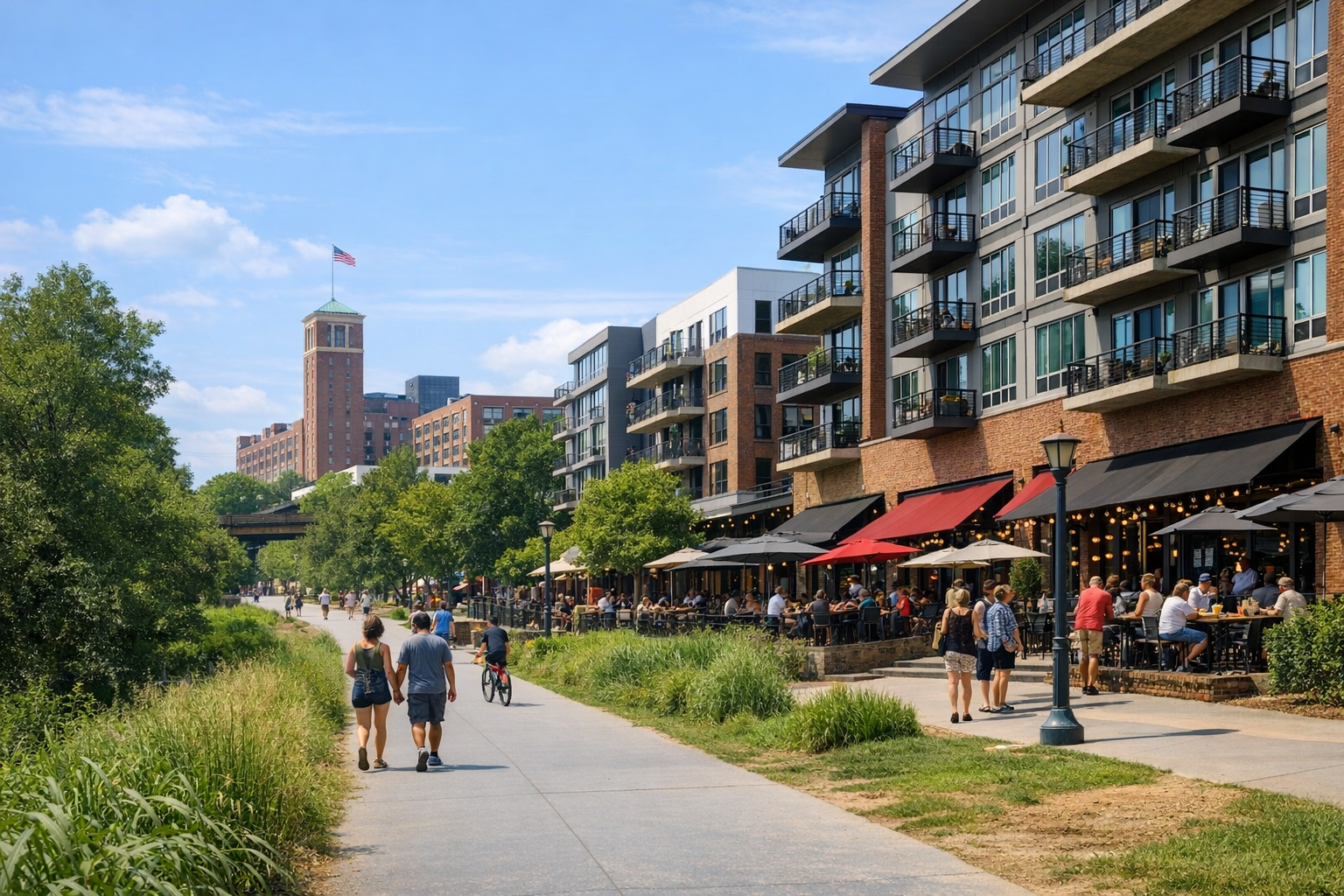
Old Fourth Ward shows Atlanta in motion: civil rights-era history, new apartments, busy restaurants, parks, and easy BeltLine access all sit in one intown neighborhood.
Old Fourth Ward is one of Atlanta’s most talked-about intown neighborhoods, and for good reason. It brings civil rights history, new housing, restaurants, parks, and BeltLine access into the same daily landscape. Ponce City Market and the Eastside Trail turned the area into a major destination for both visitors and residents, but the neighborhood’s appeal goes beyond any single project. Old Fourth Ward is a clear example of how Atlanta can layer rapid redevelopment onto a deep historical footprint without losing the conversation about where the city has been and where it is headed.
Fast facts
- Old Fourth Ward sits at the crossroads of Atlanta history and present-day growth. The neighborhood is closely tied to civil rights history while also drawing attention for apartments, dining, parks, and walkable connections. That mix is why people use it as a shorthand for the way Atlanta can change fast without leaving its past entirely behind.
- Ponce City Market helped transform the area into a major destination. Its arrival brought a new level of foot traffic, shopping, and food options to the neighborhood. For Atlanta residents and out-of-town visitors, it became a recognizable anchor that made Old Fourth Ward feel easy to reach and hard to ignore.
- The Eastside Trail made the neighborhood more connected and more visible. BeltLine access changed how people move through the area, linking Old Fourth Ward to nearby parts of intown Atlanta. The trail also encouraged more walking, lingering, and everyday use of streets that now serve residents, commuters, and visitors alike.
- Old Fourth Ward has become a place where living and visiting overlap. Apartments, restaurants, parks, and trail access sit close together, so the neighborhood works as both a residential area and a destination. That combination helps explain why it shows up often in conversations about Atlanta development and intown lifestyle.
- The neighborhood is useful for understanding how Atlanta keeps changing. Old Fourth Ward shows the city balancing memory and reinvention in the same physical space. For readers trying to understand Atlanta’s growth, it offers a practical lens: history is still present, but so are the new buildings, paths, and businesses shaping daily life.
The Atlanta angle
The Atlanta angle Old Fourth Ward matters because it puts several Atlanta stories in one place. The neighborhood carries civil rights history, but it also reflects the city’s ongoing appetite for redevelopment, especially in intown areas that attract people who want to live near restaurants, parks, and transit-friendly corridors. That combination has made Old Fourth Ward a frequent reference point whenever Atlantans talk about what growth feels like on the ground. It is not just a place to pass through. It is a place where the city’s past and present remain visible side by side, often on the same block.
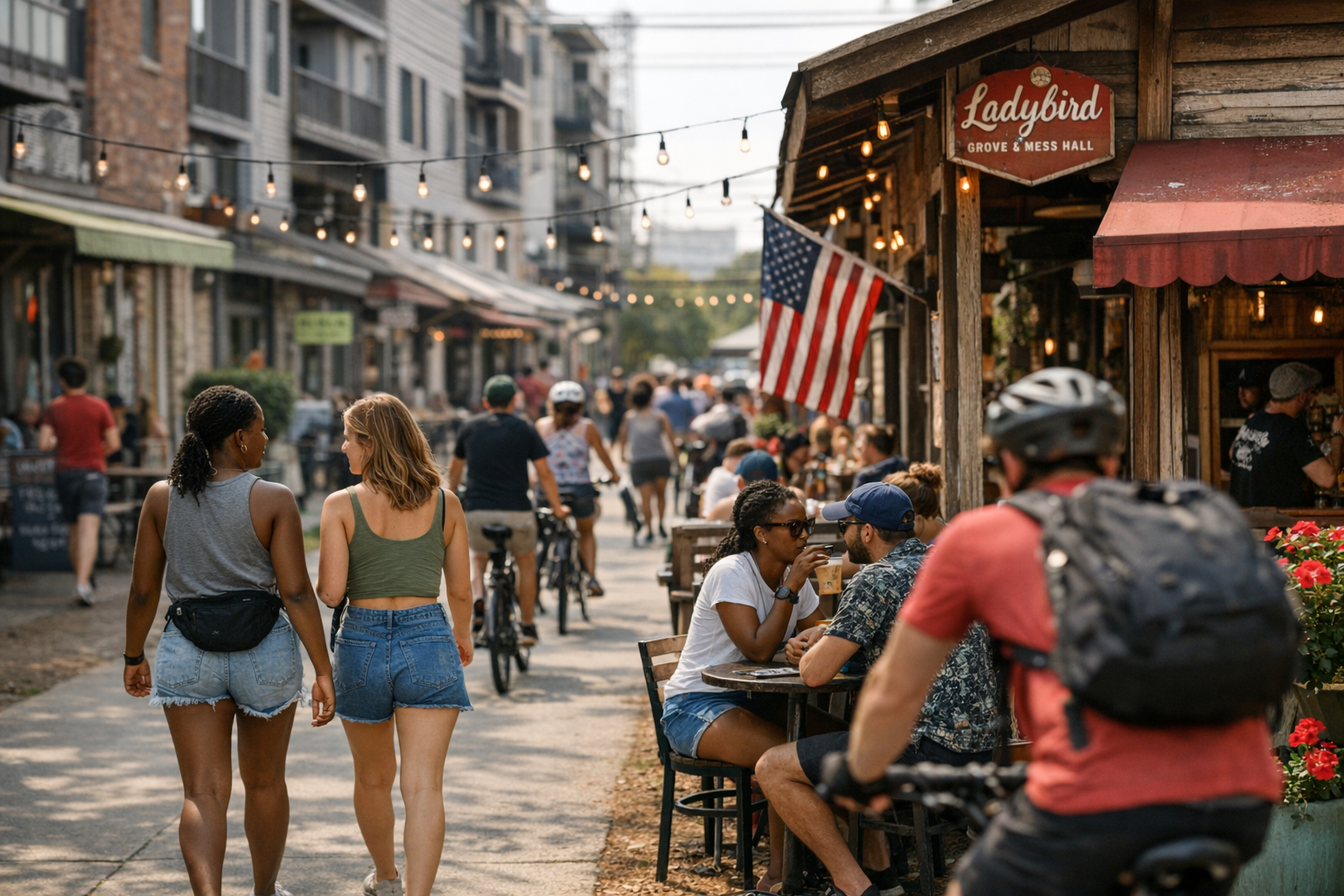
For many readers, the neighborhood is easiest to understand through the way people use it. Ponce City Market brings shoppers and diners, the Eastside Trail pulls walkers and cyclists through, and nearby apartments help keep the area active throughout the day. That daily mix makes Old Fourth Ward especially useful as an Atlanta case study: it shows how a neighborhood can become more developed and more visited without losing the larger story attached to it. If you want to understand how Atlanta keeps changing, this is one of the clearest places to look.
Keeping You In The Know