



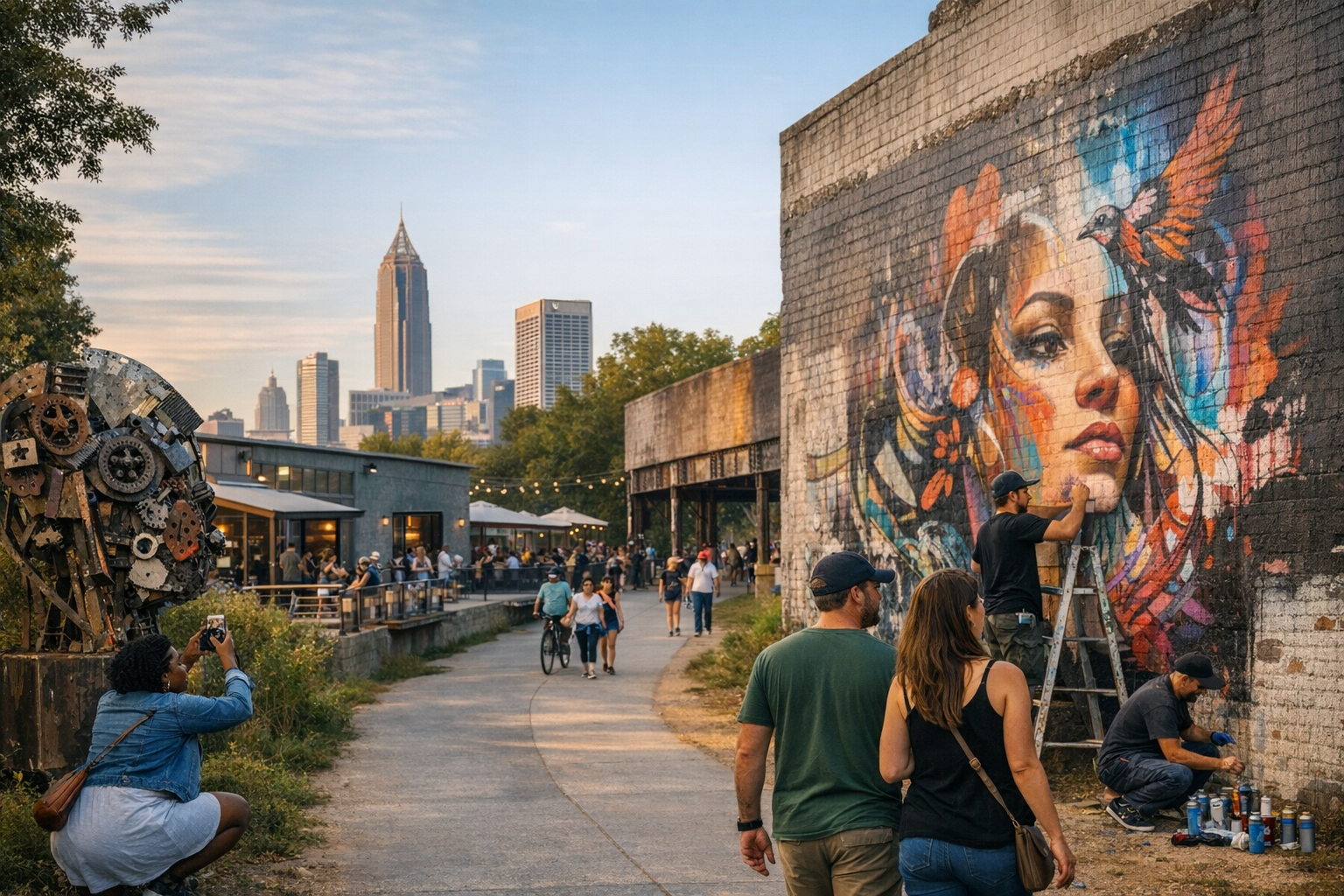
Marietta Street hums louder than the traffic. Old brick warehouses sit in a row with polished new builds; loading docks double as patios; murals slide by between stoplights. What used to be a straight shot from downtown to the suburbs is now one of the city’s tightest stretches for seeing how Atlanta makes and shows art—without relying only on a blockbuster exhibit.
The Know: Westside Art, From Marietta Street to the BeltLine
- What this is: A neighborhood-first guide to exploring art on Atlanta’s Westside, from Marietta Street NW toward the Atlanta BeltLine Westside segment.
- Good for: Folding galleries, public art, and design spaces into an ordinary night out or weekend loop—not just a special-occasion museum day.
- Where to start: Use Marietta Street NW as your spine, then connect to the BeltLine Westside Trail and nearby anchors like Midtown’s museums and Buckhead’s history institutions.
- Key context sources: High Museum of Art; ArtsATL; Art on the Atlanta BeltLine; Atlanta History Center.
Use the High as a North Star, Not the Whole Trip
Anyone new to town gets pointed to the High Museum of Art first. It is a major regional institution with rotating exhibitions, a permanent collection that runs from photography to folk and self-taught art, and programs that draw visitors from across the metro. Treat it as your calibration stop: reset your eye, see what is moving on a national level, then go look for where that energy lands on the ground.
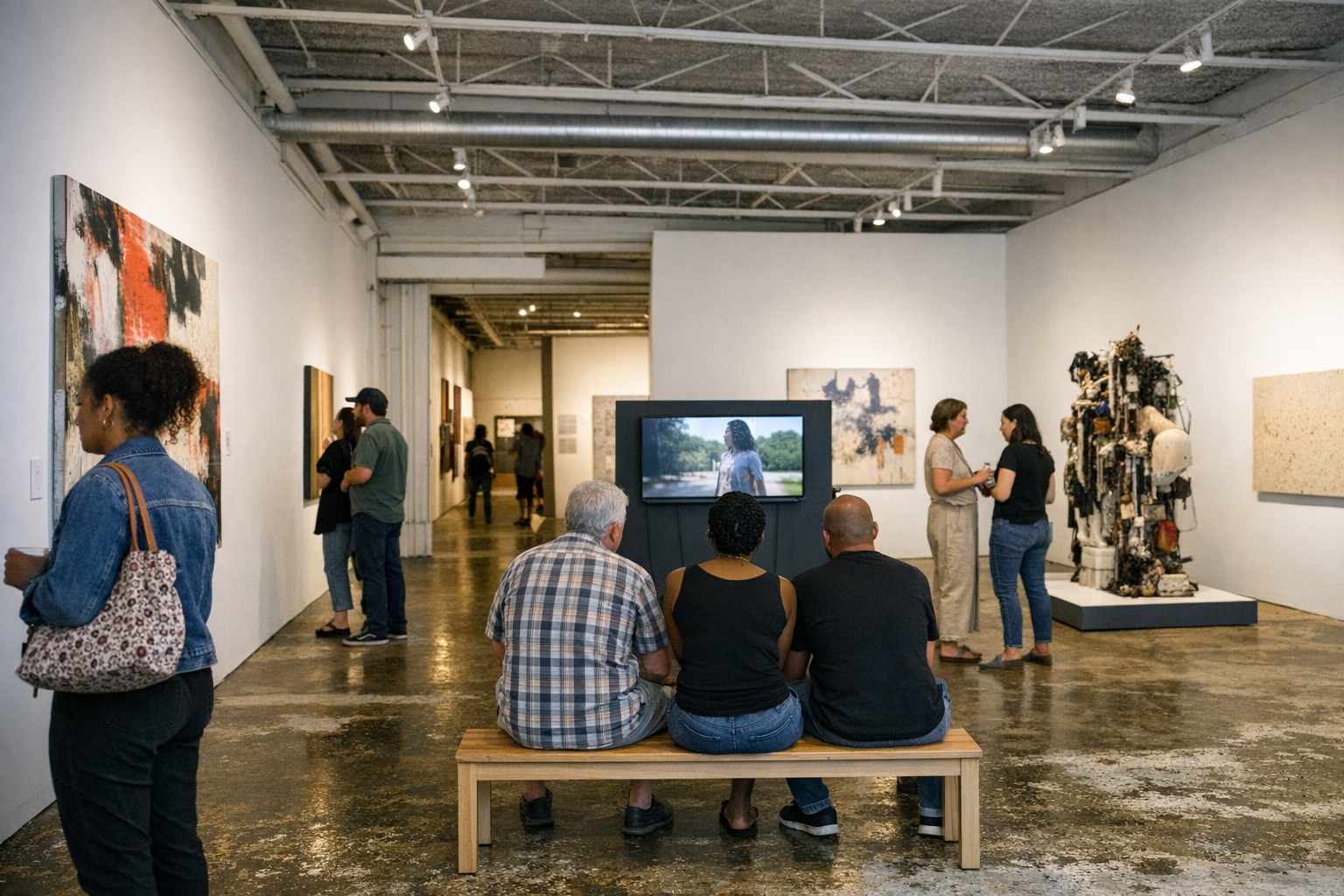
From the High’s Midtown campus, the Westside is a short drive or rideshare away. Artists who show at the High, or who appear regularly in ArtsATL coverage, often work out of studios and project spaces along Marietta Street and nearby corridors. If you only encounter their work in a white-box gallery, you miss how tied it is to warehouses, rail lines, and BeltLine walls that shape their day-to-day.
Marietta Street to the Westside Trail
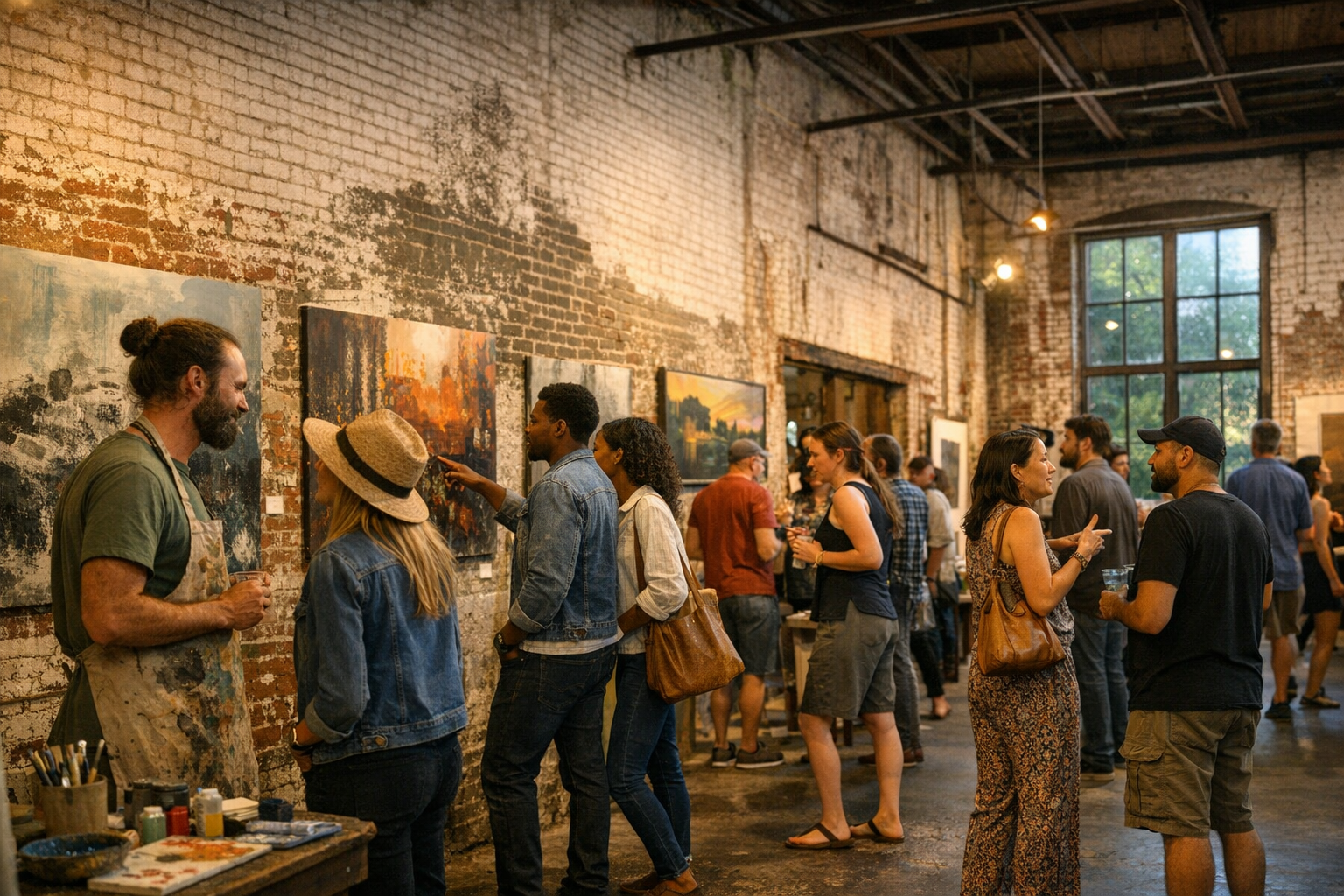
Marietta Street NW has shifted from a primarily industrial through-line to one of the city’s densest creative corridors. Office buildouts sit next to design showrooms; adaptive-reuse warehouses hold galleries, studios, and agencies. The art often hides in plain sight—on stairwells, in lobbies, in spaces you may know more for happy hour than for installations.
Walk it as an afternoon circuit. Natural light cuts across exposed brick and street-facing windows double as display cases. Look for small signage that signals project rooms, pop-up shows, or architecture studios with rotating exhibitions. Many spaces share buildings, so one stop can become several doors to try if they are open to the public.
Because tenants and gallery rosters turn over, lean on recent coverage from platforms like ArtsATL. Their listings and feature stories give you names to search for along Marietta Street—useful when you spot an intriguing banner or sandwich board and want to know whether there is an actual exhibition or an opening that night.
Head south and west from Marietta Street and you connect with one of Atlanta’s most visible public-art projects: the Atlanta BeltLine. The official Art on the Atlanta BeltLine program commissions murals, sculptures, and performances along the multi-use trail that wraps the city. On the Westside, including the Westside Trail, it functions as both outdoor gallery and connector, threading together neighborhoods that once sat on opposite sides of rail lines and industrial zones.
The installations change, but the logic stays the same: artists respond to the existing landscape—steel, kudzu, bridges, and all. Sculptures rise out of former rail corridors; murals track along retaining walls; smaller pieces tuck near trail entries and neighborhood spurs. Because the trail is free and open daily, you can make it a quick art walk before dinner or the main event.
Build Your Own Circuit
The Westside’s art presence sits on top of freight routes, factory histories, and neighborhood change that Atlanta institutions continue to document. For a broader sense of how this part of town fits into the city’s story, the Atlanta History Center in Buckhead offers exhibitions and programs on growth, infrastructure, and cultural shifts across the region.
- Set anchors: Start with the High, then drop to Marietta Street for a block-by-block read of how art lives in repurposed spaces. End on the BeltLine’s Westside segments for public art you do not need a ticket to see.
- Use local intel: Before you head out, search ArtsATL by “Westside,” “Marietta Street,” or “BeltLine” for active shows, openings, and artist talks you can fold into a single afternoon or evening.
- Make time to walk: The most interesting finds along Marietta Street and near the Westside Trail reveal themselves on foot. Plan for short walks between clusters of buildings and trail access points rather than treating each stop as a standalone drive.
The payoff is a personal map of the city’s creative life, not a souvenir list. Once you know which buildings, trails, and crossings hide the work, you can fold art into ordinary errands—adding a few blocks for a new mural, dropping by a project room after a meeting, or timing a Westside stroll with an outdoor performance. The history is underfoot, the art is on the way, and the route from Marietta Street to the BeltLine turns a familiar drive into a recurring circuit for seeing what Atlanta is making now.