



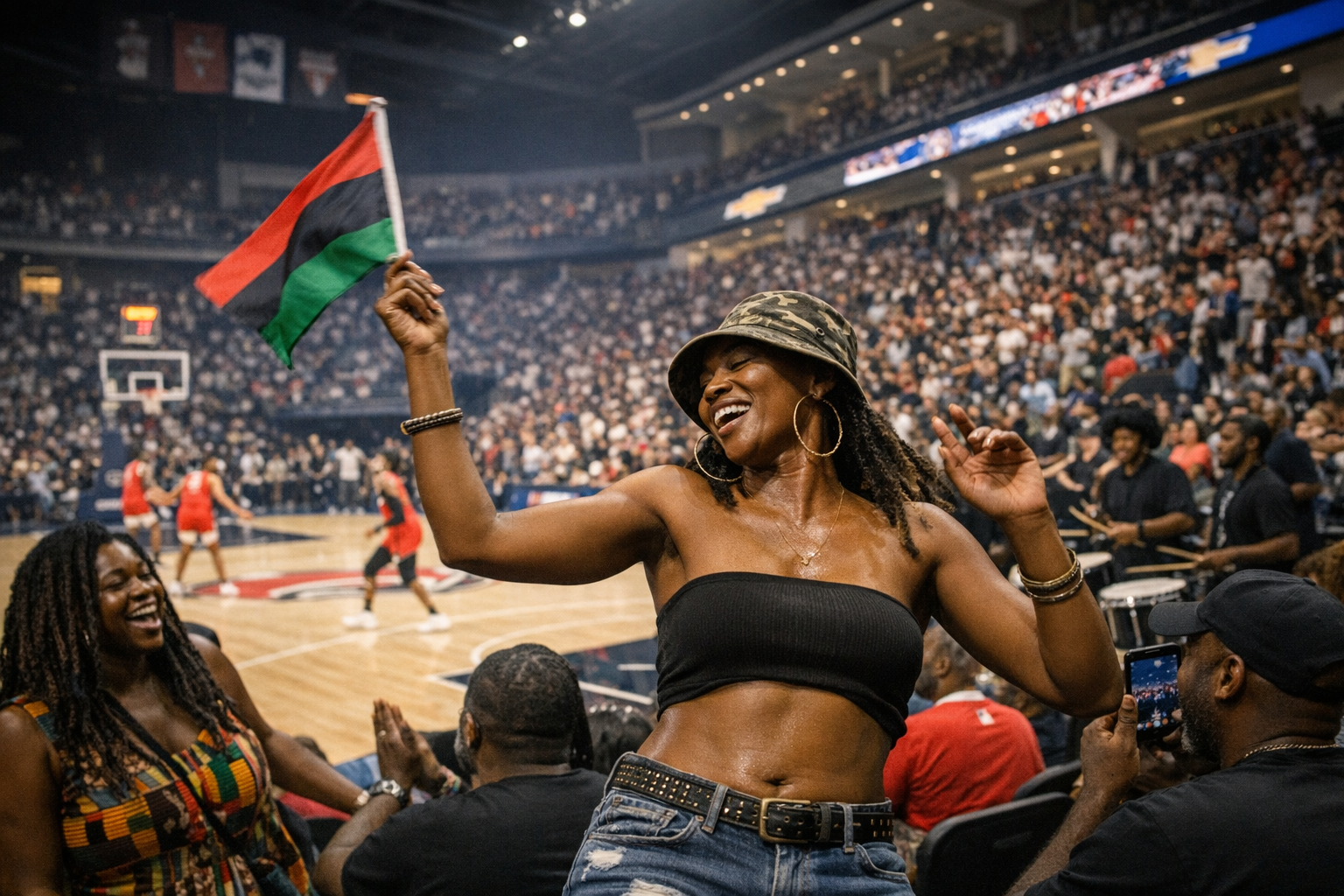
The Atlanta Dream’s home opener didn’t just launch a season; it played like a live mixtape of Black Atlanta in 2024. From the player tunnel to the 300 level, the night felt specific to this city—loud, layered, and unapologetically Southern.
Inside Gateway Center Arena in College Park, the first home tip for the Atlanta Dream read less like a corporate sports night and more like a referendum on Black Southern culture—who’s centered, who’s on the mic, and how a WNBA game here doubles as a block party. In a town where the Hawks, Falcons, and Atlanta United usually eat up the oxygen, the Dream might be the franchise most fluent in Atlanta’s Black present tense.
What to know
- Who: The Atlanta Dream, opening their 2024 home slate in front of a crowd locked in from warmups to the final buzzer.
- Where: Gateway Center Arena in College Park, beside Hartsfield-Jackson and reachable on MARTA.
- Why it matters: The Dream lean into being unapologetically Black and unapologetically Atlanta, turning game night into a culture gathering as much as a sporting event.
- If you care about: Black public life in Atlanta—music, fashion, protest, small business, HBCU energy—Dream home games are one of the city’s most concentrated live rooms for it.
Black Atlanta, concentrated
The basketball is the spine; the culture is the flex. The pregame tunnel walk is a fashion moment: high-end sneakers, independent designers, tunnel fits that read more Castleberry Hill gallery opening than routine warmup.
Courtside, the faces are familiar to anyone who moves through the city’s music and nightlife—artists, DJs, media, the people you’re used to seeing on Edgewood or at a Midtown listening session. The room lands at a specific intersection: pro hoops, sneaker culture, Southern rap, in a venue small enough that you can clock reactions across the floor in real time.
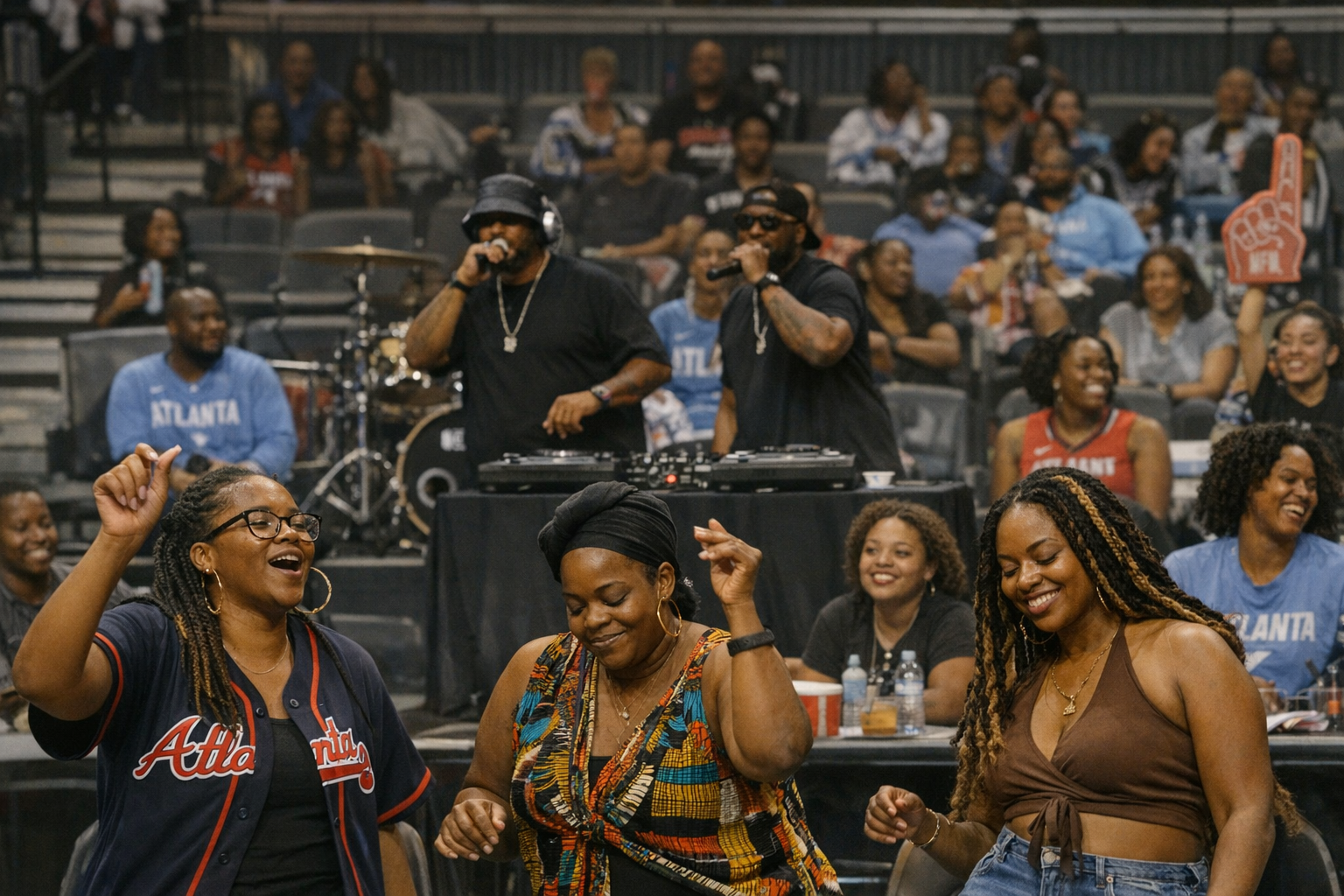
The soundtrack leans into the city’s lineage—early-2000s crunk, current trap radio—stitched like a running history of Atlanta rap. A Lil Jon hook might bleed into a Latto verse, slide through a T.I. staple, then land on something straight off a College Park cookout. No explanatory detours, no watered-down arena edits—shared language for a mostly Black crowd that already knows every ad-lib.
In the stands, WNBA fashion translates as Black Southern style: pristine sneakers, jerseys over vintage HBCU tees, dramatic lashes, bright nails. The concourse moves like a low-key runway you’d recognize from AUC homecomings or big Art on the Atlanta BeltLine weekends: Black Atlantans dressing for one another first, cameras second.
The size of Gateway Center Arena keeps the energy tight. You can see who’s starting chants, who’s dancing in the aisles, which section stands first when the DJ drops a classic. NBA nights downtown can tilt corporate; in College Park, a Dream game feels closer to a neighborhood meeting with better lighting and a subwoofer.
Around the W, players have long leveraged their platform for voting rights, LGBTQ+ protections, and racial justice. In Atlanta, that sits on top of a franchise that publicly clashed with former ownership over Black Lives Matter messaging and became part of the story that helped send Raphael Warnock to the U.S. Senate. That history still hums under every tipoff—warmup tees, handmade signs about equality and representation, a crowd notably full of Black women, queer Atlantans, and young voters who remember that chapter.
The Atlanta angle
What makes the Dream feel specifically Atlanta is the layering. The franchise sits at the crossroads of Southside development around the airport, Black women’s leadership in pro sports, and a city tradition of turning entertainment spaces into organizing rooms.
Gateway Center Arena’s College Park address matters. For fans in South Fulton, East Point, and Clayton County, it’s a big-league experience without a full downtown slog. For intown neighborhoods, the trip south is a reminder that the city’s gravity doesn’t always have to orbit the usual core.
On any given home night, you can feel how the team plugs into a wider arts and culture ecosystem—from fans who also pack exhibitions at the High Museum of Art to those catching performances spotlighted by ArtsATL. The Dream’s arena becomes one more stop on an informal circuit of Black Atlanta spaces, where sports, art, and civic life overlap.
How to plug in
- Getting there: Gateway Center Arena is accessible via MARTA’s Airport Station with a short connection to College Park; driving from most intown neighborhoods runs down I-75/85 South toward Hartsfield-Jackson.
- Make a night of it: Build a Southside day around a Dream game—pair an afternoon culture stop with an evening tip, or link it with other arts events curated through ArtsATL.
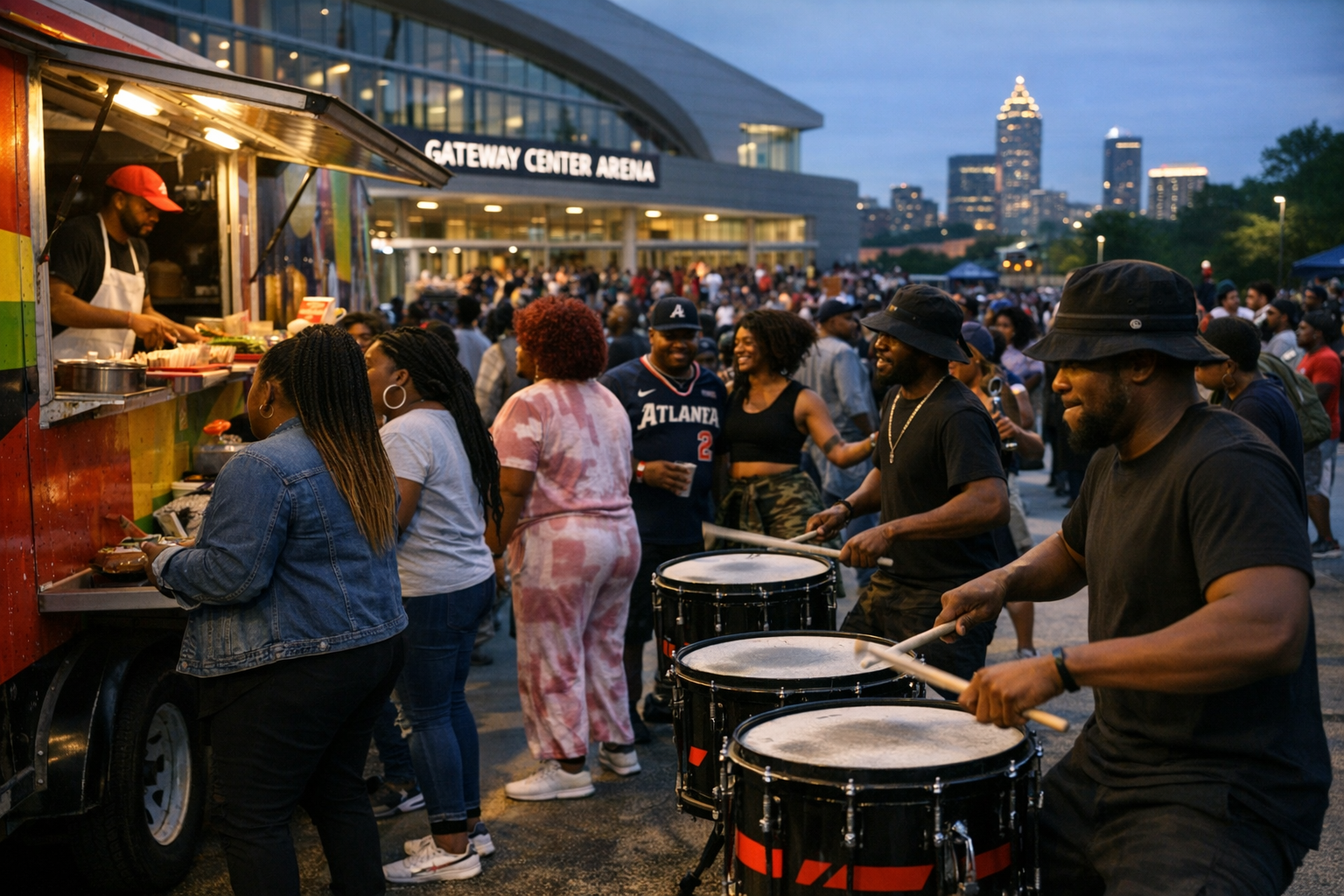
- What to look for: Arrive early for the tunnel walk and DJ sets, and leave time to wander the concourse, where community groups and Black-owned businesses often get shine.
When you plug in this season, treat it as a culture night, not just a box score stop. There’s no formal dress code, but people show up—repping neighborhoods, HBCUs, and favorite players, treating the stands as part of the show. Watch off the ball: who’s on the videoboard, whose logo is on the T-shirt drops, which sections get loudest.
In a city where galleries, museums, and performance spaces—from the BeltLine’s outdoor installations to Midtown stages—are constantly negotiating how to represent Black life, the Dream offer something unusually direct: a room where Black Atlantans are the default audience, not a demographic slice. That’s why a Dream home game can feel less like a night at the arena and more like stepping into a living snapshot of Black Atlanta.