



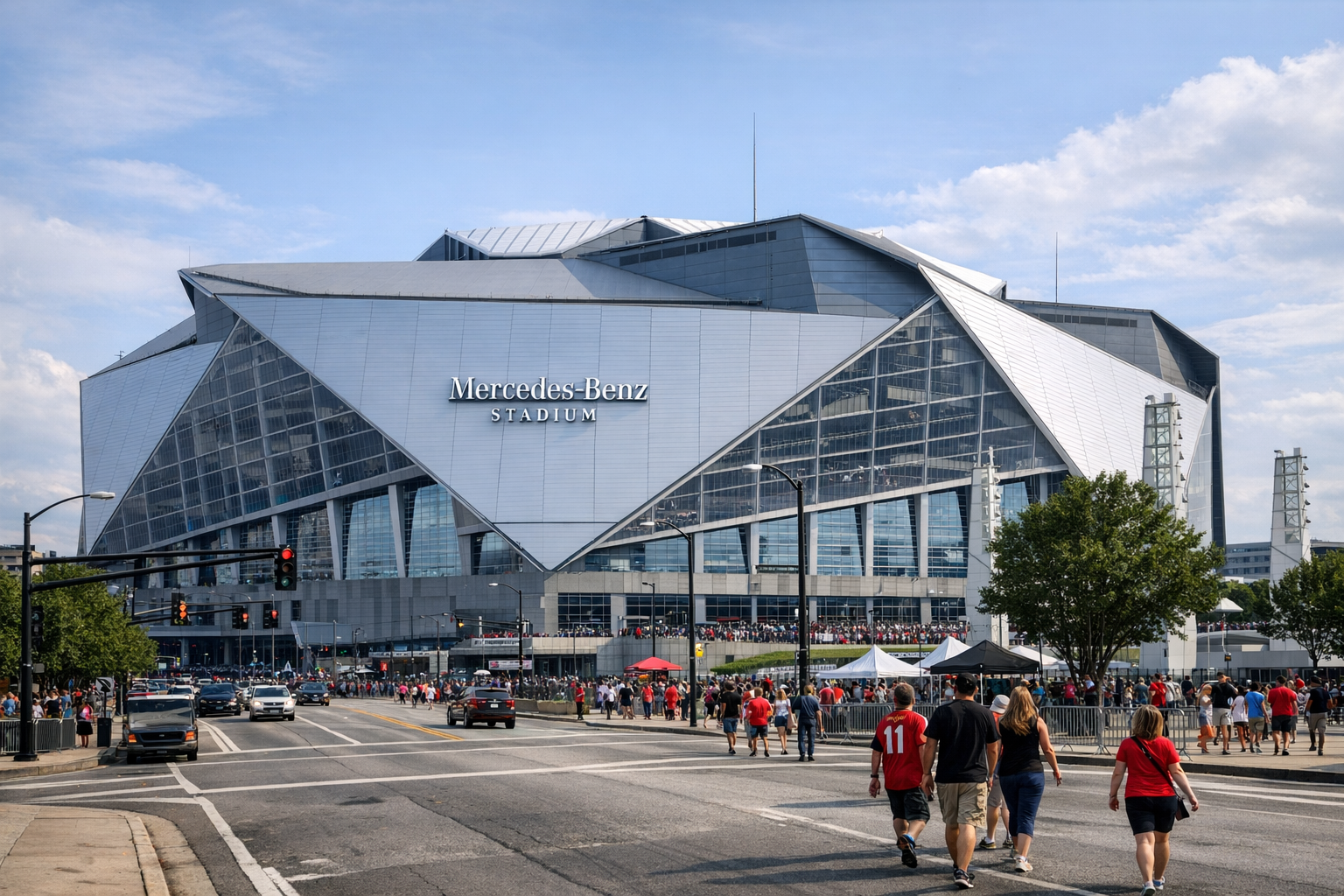
On the west side of Downtown Atlanta, Mercedes-Benz Stadium anchors game days, concert nights, and soccer crowds with a retractable roof, a giant video board, and a location built for movement.
Mercedes-Benz Stadium is one of the places where Atlanta’s big gatherings come into focus. Set on the west side of Downtown, it brings football, soccer, concerts, and special events into the same sweep of streets and plazas near the city’s convention and entertainment district. The building’s retractable roof changes how the space feels from one event to the next, while the large video board gives even a full crowd a single focal point. For Atlanta, it is more than a venue: it is a working piece of the city’s event landscape.
Fast facts
- It is the home field for the Atlanta Falcons and Atlanta United. That dual role shapes the building’s calendar and its identity. Football Sundays, soccer matchdays, and the movement around each event give the stadium a steady place in Atlanta’s sports routine, tying two very different fan cultures to one downtown address.
- The stadium sits on the west side of Downtown Atlanta, close to major convention and entertainment facilities. That location matters because it places the venue inside a larger downtown network of visitors, transit, hotels, and event traffic. On busy days, the stadium is part of a district that already knows how to handle large crowds moving in different directions.
- Its retractable roof is one of the building’s most talked-about features. The roof changes the feel of the venue without changing its footprint in the city. It helps the stadium work as a flexible indoor-outdoor space, which is useful in Atlanta’s event climate and for the range of shows and games it hosts.
- The large video board is another defining part of the experience inside the stadium. From the seating bowl, the board turns replays, graphics, and live action into part of the architecture. It gives the building a strong visual center and helps large crowds share the same moment, whether they are there for sports or a concert.
- Atlanta United’s home matches helped make the venue a major soccer destination. That shift expanded how people used the stadium and how Atlanta saw it. The venue became a place where soccer crowds gather with their own rhythms, colors, and match-day habits, adding another layer to the city’s sports calendar.
The Atlanta angle
Mercedes-Benz Stadium works like a pressure point in Atlanta’s downtown grid. People arrive from the surrounding blocks, from nearby event spaces, and from the larger flow of the city, then move through the same gates, concourses, and seating sections for very different occasions. That flexibility is part of its importance. A building that can host football, soccer, concerts, college football, and special events becomes a shared civic room, not just a sports venue. It also helps define the west side of Downtown as a place where large crowds are normal, planned for, and woven into the everyday geography of the city.
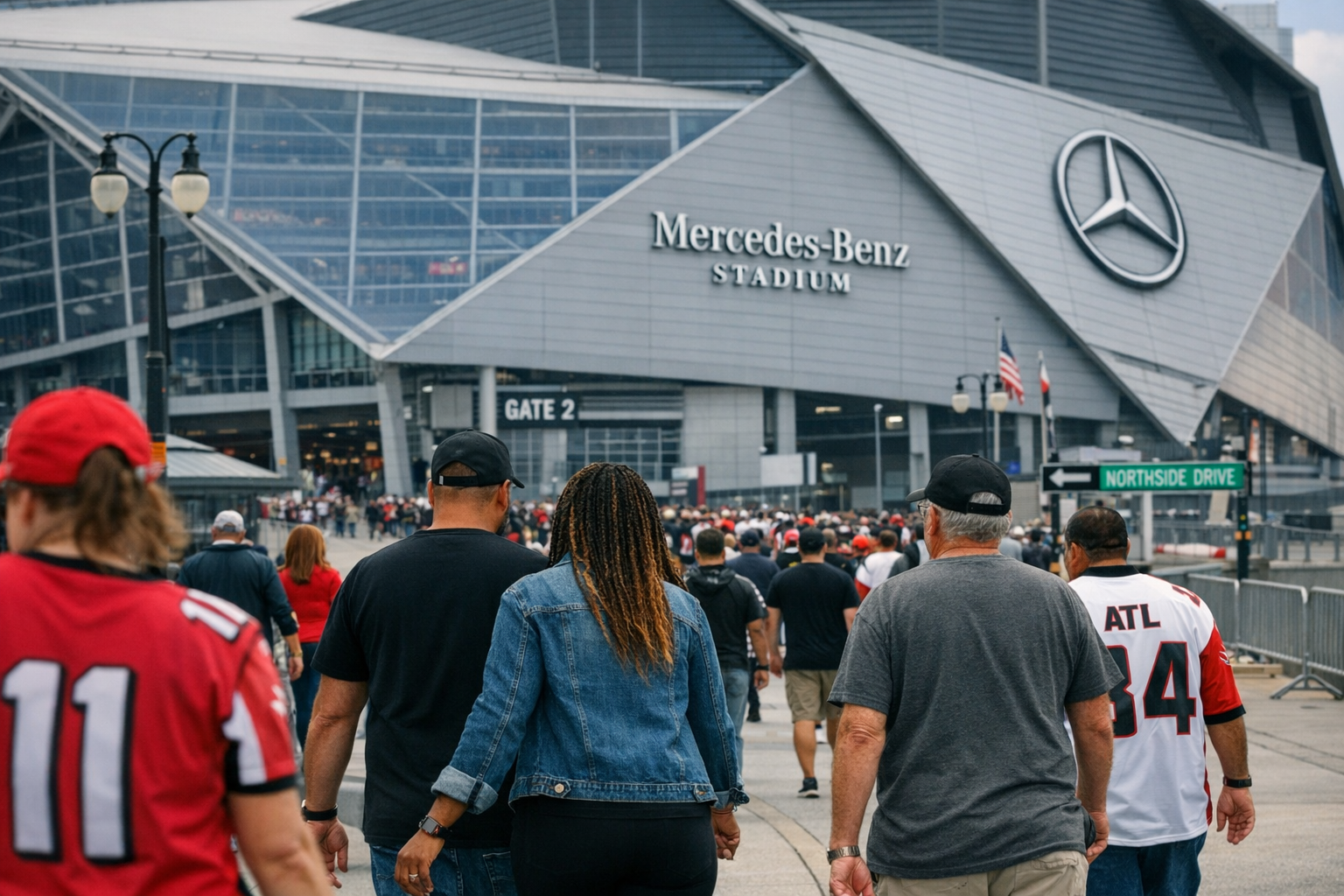
Atlanta United’s rise made the stadium feel different in the eyes of many Atlantans. Soccer brought its own sound, pace, and crowd behavior, and the building responded by becoming a destination for more than one kind of fan. That matters in a city that is always balancing growth, identity, and the practical demands of moving people into a single place at scale. Mercedes-Benz Stadium shows how Atlanta uses major venues: not only for headline events, but as active pieces of urban life that connect neighborhoods, downtown streets, and the city’s larger event economy.
Keeping You In The Know