




As the Atlanta Film Festival turns 50, the city’s longest-running movie party isn’t just blowing out candles; it’s arguing for what kind of film town Atlanta wants to be.
On Ponce, the neon blade of the Plaza Theatre still cuts through the evening. Inside, the lobby soundtrack is familiar: wrap badges from productions shooting on the Westside, a Georgia State student clutching a shorts program, a couple who still call it the “Atlanta Film Festival of ’76.” The popcorn line bends past a poster wall where microbudget indies hang beside studio-backed features that quietly spent a summer on a soundstage in College Park.
This spring, those rituals double as a milestone party. The Atlanta Film Festival marks its 50th edition, stretching across venues like the Plaza, the Rialto Center for the Arts, and the Tara Theatre over eleven days.
In a city branded for the past decade as the “Hollywood of the South,” that anniversary lands with extra weight. The half-century survival of ATLFF suggests something quieter but sturdier: Atlanta’s film culture wasn’t flown in with tax credits and blockbuster shoots. It grew out of a homegrown creative class and the institutions that bet on local stories early and often.
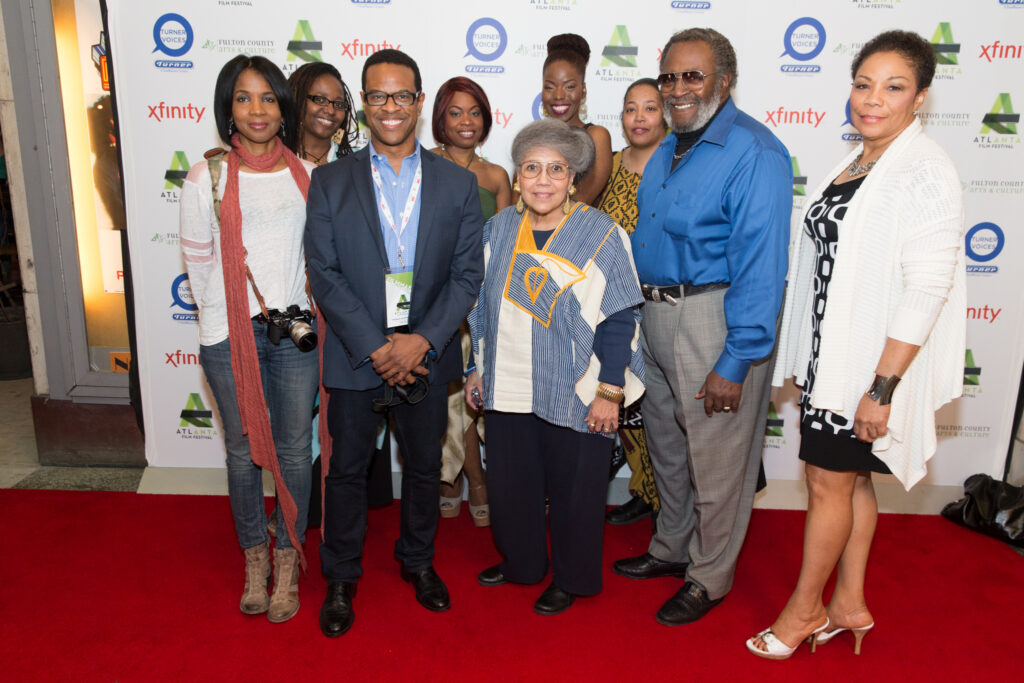
From scrappy showcase to cultural anchor
The festival started in the mid-1970s as the Atlanta International Film Festival, when Atlanta’s movie life meant drive-ins on the edge of town, a few Midtown art houses, and sporadic location shoots with no real hub. Those early programs brought in foreign titles that would never hit a Peachtree marquee and independent work that used Atlanta as subject instead of scenery.
Over time, the festival became an Academy Award–qualifying event, giving local filmmakers a path from a Plaza or Tara premiere to the Oscar long list. It lasted by moving with the city, embedding itself in neighborhood theaters, downtown stages, and post-screening conversations that spill out onto the sidewalk. Incentives are a business tool, not a cultural plan. Big productions can leave. A festival that keeps training local directors, writers, programmers, and audiences is harder to uproot.
Run by the nonprofit Atlanta Film Society, ATLFF leans into that role. Year-round workshops, screenplay competitions, and community screenings keep the work going between festivals. The 50th edition plays less like a victory lap than the next checkpoint in building a pipeline that starts and ends here.
What the 50th puts on screen
The 50th program leans hard into Georgia-made work. The “Georgia Shorts” blocks, often in prime evening slots at the Plaza or Tara, have shifted from curiosity to anchor. Filmmakers who once queued nervously in the lobby come back as mentors, trading production tips with first-timers shooting on weekends between shifts on studio jobs in Fayetteville or Trilith.
That emphasis frames Atlanta as a point of view, not just a skyline. A short set off Cleveland Avenue doesn’t pause to translate itself for a coastal industry crowd; it plays first to viewers who ride MARTA past the same corners. A Gwinnett documentary trusts you already know the malls, cul-de-sacs, and night-shift rhythms.
Partnerships with Georgia State and SCAD Atlanta tighten that loop. Students volunteer and premiere thesis work; some return with features, web series, and pitches. The path from classroom to crew job to festival screening is part of what separates a production hub from a film city.
ATLFF also uses film as civic conversation. A documentary on the BeltLine’s impact doesn’t land here as an abstract planning debate; it plays in a place where residents have watched Reynoldstown, West End, and Old Fourth Ward change block by block. Screenings frequently come with panels or talkbacks that feel closer to town halls than red carpets.
Within that frame, the work circles questions that feel specific to Atlanta: What does it mean to grow up in Gwinnett with parents on night crews? What does queer community look like in a city that sells itself as progressive while the state legislature pulls the other way? What does it mean to be a trans filmmaker in a place where your rights keep cycling back onto the ballot? The festival gives those questions a room full of neighbors instead of a comment thread.
ATLFF’s other strength is the way it locks into the rest of the arts ecosystem. A puppetry-centered short hits differently in a city with the Center for Puppetry Arts down the road. At the High Museum of Art, exhibitions on the African diaspora’s influence on visual media or retrospectives on Southern photography share a language with the region’s documentaries.
What this anniversary says about Atlanta
Set ATLFF’s history alongside Atlanta’s, and patterns emerge. In the post-Olympics push for global attention, the festival kept foregrounding work made here. As the BeltLine turned old rail into an outdoor gallery, the festival ramped up documentaries and experimental work—its own way of asking what it means to rebuild a city in real time.
When state incentives came under scrutiny, the festival kept building skills and relationships so Atlanta’s creative muscle wouldn’t vanish if subsidies dipped. It helped raise an audience that expects to see its own streets, accents, and contradictions on screen.
The 50th arrives as Atlanta is again being asked to define itself. Is this a company town for out-of-state studios, or a place where a kid from East Point can go from skate videos under the Downtown Connector to a feature premiere in a theater their grandparents remember as a single-screen house? Is film something that happens behind fences in Fayette County, or in public rooms where strangers argue in the lobby after the credits?
There’s a tension there: the polished soundstages that power Georgia’s economy sit miles from the neighborhood cinemas that shape Atlanta’s sense of itself. One runs on tax policy and global franchises; the other runs on who shows up on a Tuesday night for a shorts block about the street outside.
Watch the lines outside the Plaza, the Tara, and the Rialto this year and you see one answer: a city still willing to sit in the dark together and treat movies as a local issue. In a place constantly rewriting its skyline, a 50-year-old festival becomes its own quiet landmark—less obvious than a new tower, but just as revealing about what Atlanta wants to project outward and back to itself.
ATLFF’s bet is that Atlanta’s claim as a film town won’t rest on who’s renting the biggest stage, but on how seriously the city takes the stories rising from its own streets—and who gets the mic to tell them.
How to go
- Venues: Screenings and events are centered at the Plaza Theatre on Ponce, the Tara Theatre in Buckhead, and Georgia State’s Rialto Center downtown.
- Tickets and schedule: Lineups, passes, and individual tickets are available through the Atlanta Film Festival and venue websites.
- Where to start: Look for “Georgia Shorts” blocks, local documentaries tied to neighborhoods you know, and screenings with panels or talkbacks if you want that town-hall energy.