




Flowery Branch feels less like a practice facility and more like a lab. In the Falcons draft room, the work isn’t just stacking names — it’s stress‑testing how to build a roster for the way the NFL actually plays on Sundays at Mercedes‑Benz Stadium.
Inside the building, there’s a nickname for it: “Nerdy Birds.” It’s shorthand for a certain type of Falcon — defined as much by processing speed, scheme fluency, and alignment versatility as by height‑weight‑speed. If Atlanta leans into that identity, the next draft class becomes a referendum on whether this front office can match football IQ with a city that expects big‑moment Sundays under the lighted roof on Northside Drive.
The Know: How the Nerdy Birds board works
The blueprint treats the draft as a value puzzle, not a wish list.
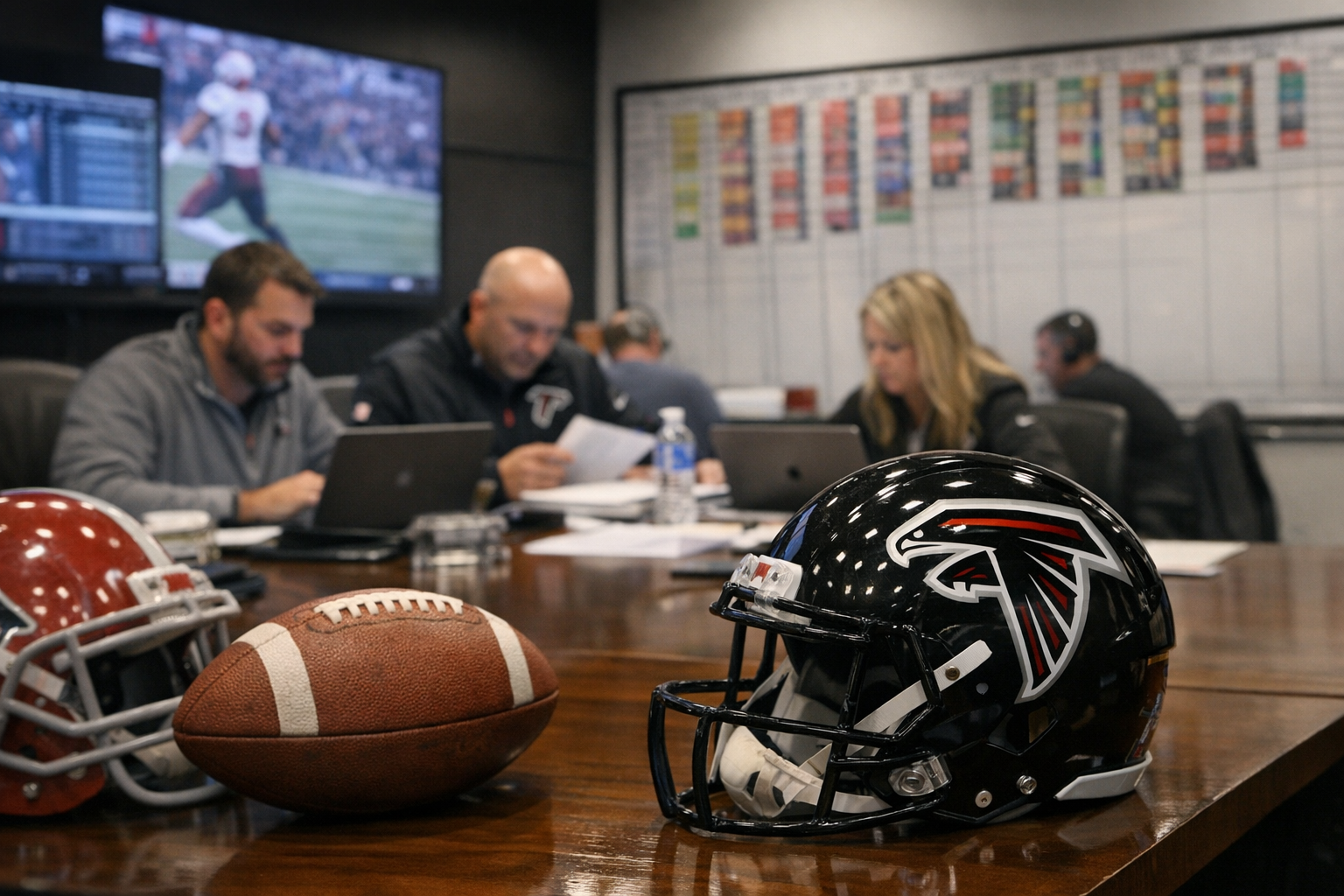
- Premium positions first. Quarterback, offensive tackle, edge rusher, and cornerback live at the top. Lower‑value spots must clear a higher bar in efficiency and impact to earn similar capital.
- Younger over older. Prospects who are 20 or 21 with clear growth curves get priority. Older players need exceptional traits and tape to offset a shorter runway to a second contract.
- Multi‑tool defenders only. Safeties who spin from the box to the post, corners who slide inside, and edges who rush from two‑ or three‑point stances are treated as core pieces against motion‑heavy, matchup‑hunting offenses.
- Data over vibes. Athletic testing, GPS numbers, and role‑specific metrics — pass‑rush win rate, yards per route run, missed‑tackle rate — separate similar prospects.
- Processing as a trait. Pre‑snap recognition, communication, and spatial awareness are weighted heavily, even when the 40 time is more “solid” than “viral.”
When a prospect gets linked to Atlanta, the question isn’t just talent. It’s whether he’s young, explosive, assignment‑sound, and playing a high‑value position the way this staff wants it played.
Context: Building a 2026 board for Mercedes‑Benz Sundays
How the Falcons frame the 2026 class doubles as a statement on how they want to play — and who they trust to run the show on the field.
Quarterback as the pivot. Even with the room stabilized into 2025 and 2026, Atlanta doesn’t want to get stuck between eras. An efficient, accurate passer with mobility and fast processing will always be in play if the value lines up. The goal is stacking years of competent quarterback play, not chasing a single window.
Tackles and edges as non‑negotiables. On the perimeter, length, movement skills, and comfort in space are mandatory. A tackle prospect in the Kelvin Banks Jr. mold — a technician who wins with angles and recognition as much as raw power — fits the prototype: smart, steady, fluent in modern protections. On defense, edge rushers who understand protection rules, build rush plans, and adjust mid‑snap are the standard in a division where a few third‑and‑sevens can swing the NFC South.
Cerebral operators in the middle. Centers and safeties function like on‑field coordinators. A center with command — identifies the Mike, points out creepers, resets protections — climbs a “Nerdy Birds” board because that control connects directly to staying on schedule and keeping the quarterback upright. In the back end, a Malaki Starks‑type safety — capable of rotating, disguising, and managing traffic from the post — reflects the profile.
Coverage versatility as the multiplier. In the back seven, Atlanta cares more about assignments than labels. Nickels who tackle and corners with both long speed and short‑area quickness are viewed as force multipliers, not luxuries. A long, physical corner who can handle the NFC South’s big‑bodied receivers and kick inside against spread looks might not sell as many jerseys as a jump‑ball wideout, but in a league where January football is decided by third downs and red‑zone snaps, those “hidden value” picks are what this model is built to find.
Day 3 as a lab. The late rounds become experiment time: special‑teams value, elite athletic markers, and clear developmental traits. Clean processing on film plus high‑end testing scores outweigh gaudy college box scores, turning those picks into targeted bets on ceiling and scheme fit.
Atlanta angle: Reading the tells before the draft
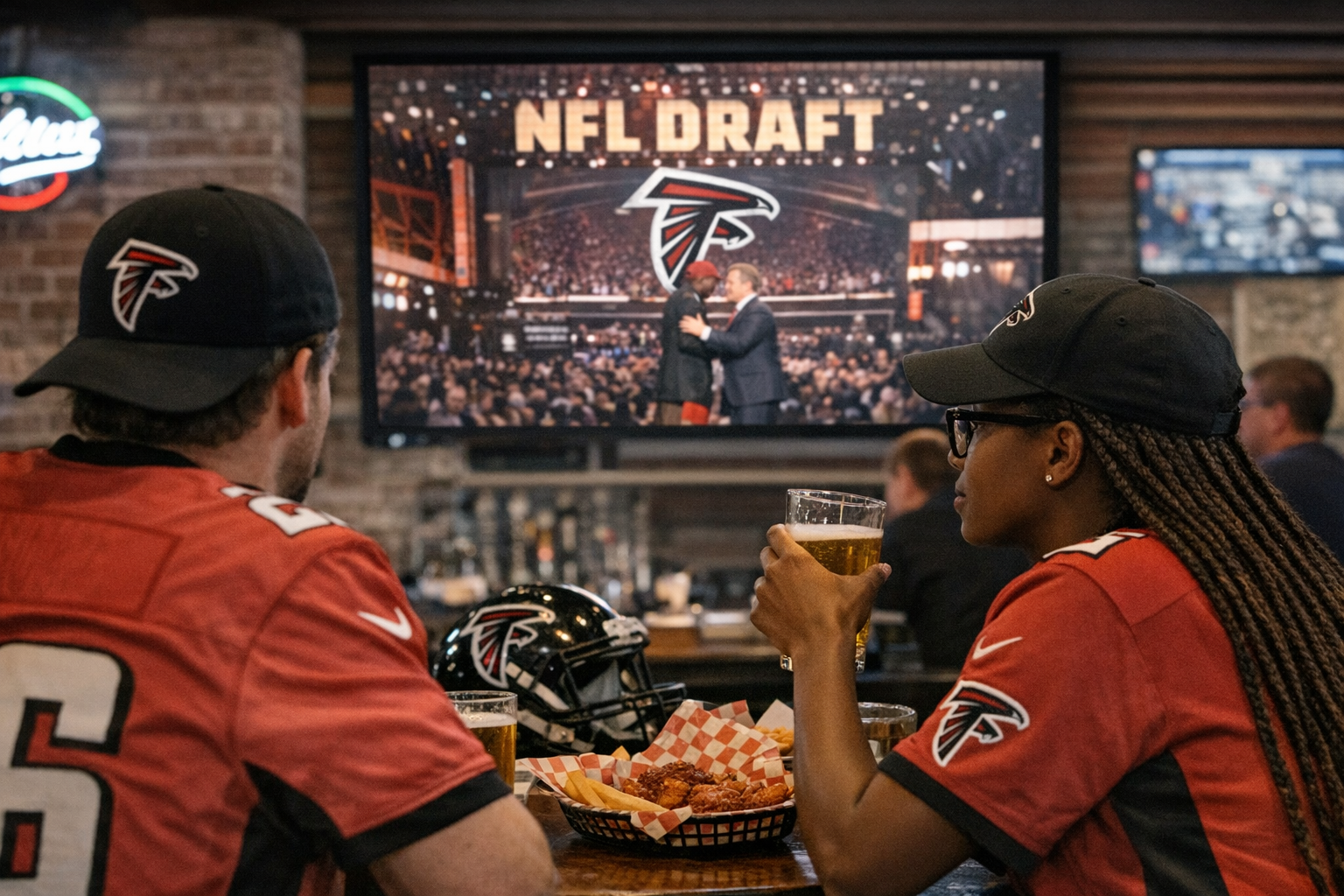
This only matters if it shows up on fall weekends — from Vine City porches to Vinings cul‑de‑sacs, from Westside living rooms to draft‑night watch parties at The Battery. The city still measures offenses against 2016, when the old Dome scoreboard felt like it might overheat. A more data‑driven approach doesn’t erase that history; the aim is lighting up the board at Mercedes‑Benz while also winning hidden battles in down‑and‑distance and coverage rules.
Atlanta loves stars and fireworks, but the front office is signaling an appetite for corners who erase throws, safeties who fix coverage busts, and linemen who prevent chaos before it starts. For fans trying to read the board from the outside, a few tells matter most:
- How early premium spots go. If Atlanta targets a tackle like Kelvin Banks Jr. or a Malaki Starks‑type safety in the first two days, it reinforces the “Nerdy Birds” focus on smart operators at premium positions rather than splashier but lower‑value roles.
- Day 2 flexibility vs. need. Watch whether the Falcons stick to value on Day 2 — taking the highest‑graded, scheme‑savvy player on the board — or lean toward immediate depth chart needs if a run starts at quarterback, edge rusher, or cornerback.
For a fan base that knows how Sundays are supposed to look under that retractable roof, the next draft class is more than a list of names. It’s the latest test of whether “Nerdy Birds” can turn smart bets in April into statement wins on Northside Drive in January.