In Atlanta, some of the city’s most reliable gathering spots are not ticketed venues at all. They are parks—places people return to for a walk, a workout, a concert lawn, a bench, or simply a little room to be around other Atlantans.
That pattern is easy to spot at Piedmont Park, along the Atlanta BeltLine, and at Centennial Olympic Park. These spaces are helping shape a steady public rhythm across the city, from stroller loops and pickup games to joggers at dusk, street musicians, yoga mats, and friend groups looking for somewhere to land without a reservation.
Where the city shows up
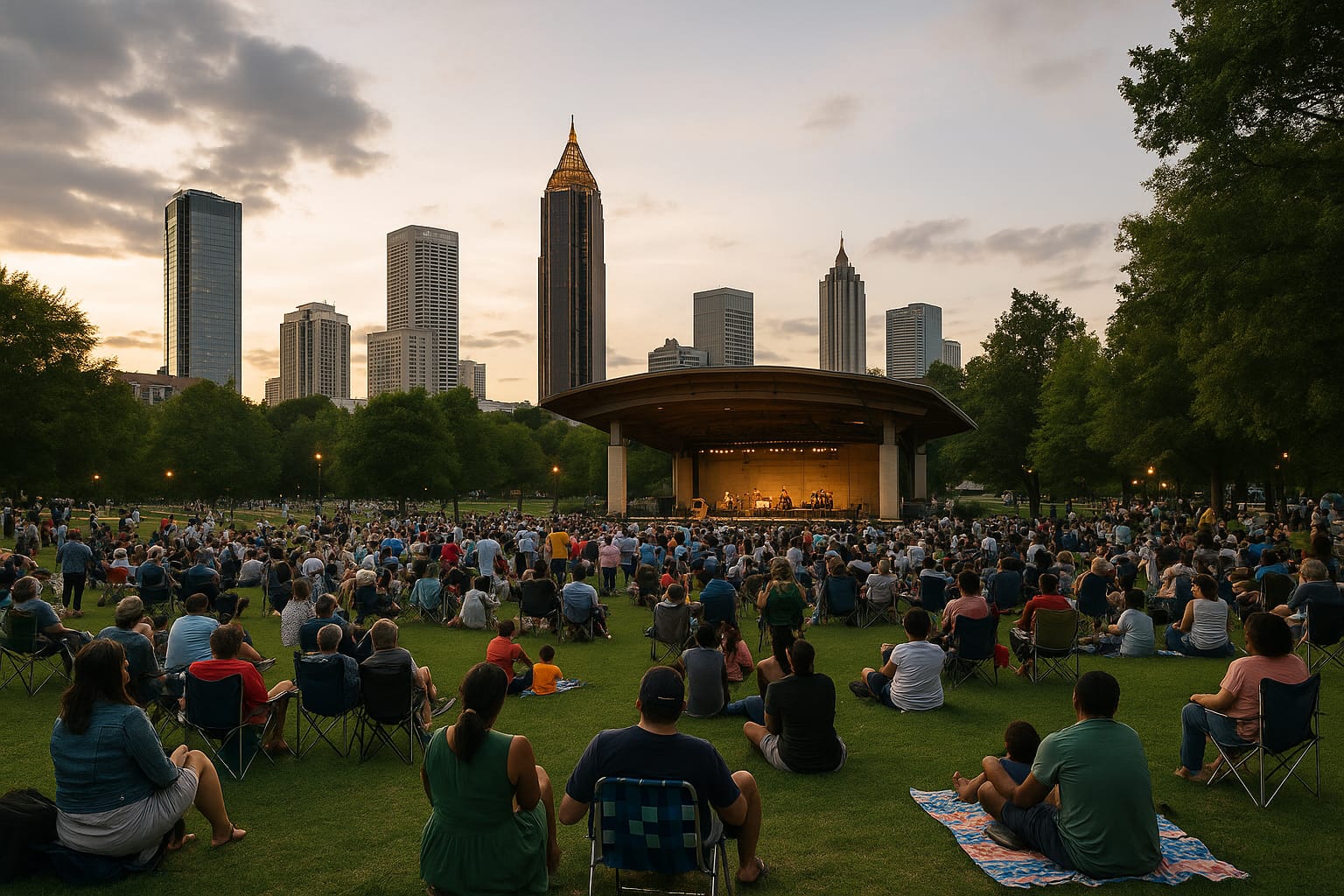
Piedmont Park still reads as intown Atlanta’s clearest shared lawn. Between Midtown and Virginia-Highland, it has enough room for several versions of the day to unfold at once: runners on the paths, dogs in designated play areas, families on the grass, and small clusters of people settling in with no real agenda beyond staying awhile. The skyline helps, but the real draw is ease. You do not need a ticket, a membership, or much planning to make use of it.
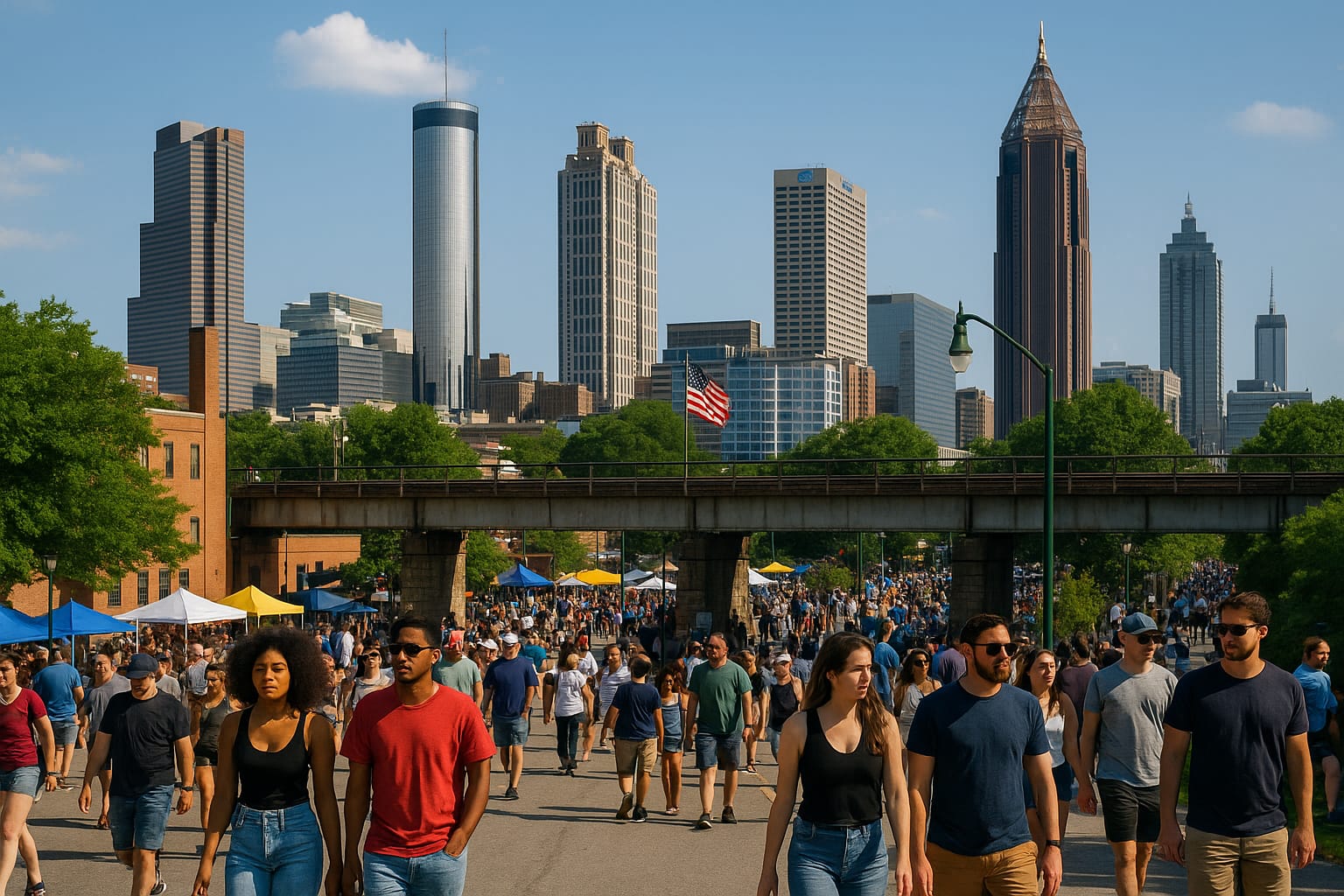
The Atlanta BeltLine, especially the Eastside Trail and its connected greens, offers a different kind of social energy. Here, the activity is in motion. Walkers move between coffee stops, cyclists pass commuters, kids stop at public art, and neighbors pause on benches or along the trail. It is one of the city’s clearest examples of how foot traffic can create its own atmosphere.
Downtown, Centennial Olympic Park serves another role. Surrounded by visitor attractions and hotels, it remains a visible public space where people can walk, sit, and slow down for a minute. For locals, that can make it a useful reset in a part of the city often defined by conventions and tourism.
Why the everyday matters
Big events may fill a park for a day, but recurring use is what gives a place its staying power. People learn where to meet, when a path is busiest, which lawn catches the late light, and where to go when they want company without much pressure. Over time, that kind of familiarity can make public space feel easier to enter.
It also appears to widen the mix of people who use it. A major event brings a crowd; a well-used park brings regulars. For informal performers, fitness groups, and community organizers, that kind of repeat audience matters. So does simple visibility. Parks put people near one another, and that proximity is part of what keeps them socially useful.
Atlanta’s climate helps. Fall and spring are obvious high seasons, but winter is often mild enough to keep trails and lawns active, and summer evenings still draw people once the heat lets up. Public space here tends to stay in rotation most of the year.
How to catch the best of it
For the most social version of Atlanta, go without overplanning. Piedmont Park rewards lingering. The BeltLine works best when you leave room to wander. Centennial Olympic Park makes sense as a downtown pause when you need air and a sense of the city around you.
Early mornings usually belong to runners, dog walkers, and people squeezing in time outside before work. Late afternoons and early evenings tend to bring the broadest mix. Weekends offer the most atmosphere. Weekdays usually offer more space.
As Atlanta grows, these kinds of public places will matter even more. The parks worth watching are not just the ones with big programming, but the ones that keep making room for ordinary city life—day after day, season after season.
Indakno — Keeping you in the know.