




Castleberry Hill sits between Downtown and Mercedes-Benz Stadium, linking art spaces, loft living and event crowds to neighboring districts through streets that feel like a warehouse corridor turned neighborhood hub.
A short walk from Downtown and a block map away from stadium pulse, Castleberry Hill reads like Atlanta’s backstage: converted warehouses, artist studios, and lofts funneling people between concerts, games, and nearby neighborhoods. That proximity shapes how Castleberry Hill lives — part gallery district, part event spillover — while preserving a compact, walkable streetscape that still feels distinct from the surrounding commercial sprawl.
Fast facts
- Warehouse streets that act like neighborhood connectors Castleberry Hill’s brick-lined blocks and former-industrial buildings create a warehouse-district feel that channels foot traffic between Downtown, the stadium, and adjacent neighborhoods, making it a physical corridor rather than an isolated pocket.
- Art spaces anchor local cross-neighborhood flows Galleries, studios and monthly art walks in Castleberry Hill draw visitors from Midtown, Downtown and surrounding intown areas, creating regular pedestrian routes that link cultural activity across neighborhood borders.
- Lofts provide housing close to stadium events Residential lofts and converted industrial units offer eventgoers and neighborhood residents short walks to Mercedes-Benz Stadium, which increases short-term foot traffic without erasing the neighborhood’s quieter, lived-in character.
- Nightlife and bars serve both locals and event crowds Bars and small music venues in Castleberry Hill cater to nearby residents while absorbing pre- and post-event crowds, acting as a buffer that keeps stadium energy from overwhelming strictly residential streets.
- Historic buildings help maintain a neighborhood identity Protected warehouses and brick facades preserve a distinct architectural layer, giving Castleberry Hill a recognizable sense of place that lets it participate in citywide events without losing a neighborhood rhythm.
The Atlanta angle
Castleberry Hill functions like a hinge in Atlanta’s urban fabric, where built form and program create movement between neighborhoods. Its low-rise warehouses and narrow streets invite walking and short trips, so people traveling from Midtown, Downtown, or the Westside often pass through rather than around it. That circulation matters: it keeps galleries and small businesses visible to stadium crowds and office workers alike, while the neighborhood’s scale prevents event-related traffic from feeling indistinguishable from the wider city’s commercial corridors. In effect, Castleberry Hill translates large-scale activity into human-scale encounters on its streets.
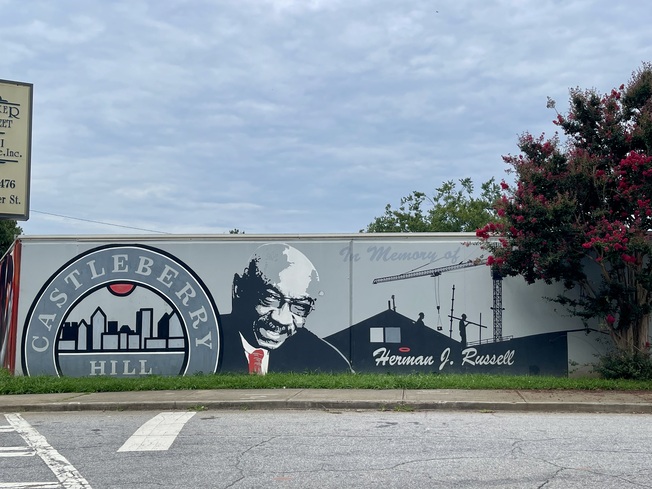
Because Castleberry Hill mixes residential lofts, art spaces and nightlife within blocks, it acts as both destination and intermediary for Atlanta neighborhoods. On event days it absorbs surges of visitors who spill into local bars and9 galleries; on regular evenings it feeds surrounding districts with cultural programming and foot traffic. The result is a layered identity — part art district, part residential community, part corridor — that helps neighboring areas feel connected rather than isolated, while preserving Castleberry Hill’s own distinct rhythm.
Keeping You In The Know