



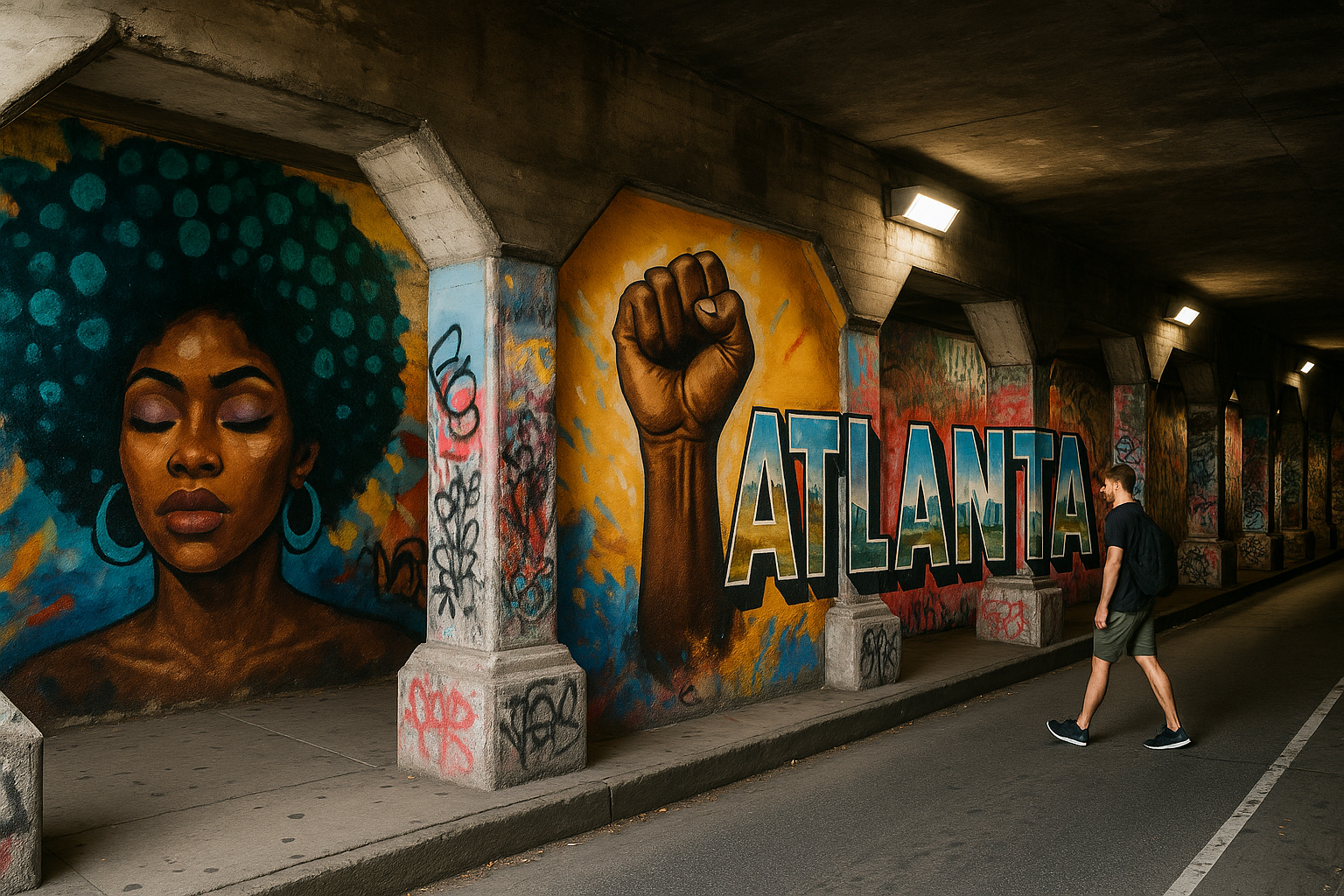
Krog Street Tunnel’s Evolving Murals Reflect Atlanta’s Current Social and Artistic Pulse
The paint never stays long on the Krog Street Tunnel. New murals, slogans, and memorials appear and disappear there with a speed that turns the stretch beneath the rail line into an unofficial public forum—where artists test ideas, neighbors claim space, and the city’s debates get written in aerosol and wheatpaste.
What matters right now isn’t a single masterpiece but a pattern: the tunnel has shifted from decorative tags and portraits to a denser mix of political slogans, personal dedications, and formally ambitious murals—signs that Atlanta’s street-art scene is reacting to national politics, local displacement, and questions of authorship.
Located under the CSX tracks between Inman Park and Cabbagetown and adjacent to Krog Street Market, the tunnel is highly visible yet unofficial. Walk its length and you’ll find short declarative demands on policing, housing, and voting alongside community memorials, critiques of gentrification, and work drawing on Afro-diasporic aesthetics—Afrofuturist motifs, bold portraiture, and textile-inspired patterns among them.
A canvas that refuses to sit still
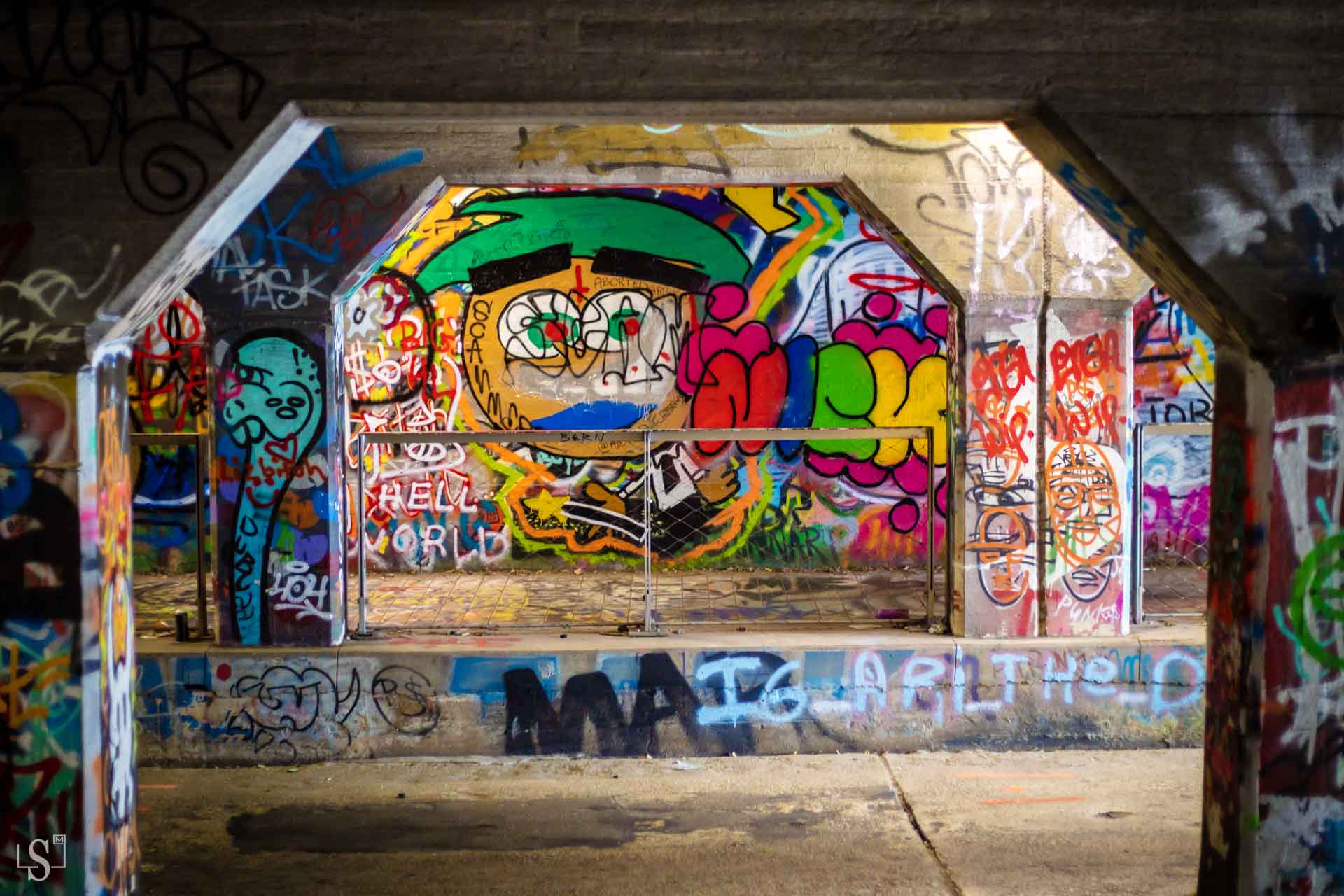
New layers often go up overnight; older pieces are covered within days. With little formal permitting, the tunnel rewards immediacy: artists respond quickly to protests, city debates, or viral moments. The result is a palimpsest—polished, large-scale figurative murals rubbing up against raw stencils, handwritten posters, and geometric experiments. Reading the walls is a way to read the city’s present tense.
Messages and motifs
Recurring themes have emerged across recent layers: political urgency; memory and mourning in the form of personal dedications; explicit critiques of displacement and development in nearby neighborhoods; and a noticeable turn toward Afro-diasporic visual languages. These motifs surface where redevelopment pressure meets a public surface that requires no gallery or corporate sponsorship to be seen.
Artists and audiences—an uneasy choreography
The tunnel’s informality fosters experimentation and collaboration but also sparks questions about authorship and ownership. Who paints whose story? When does a mural slide toward advertising? Longtime residents often treat the tunnel as a neighborhood asset and a place to preserve local histories; visitors treat it as an Instagram destination, which brings foot traffic and commercial attention. Those pressures shape what remains on the walls.
How to read it and where to see it
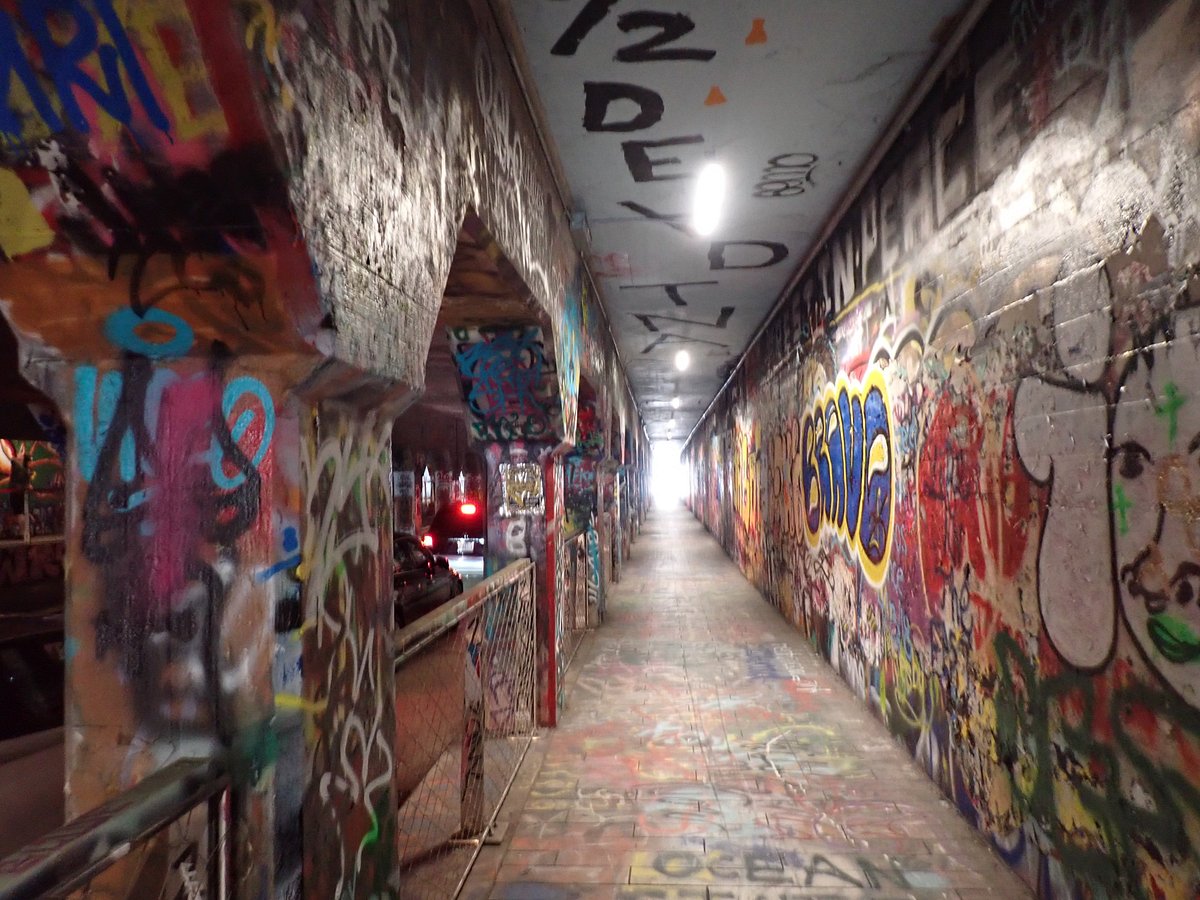
Access is easiest on foot from the BeltLine Eastside Trail. The tunnel runs beneath the rail line near Krog Street Market; the market’s website can help with orientation. The nearest MARTA stop is Inman Park/Reynoldstown on the Blue and Green lines.
Practical notes: the tunnel is open 24 hours; light is best in mid-morning or late afternoon. Night visits are common—bring a friend and be mindful of traffic at the entrances. Because murals change rapidly, frequent visits reveal the conversation in layers rather than single images.
Why it matters for Atlanta
The tunnel’s constant churn makes it one of the city’s most visible sites for unmediated public expression. Murals there educate, mourn, agitate, and archive local and national concerns in real time. As development reshapes the Eastside Trail corridor and nearby neighborhoods, the tunnel remains an informal laboratory for how public art amplifies voices that institutional spaces may overlook.
Indakno — Keeping you in the know.