



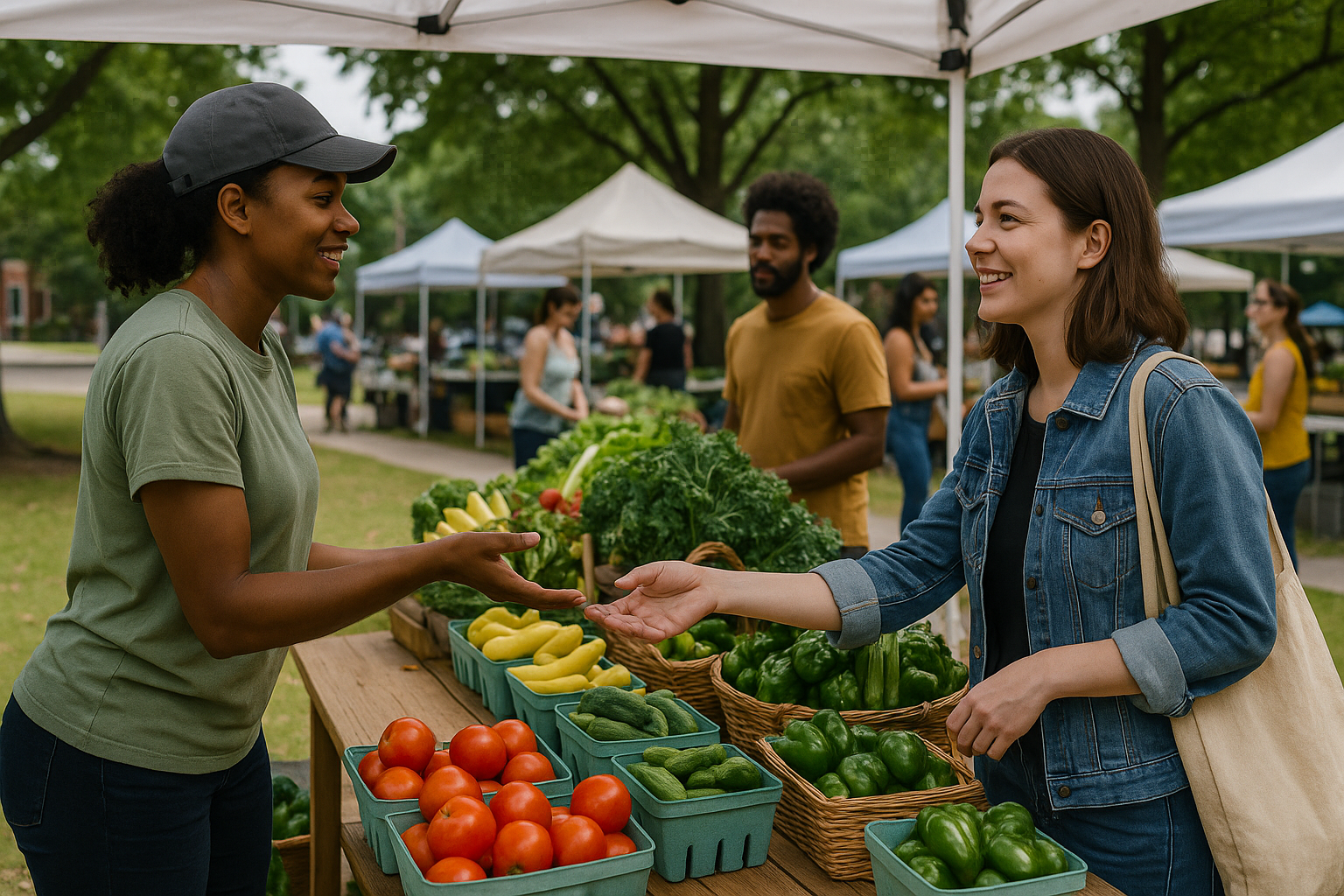
A neighborhood market in Adair Park offers more than produce tables and prepared foods. In Southwest Atlanta, spaces like this represent a more grounded version of the city’s growing food movement, one built around access, conversation, and local connection rather than scale alone.
On market mornings, the atmosphere feels practical and personal. Shoppers move from table to table picking up seasonal vegetables, baked goods, preserves, and small-batch prepared foods while talking directly with the people behind them. That exchange matters. Instead of food arriving anonymously through a supply chain, neighbors get recipes, storage tips, and a better sense of what is in season and how to use it at home.
That closeness between growers, makers, and residents is part of what gives neighborhood markets their value. For producers working in and around Southwest Atlanta, a local setup creates room to build relationships with repeat customers and introduce products in a setting that feels approachable. For shoppers, it turns routine buying into something more immediate and useful, especially for households trying to make fresh ingredients part of everyday meals.
The sustainability story here is also more practical than performative. It shows up in seasonal inventory, shorter travel distances, lower-waste packaging choices, and a sales model that keeps food closer to the communities buying it. In a neighborhood setting, sustainability is not just about image. It is about making local food feel normal, reachable, and worth returning for.
There is also a cultural layer that gives markets like this a distinct Atlanta identity. Bakers, cooks, and artisans often bring Southern technique, neighborhood flavor, and handmade craft into the same space. The result is not just a place to shop, but a place where culinary knowledge, creativity, and community memory stay in circulation.
That is why this matters beyond one weekend stop. As Atlanta’s food conversation continues to expand, Adair Park reflects a model that feels especially relevant for the city’s south and west sides: smaller, embedded markets that support micro-producers, encourage neighborhood spending, and make public space feel more useful in daily life. It is a reminder that sustainable food systems do not have to start with large institutions. Sometimes they start with folding tables, regular faces, and a neighborhood that shows up.
For Atlanta readers, that may be the bigger takeaway. In Adair Park, the value of a local market is not only what is sold there. It is the way it turns food, place, and community into part of the same conversation.
Indakno — Keeping you in the know.