



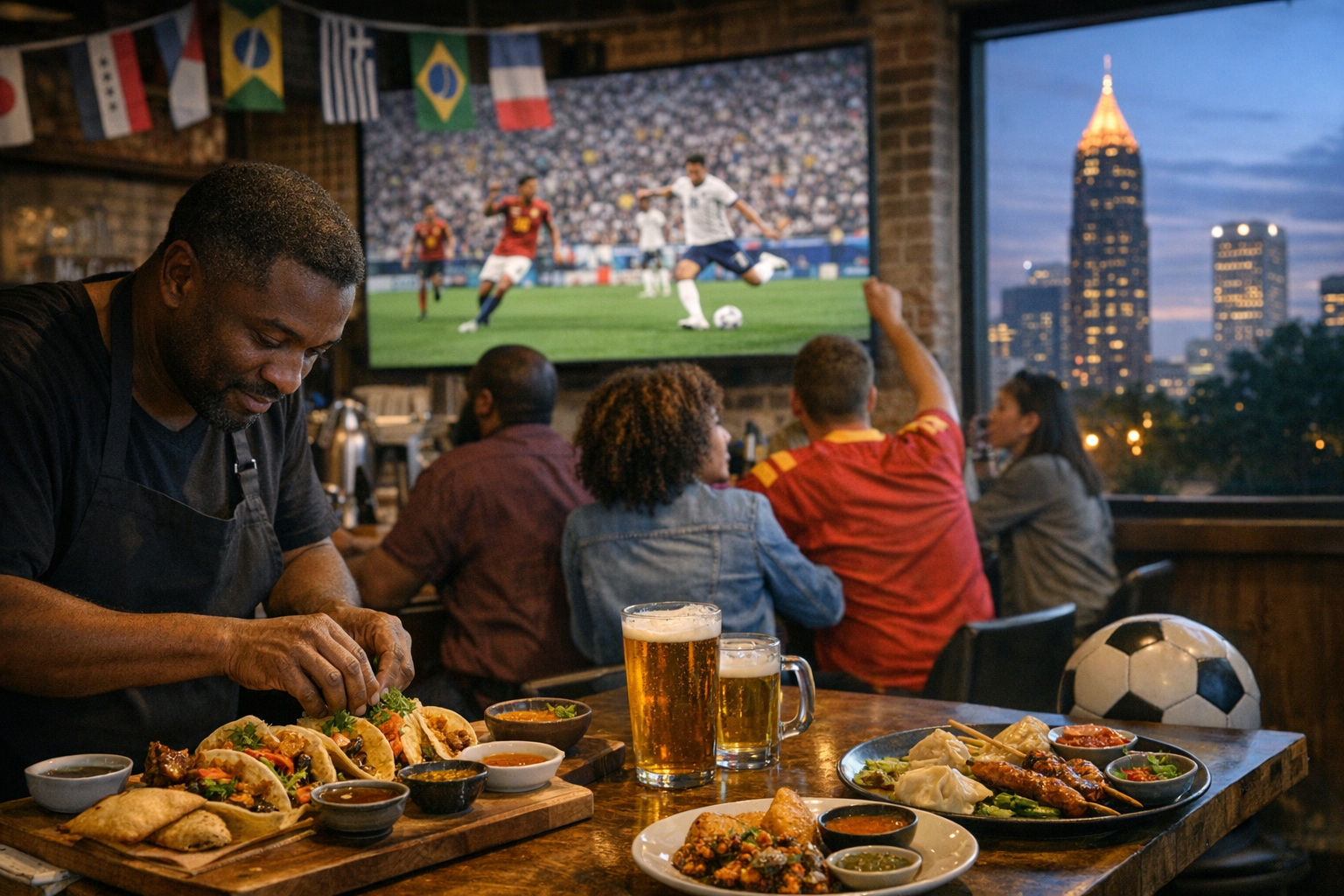
On a summer night in West Midtown, TVs flicker above a line of taps, the sound of the match bleeding into the clatter from the open kitchen. A cook in clogs leans on the bar with a plate of wings glazed just right, eyes locked on a last-minute counterattack. This is how Atlanta watches soccer: not in branded fan zones, but in the same rooms where the city eats best.
Atlanta will be a 2026 World Cup host city, but it already eats like every match is extra time. To watch the tournament the way Atlanta’s chefs actually do, you follow their routes: serious food, sharp drinks, and rooms that hum like a stadium concourse.
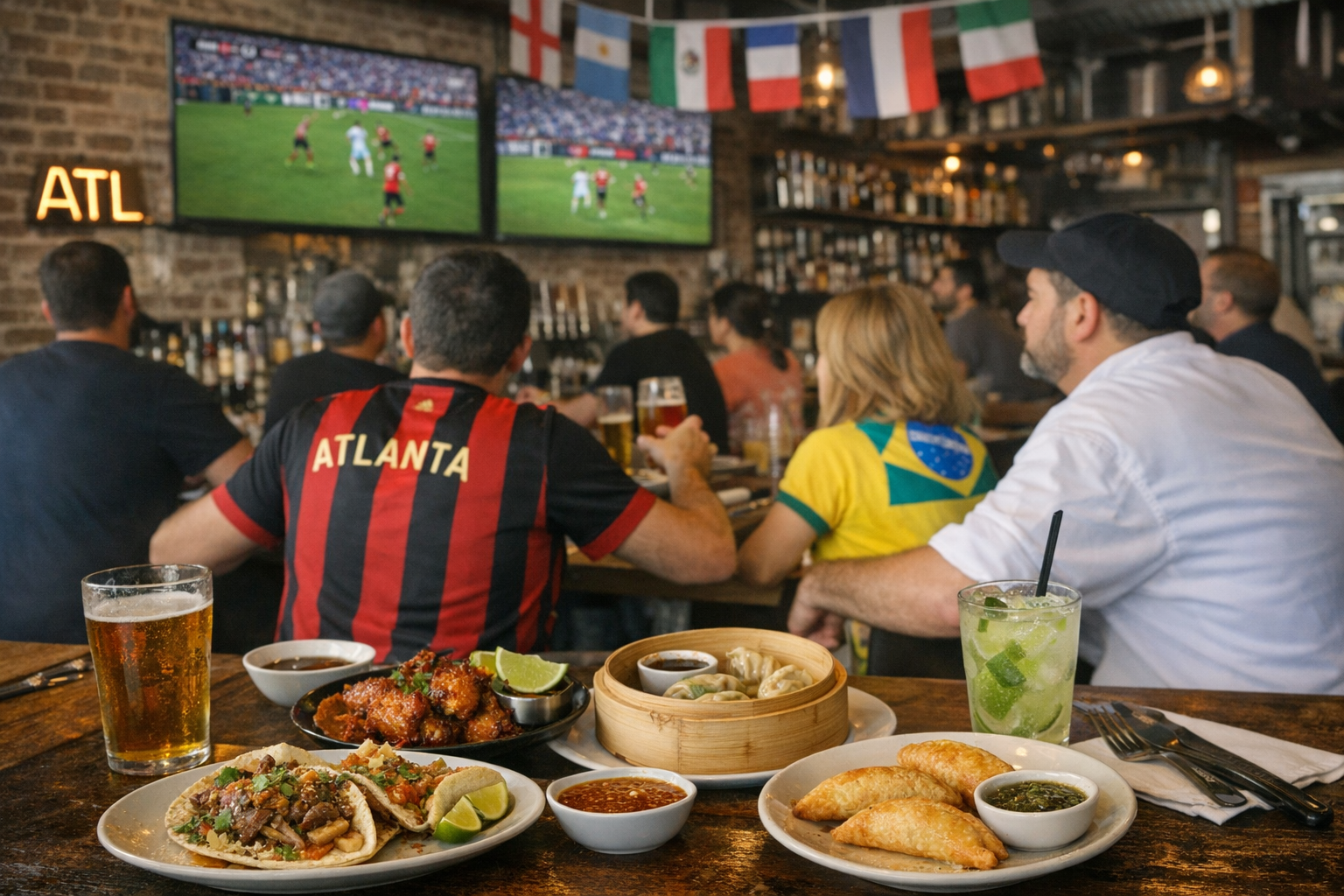
This isn’t a list of sports bars. It’s a field guide to World Cup viewing through the kitchens that run this town—places where the wings are cooked with intent, the tacos taste like travel, and the crowd feels as global as the tournament itself.
The Know
- What this is: A chef-minded way to watch the World Cup in Atlanta, built around real dining corridors and neighborhoods instead of generic fan zones.
- Who it’s for: Atlantans who care as much about what’s on the plate as what’s on the pitch—and visitors who want a local’s path through the city.
- How to use it: Pick a match day, choose one or two corridors (Buford Highway, Duluth, West Midtown, the BeltLine, Summerhill), and build your own “food bracket” around kickoff times.
- Need context: For a deeper dive into how global sports have shaped the city’s story, the Atlanta History Center and ArtsATL trace how soccer, music, and food intersect across the arts and history scenes.
The chef’s playbook
Navigating Atlanta during a World Cup takes a plan. Think like the people who cook here for a living.
- Think chef-first, not TV-first. Target spots where food is the point and the match is the soundtrack: Buford Highway taquerias, West Midtown brewpubs, Korean barbecue joints in Duluth, and BeltLine-adjacent patios.
- Work the radius, not the gate. Around Mercedes-Benz Stadium, assume packed rooms and soft menus. Eat in nearby neighborhoods, then ride in for kickoff.
- Let MARTA dictate the table. Aim for train-linked pockets—Decatur, Midtown, Inman Park, Downtown—and skip traffic and stadium food entirely.
- Match times = service times. Early kickoffs mean coffee counters, pastry shops, noodle houses, diners. Confirm hours and game coverage before you go.
- Off-hours are prime time. Late afternoons or after 10 p.m. are when the post-match rush thins and the cooks finally sit down to watch.
- Reserve for the knockouts. In Midtown, Old Fourth Ward, and Inman Park, the chef-driven rooms that roll out projectors for big fixtures will book like New Year’s Eve.
Where the industry actually watches
To move through a World Cup day like a local, think in corridors, not bar lists.
Buford Highway: the global group stage
Along Buford Highway, the World Cup feels permanent. Plazas stack regional Mexican next to Sichuan, Vietnamese, and Central American spots; grocery stores fly as many national flags as bars. Off-duty cooks come for serious food with minimal ceremony: late-night bowls of pho, al pastor carved to order, cumin-scented lamb skewers, Korean fried chicken and beer long after many intown kitchens close.
On match days, the TVs may be small, but you’re wedged into booths with families watching their national teams like it’s a civic duty. Treat the corridor like a group stage—tacos and a Mexico match in one plaza, bubble tea and South Korea on another screen a few doors down, then congee or hot pot as extra time.
Duluth and the Korean late-night circuit
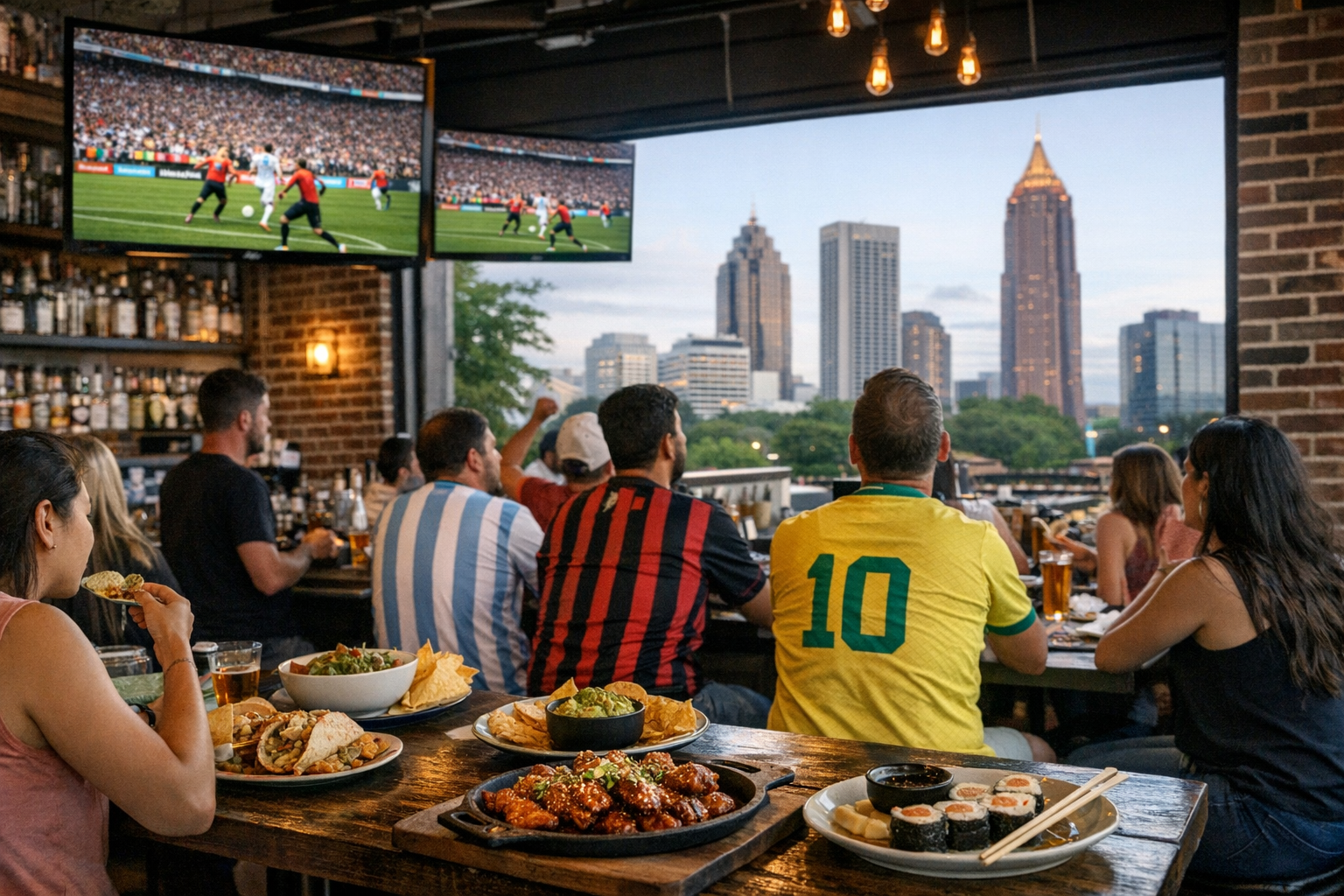
Farther north, Duluth’s dense Korean dining ecosystem runs on restaurant-industry hours: barbecue smoke after midnight, bubbling stews, icy soju, K-pop videos cutting to match highlights. For any South Korea fixture—or a late match you want to stretch into the night—this is where the service industry goes to refuel and decompress.
West Midtown, the BeltLine, and the stadium halo
West Midtown’s warehouses and lofts hide restaurants that double as after-shift sanctuaries. Breweries and taprooms here have leveled up their menus with brined wings, house-ground burgers, and pickles coming out of walk-ins, not warehouses; projectors drop for key matches, sound goes up, and the room often skews heavy on cooks just off the line.
On the Eastside Atlanta BeltLine, the path itself can feel like a slow-motion victory lap between viewing parties: first half at one patio, penalties at another. Industry folks often slip a block or two away—to neighborhood fixtures in Inman Park, Reynoldstown, Oakhurst, Decatur, or Old Fourth Ward—where execution stays tight even when half the dining room is craned toward a screen.
Closer to Mercedes-Benz Stadium and the old Turner Field, Summerhill has become a magnet for independent operators and pop-ups that care more about their mise than their marketing. Eating like a chef here can mean finding the room where the staff is sneaking glances at the screen between tickets. If the line cook is quietly tracking a South American qualifier while plating your empanadas, you’ve chosen well.
Build your World Cup food bracket
Use the match schedule as a menu and the city as your pantry. Start with coffee and pastry in a MARTA-linked neighborhood for the early kickoff. Drift to Buford Highway for an afternoon clash over noodles or tacos. Ride north for Duluth’s late matches and barbecue smoke, or loop back to a BeltLine patio for a twilight second leg.
Between fixtures, plug into the rest of the city’s culture: step into the High Museum of Art for a quick dose of visual art, or watch ArtsATL for festivals and screenings that turn match days into all-day neighborhood events.