



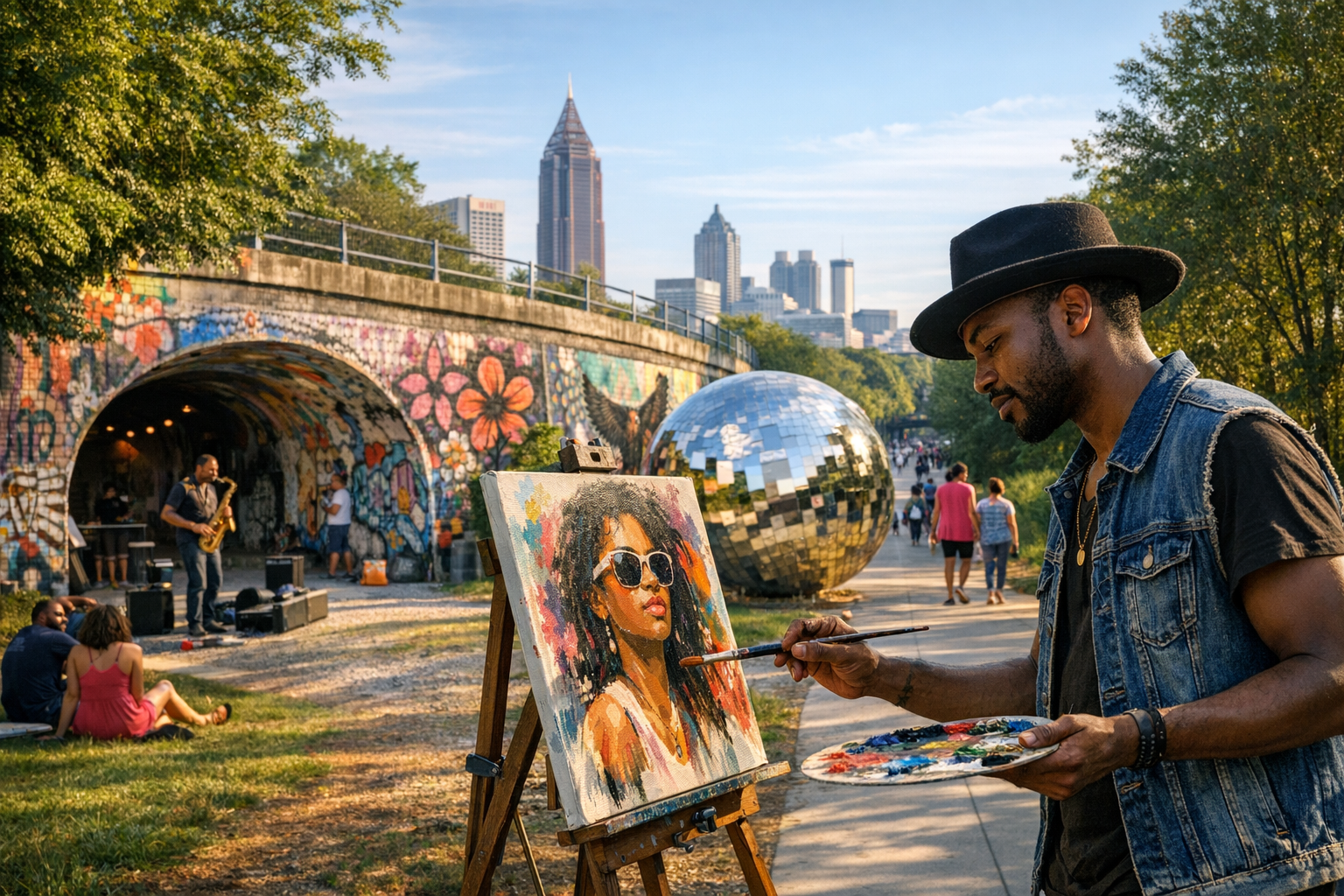
On a humid Tuesday night, a few dozen people climb the worn stairs above a storefront in South Downtown. Inside, a choreographer debuts a new piece in a room no bigger than a two-bedroom apartment. The soundtrack is a local producer’s unreleased tracks; dancers slip between folding chairs set so close you can hear them catching their breath. Someone from a Midtown museum is in the back row. So is a rapper off a Music Midtown bill, a public-school art teacher, a couple who wandered in after dinner on Broad Street. After the show, conversations spill onto the sidewalk as people trade Instagram handles and make plans for the next opening.
Scenes like this—small, specific, easy to miss—are how Atlanta keeps inventing itself. They’re also fragile. The people running storefront spaces, warehouse galleries, and black-box theaters are asking a blunt question: Will Atlanta sustain the arts ecosystem that makes the city feel like itself—or watch talent drift to cities that will?
The answer shows up less in murals and slogans than in ticket stubs and budgets: who gets paid, who can afford space, who still bothers to show up on a weeknight. Atlanta exports music, film, and design while the local ecosystem that grows that talent runs on razor-thin margins.
The Know: Where the pressure is building
Atlanta’s cultural life sits at the collision of rapid growth and flat support. Population and corporate power have surged; individual giving and steady audiences for local, non-touring work have not. The gap between consuming culture and actually paying for it keeps widening.
- Public funding is thin. Atlanta trails peer cities on dedicated arts funding. City and county arts budgets are modest and often squeezed first, leaving organizations dependent on corporate philanthropy and ticket sales—and exposed to every economic wobble.
- Real estate is the quiet threat. Rising rents in once-affordable corridors like Castleberry Hill, Old Fourth Ward, the West End, and West Midtown have pushed out the warehouse galleries, rehearsal studios, and black-box theaters that helped energize those neighborhoods.
- The work travels further than the money. From Art on the Atlanta BeltLine to contemporary Southern voices at the High Museum of Art, Atlanta art is in the national conversation—often without the financial backing that usually underpins that level of visibility.
- The decision point is local. This future will be shaped in Fulton County budget hearings, foundation boardrooms, corporate suites, zoning meetings, and by how often Atlantans buy tickets and memberships—not in Washington or New York.
Atlanta doesn’t need a new tagline; it needs new habits. Treat the arts not as an occasional upgrade but as neighborhood infrastructure that requires regular, local investment.
Atlanta’s backbone—and its R&D lab
Walk Peachtree between Midtown and Downtown and the official outline of Atlanta culture comes into view: the High, the Woodruff Arts Center campus, the Fox Theatre, the Alliance Theatre—anchors of the formal tier. In Buckhead, the Atlanta History Center tends the city’s civic memory. In Midtown, the Center for Puppetry Arts pairs Jim Henson’s creations with experimental work. Their longevity can make them feel immovable. They aren’t.
Meanwhile, another version of the city’s culture has grown along the Atlanta BeltLine, in South Downtown, on Westside rail corridors, and in DeKalb strip malls: DIY theaters, pop-up galleries, artist-run spaces, creative coworking hubs. They host experimental dance, Afrofuturist sound installations, indie comics, spoken word—projects that don’t fit neatly into grant categories. On paper, each space looks fragile. Together, they function as Atlanta’s R&D lab.
That lab operates closest to the edge. A modest rent increase can wipe out a studio collective in Westview or a rehearsal space on Memorial Drive. Insurance, permitting, and code compliance—handled by departments at major institutions—can shutter a small theater in Little Five Points or East Atlanta Village overnight. Many artists who eventually show in Midtown museums first hang work in rooms that survive month-to-month on landlord patience and founder hustle.
Between big institutions and DIY rooms is a middle layer of working creatives and interpreters: independent curators, neighborhood gallery owners, black-box directors, teaching artists, freelance critics. Here, dedicated arts journalism becomes a survival tool. Outlets like ArtsATL validate emerging artists, push audiences toward shows, and hold boards accountable. Without that coverage, quieter voices get drowned out by touring productions and franchised entertainment.
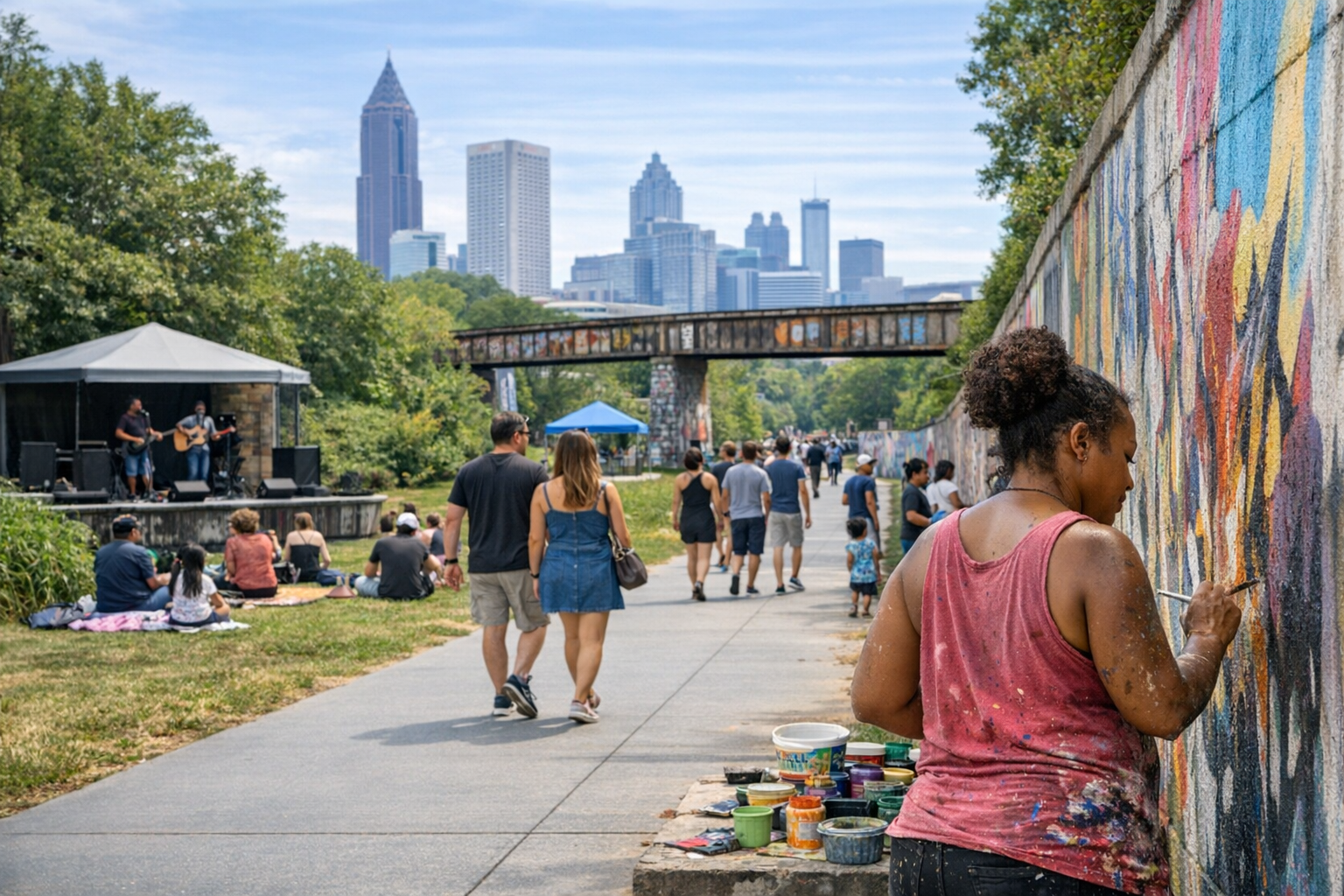
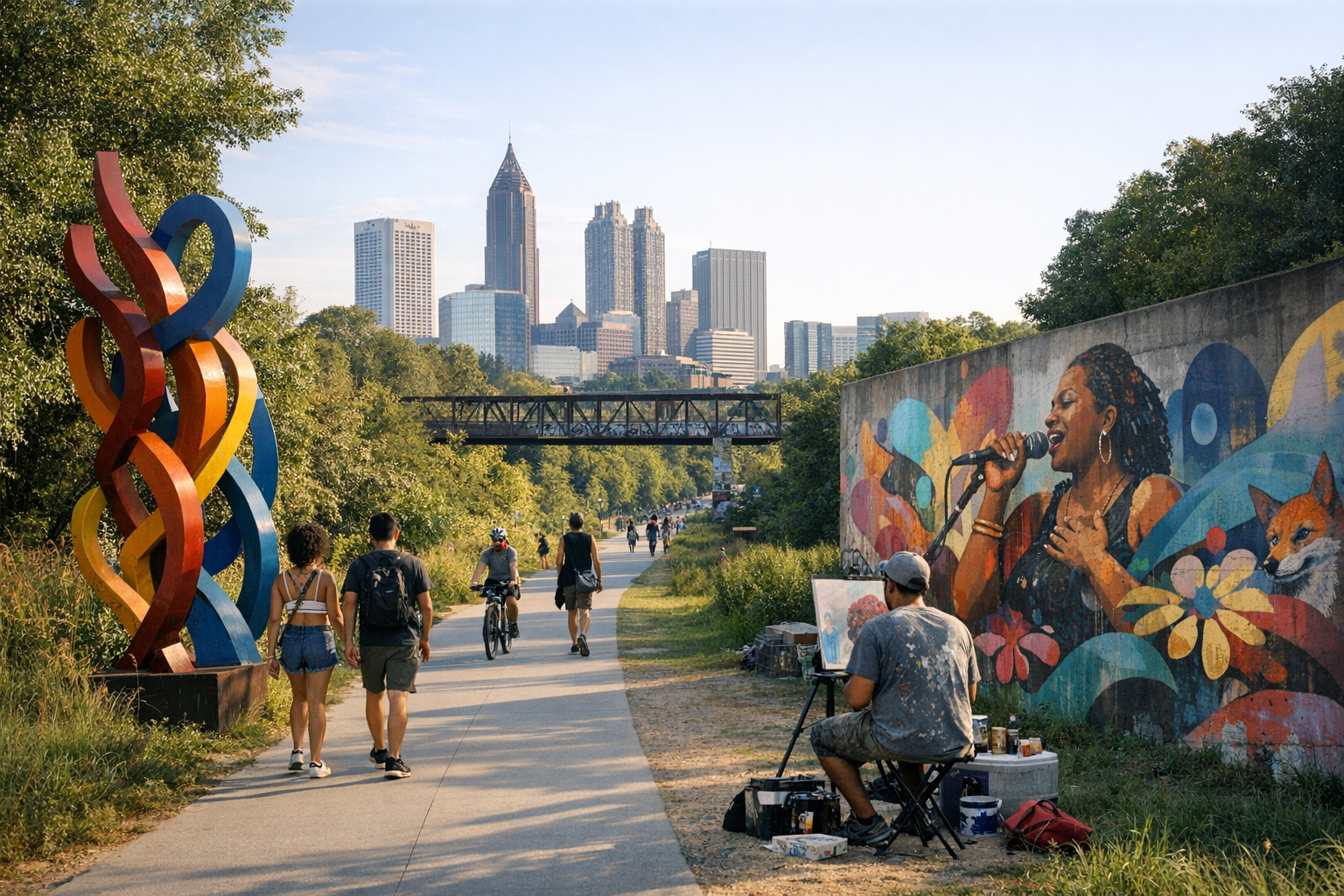
The BeltLine’s public art program has turned an old rail corridor into an open-air gallery, where a Sunday bike ride can run into a new mural, sculpture, or pop-up performance. For many residents, this is their most regular contact with local artists—access that matters, and that often masks how much unpaid labor and behind-the-scenes scrambling underwrites those moments.
Atlanta’s reputation in music and film—trap’s global reach, the presence of Tyler Perry Studios—can also create a misleading sense of security. Below the headlines are rehearsal rooms in East Point, dance studios in converted warehouses, recording booths above storefronts. A handful of highly visible entertainment wins is not the same thing as a stable arts ecosystem.
Your move: How to keep the creativity here
The survival of Atlanta’s creative class won’t hinge on a single bill or splashy grant. It will come down to thousands of choices residents, companies, and officials make in the next few years—not “Is Atlanta an arts city?” but “What kind of arts city are we willing to fund and protect?”