



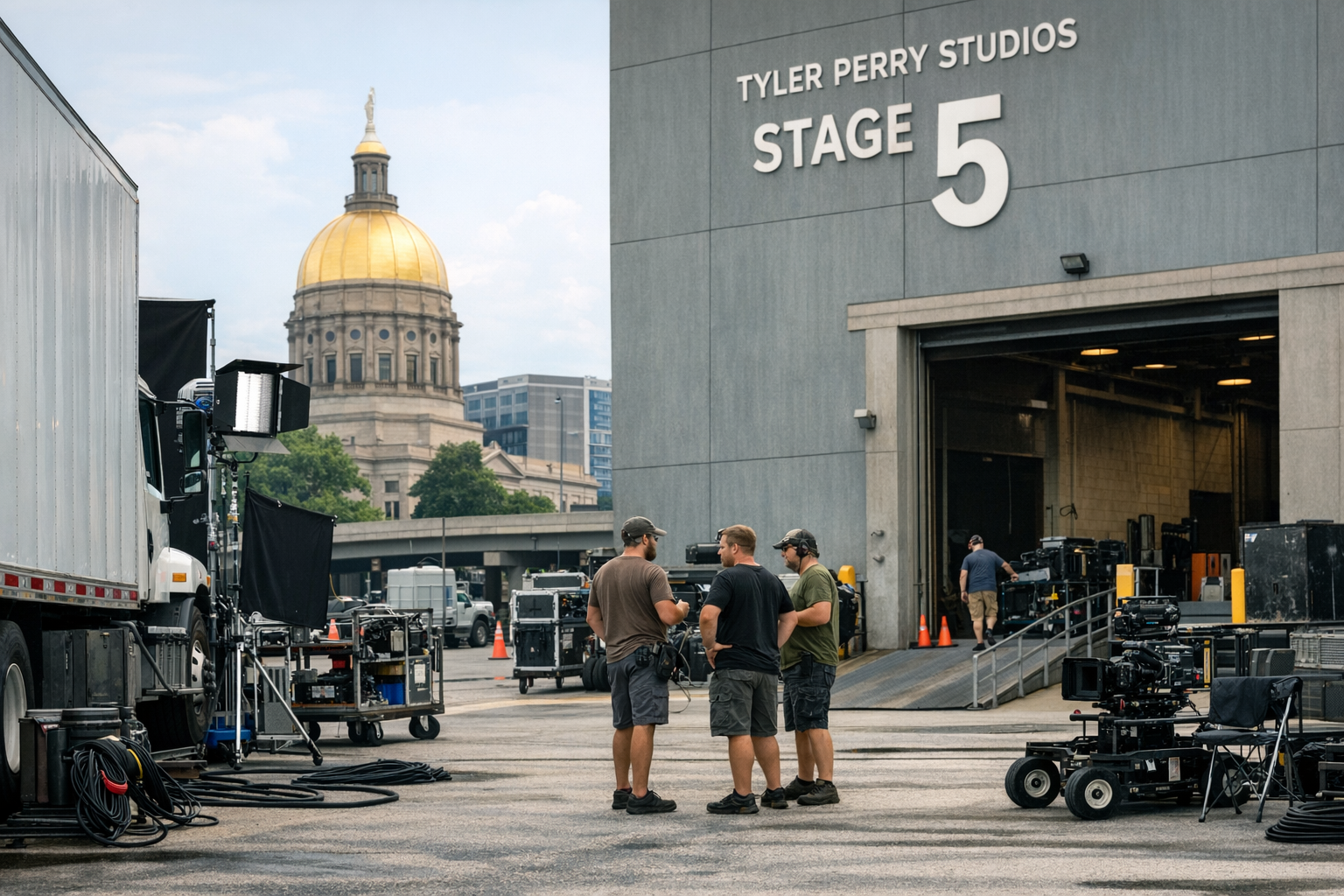
Atlanta’s film economy reaches beyond soundstages, shaping crew work, local vendors, and the everyday movement of hotels, trucks, kitchens, and neighborhoods across the metro area.
On a film day in Atlanta, the city does not just host production; it helps carry it. Soundstages, neighborhood streets, suburban blocks, loading docks, and back-of-house spaces all become part of the same working landscape. That reach is why film and television matter here as both creative output and economic activity. The industry ties together crew jobs, location scouting, transportation, hospitality, and post-production, while using Atlanta’s varied built environment to stand in for many different places on screen.
Fast facts
- Atlanta is a major Southeast production hub. The region is one of the Southeast’s most visible centers for film and television work, with production activity woven into the metro’s business and entertainment identity.
- The industry depends on more than studio space. A shoot in Atlanta reaches beyond soundstages to location filming, crew employment, vendors, and post-production activity that keeps work moving after cameras wrap.
- Production day supports a wide local service network. Hotels, catering, transportation, and other local services become part of the film economy, turning a set into a chain of support across the city.
- Atlanta’s built environment offers a flexible screen geography. Urban streets, distinct neighborhoods, and nearby suburbs give productions a range of looks without leaving the metro area, which helps crews move between settings efficiently.
- Film work now helps define how the city is known. What started as entertainment output has become part of Atlanta’s broader economic story, linking creative production to jobs, services, and the way the city presents itself to the country.
The Atlanta angle
The Atlanta film economy works like a city within the city. A production can begin on a soundstage, move to a neighborhood street for exterior shots, and then spill into hotels, catering kitchens, vans, and editing rooms before the final cut is ready. That mix matters in Atlanta because it spreads the work across many kinds of businesses, not just those tied directly to cameras and lights. It also means the industry leaves a visible trace in ordinary places: freight elevators, parking lots, corner sidewalks, and office parks that suddenly become part of a scene. For residents, that reach is part of daily urban life.
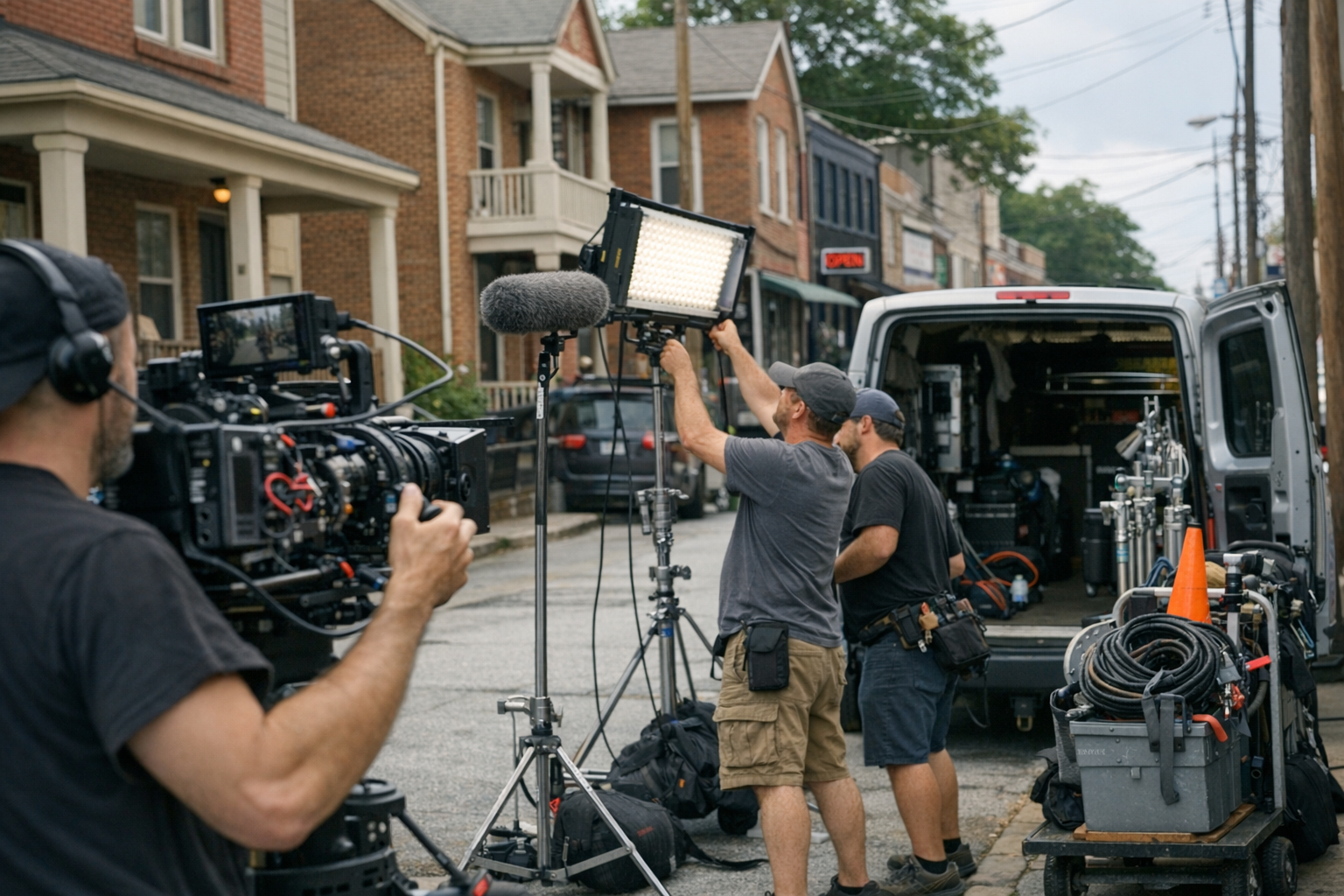
Atlanta’s appeal to productions comes from geography as much as scale. The metro offers downtown blocks, tree-lined streets, older neighborhoods, and surrounding suburbs that can each hold a different screen identity. That range lets crews build varied stories without rebuilding the world from scratch. Over time, the result has been more than a cluster of shoots; it has become a working part of Atlanta’s identity. The city is now known not only for what it shows on screen, but for the labor, logistics, and local services that make those images possible. That is why film production here reads as both culture and commerce.
Keeping You In The Know