



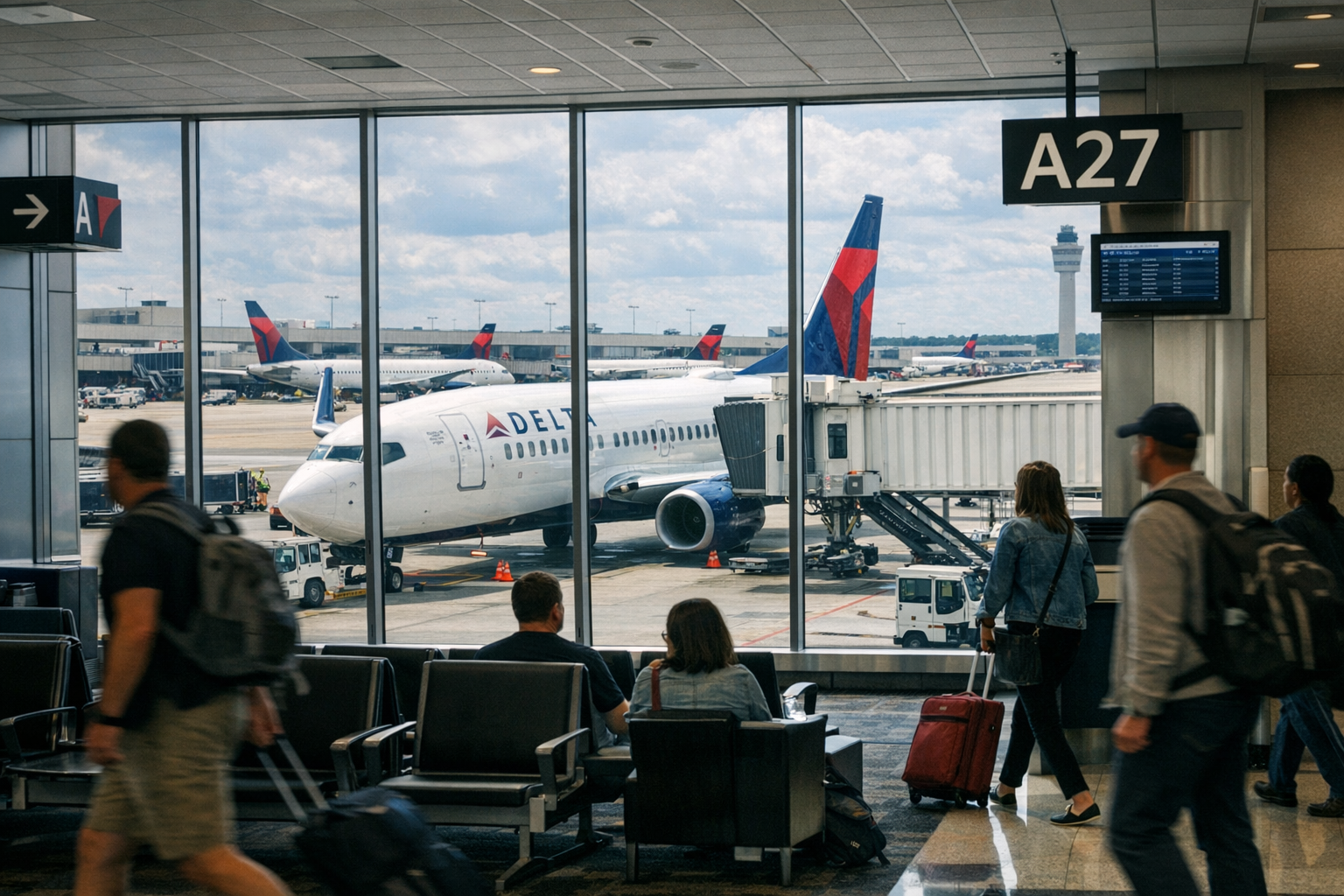
From check-in counters to connecting gates, Delta Air Lines helps shape how Atlanta moves through Hartsfield-Jackson. Its hub role affects travel, jobs, business trips, and the city’s reach far beyond the terminal.
At Hartsfield-Jackson, Delta Air Lines is not just a logo on a boarding pass. It is part of the daily rhythm of Atlanta’s airport, shaping how passengers move from curbside check-in to tight connections and long-haul departures. Because Atlanta is a major hub in Delta’s route network, the airline helps connect the city to domestic and international travel in a way that touches business, tourism, and the airport workforce. In Atlanta, Delta is part of the system as much as the schedule.
Fast facts
- Delta is one of Atlanta’s defining aviation brands. In a city built around movement, Delta is woven into the way Atlanta talks about air travel. Its presence at Hartsfield-Jackson is visible in terminals, gates, and flight boards, making the airline part of the city’s everyday airport language.
- Hartsfield-Jackson serves as a major hub in Delta’s network. That hub role gives Atlanta a direct place in Delta’s route map, with the airport acting as a central transfer point. For travelers, that means more connecting options and a familiar path through one of the busiest travel corridors in the city.
- Delta’s Atlanta operations link the city to domestic and international travel. From short regional flights to overseas departures, Delta helps place Atlanta in reach of more destinations. The airline’s presence at the airport supports the city’s connection to national business centers and global travel routes.
- The airline’s footprint affects airport jobs and daily operations. When a carrier has deep roots at a major airport, the effect extends beyond passengers. Delta’s Atlanta presence supports work across the airport ecosystem, from ground operations and customer service to the steady pace of services that keep departures moving.
- For many travelers, Delta is part of the Atlanta airport experience from start to finish. At Hartsfield-Jackson, the airline shapes what the trip feels like before takeoff. Check-in, security flow, gate changes, and connection timing all influence how travelers experience the airport, especially when Delta is the carrier carrying them through Atlanta.
The Atlanta angle
Delta’s role in Atlanta is easier to understand when you think of the airport as a working city inside the city. Hartsfield-Jackson is not just a place to leave from; it is a system of counters, concourses, runways, and connection points. Delta sits at the center of that system for many travelers, which is why its name comes up in conversations about business travel, conventions, and tourism. The airline’s reach helps determine how smoothly people can arrive, connect, and leave Atlanta, whether they are commuting for work or passing through on a longer journey.
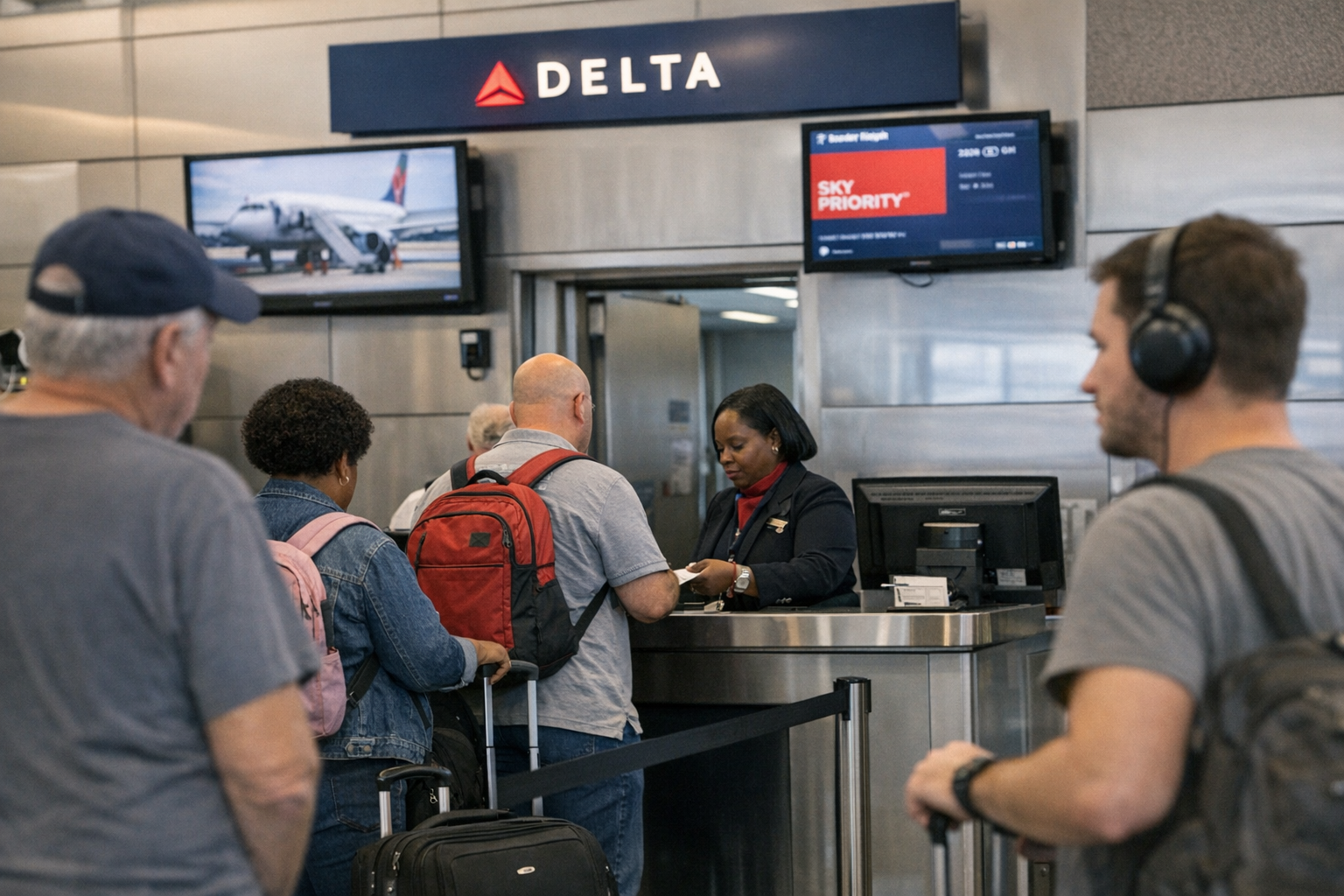
That influence also matters on the ground. A major hub creates demand for airport labor, support services, and the routines that keep a large terminal complex moving. It also shapes how visitors experience Atlanta as a destination, because the airport is often the first and last impression of the city. For residents, Delta’s presence is part of a larger pattern: Atlanta works as a transportation center because airlines, airport staff, and travelers all pass through the same shared spaces. In that sense, Delta is not separate from the city’s identity. It is one of the ways Atlanta stays connected.
Keeping You In The Know