A concise guide to how Atlanta’s airport moves people, conventions and big productions — and what local travelers should know when they arrive or connect.
Hartsfield‑Jackson Atlanta International Airport is the hinge that connects the city to visitors, conventions and touring industries. For Atlantans, working knowledge of how ATL organizes terminals, transportation and cargo routes pays off whether you’re picking up a visiting colleague, meeting a band’s tour truck, or making a same‑terminal connection.
Fast facts
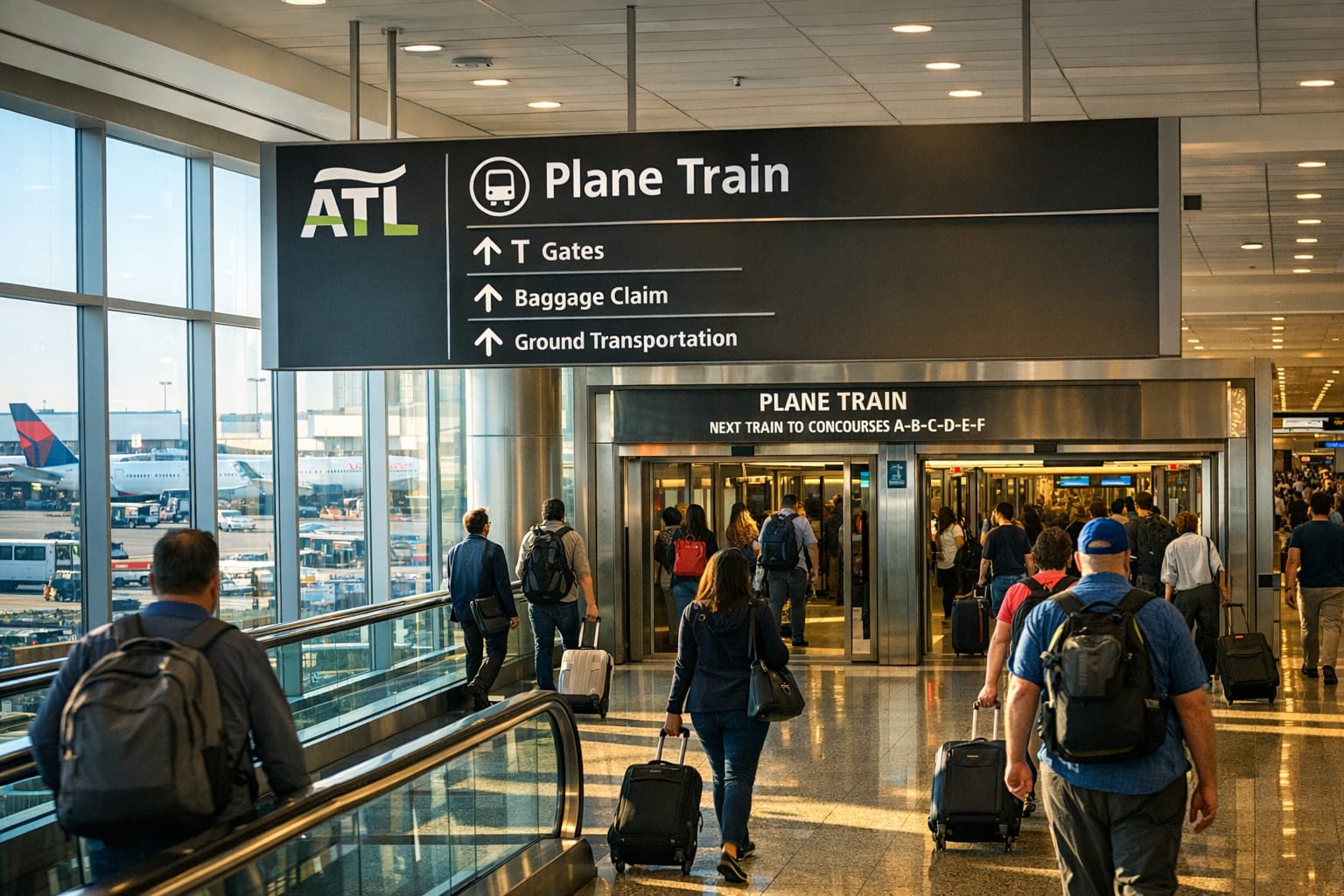
- Terminal layout and transfers are built around a centralized people‑mover and linked concourses. Travelers move between landside areas and multiple airside concourses via the Plane Train plus pedestrian corridors and moving walkways; that arrangement lets many connections happen without leaving the secured area, so check your departure concourse before you leave the gate area.
- Ground transportation is zoned and distributed — plan where to meet or be picked up. The airport separates curbside zones for drop‑offs, dedicated rideshare pick‑ups, bus and coach areas, and a rental‑car center that’s linked with a people‑mover; for event nights or busy travel periods, using the designated pick‑up area listed on your airline or rideshare app avoids delays and extra walking.
- Beyond passengers, the airport’s logistics support events, tours and productions arriving with heavy gear. Cargo handling, apron access and charter services at the airport make it practical for bands, touring crews, sports teams and film productions to bring bulky equipment and vehicles into the region — that same capacity feeds the city’s attractiveness as a destination for conventions and large events.
- Concourses hold a mix of local dining, airline lounges and traveler services arranged for high‑volume flow. Food, retail and lounge options are distributed across concourses so people in transit can find services near gates; signage, accessibility ramps and seating clusters are placed to manage large volumes, so consult concourse maps and lounge access policies if you need a specific service before a tight connection.
The story behind it
The airport’s physical layout is designed around moving people efficiently through a handful of concourses that radiate from central landside facilities. The Plane Train and covered walkways are the practical backbone: they let passengers transfer between distant gates without re-clearing security, and they concentrate wayfinding and services along predictable corridors. That matters on busy days — if you know which concourse your airline uses, you can minimize time spent navigating crowds and moving walkways and find the right dining or lounge options close to your gate.


On the ground side, ATL functions like a city transit node. Curbside is divided into distinct zones for drop‑offs, rideshare pick‑ups, shuttle coaches and long‑term parking, while the rental‑car center is connected by an automated people‑mover to the terminals. For anyone meeting arriving guests or coordinating large equipment deliveries, using the airport’s designated loading and pick‑up points speeds the process and keeps traffic moving. On event days — when conventions, sports matches and concerts converge — expect heavier curbside congestion and allow extra time for vehicles to reach the correct zone.
The airport’s infrastructure also supports the behind‑the‑scenes logistics that keep Atlanta’s convention, sports, music and film business humming. Cargo ramps, apron space for charters and coordinated ground operations let production teams and touring companies unload oversized gear with fewer stops between air and road. That operational capacity is part of why promoters, event planners and production managers route large arrivals through ATL rather than using more peripheral airports: the terminal and ground systems are built to absorb high volumes of people and freight, which in turn connects directly to hotel blocks, convention centers and studio facilities across the metro.
If you’re an Atlanta local who uses the airport frequently: check your airline’s concourse assignment before travel, confirm the specific rideshare or curbside meeting point your guest should use, and consult ATL’s maps for accessible routes and lounge locations. Those small moves save time and keep weekday commutes and major‑event pick‑ups from becoming a day‑long logistical headache.
Keeping You In The Know