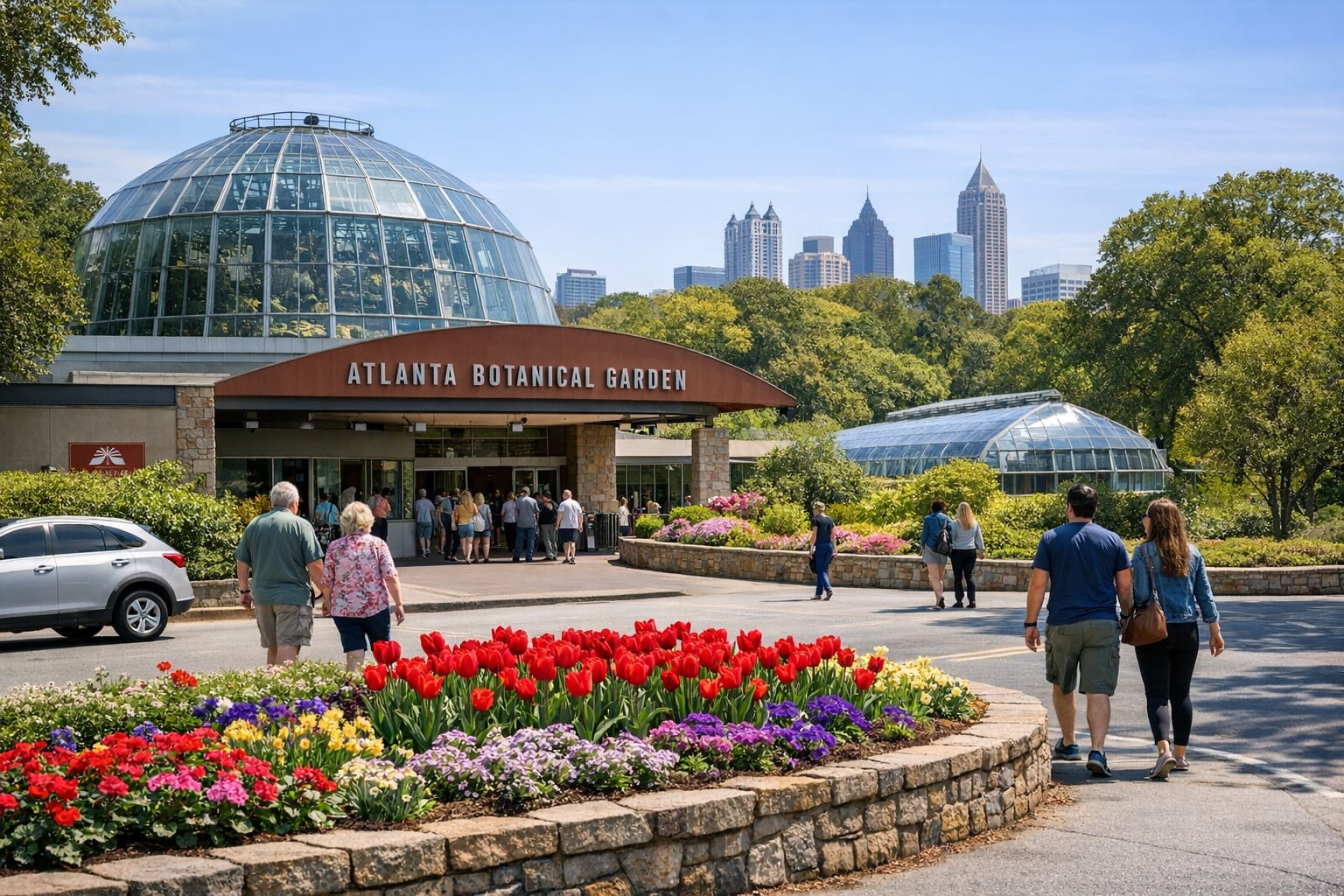
A Midtown green space where plants, seasonal exhibitions and conservation work meet Piedmont Park’s daily life.
The Atlanta Botanical Garden sits next to Piedmont Park in Midtown and operates as a hybrid public garden, exhibition venue and conservation hub. It’s a place Atlantans use for quick weekday breaks, weekend family time and scheduled visits tied to changing seasonal displays and art installations.
Fast facts
- Where it sits and how to get there. The Garden is located along Piedmont Avenue beside Piedmont Park in Midtown, making it an easy walk from the park and a short ride from nearby MARTA stations and BeltLine access points. The property lists street-level visitor information, including its address and on-site entry points that connect directly with Midtown’s pedestrian corridors.
- Daily operations and tickets. The Garden posts regular visiting hours and a ticketing page for advance purchase; its schedule shows that public access is concentrated on specific open days each week and that timed-entry tickets and membership options are available for frequent visitors. Check the site before you go for current hours, special-event closures and ticketing requirements.
- Collections and exhibition mix. Indoor conservatory spaces (including a tropical rotunda and orchid center) and curated outdoor gardens host rotating plant displays alongside long-term installations and temporary art shows. The campus blends horticultural collections — roses, conifers, Japanese and desert collections among others — with exhibition programming and a named glass-sculpture collection and seasonal art projects.
- Conservation, education and expansion plans. Beyond visitor displays, the Garden supports conservation science and education through a regional center focused on genetics, restoration and outreach, and it is planning a transformation of a BeltLine–Piedmont corridor parcel to expand public-facing gardens and programming in Midtown. Those initiatives link the Garden’s on-site learning with broader urban-restoration and city-access goals.
The story behind it
Practical planning is straightforward: the Garden publishes its opening days and hours and sells timed-entry tickets and memberships on its website. That matters for weekday commuters who want a short walk through outdoor gardens as well as for people arranging group visits or attending evening events. On-site amenities listed online — from dining and a gift shop to guided tours and rentable spaces — give readers a sense of what to expect besides plant displays.


The visitor experience on any given day blends living collections with creative programming. Conservatory spaces shelter tropical and orchid displays, while outdoor rooms — like a skyline garden and storied seasonal beds — rotate plantings to match the calendar. The organization also programs large-scale sculpture shows and seasonal lighting exhibitions; those temporary installations change how the pathways and lawns feel, and they often require separate ticketing or queueing at peak times.
Behind the scenes, the Garden’s conservation and education work ties its Midtown presence to regional stewardship. A dedicated center advances conservation genetics and restoration projects, and the institution runs camps, classes and outreach for schools and adults. Its stated plans to develop adjacent land toward BeltLine-facing gardens aim to strengthen pedestrian connections and programming in one of the city’s busiest public-space corridors, signaling that the Garden is as much about civic access and research as it is about seasonal color and exhibitions.
Keeping You In The Know