



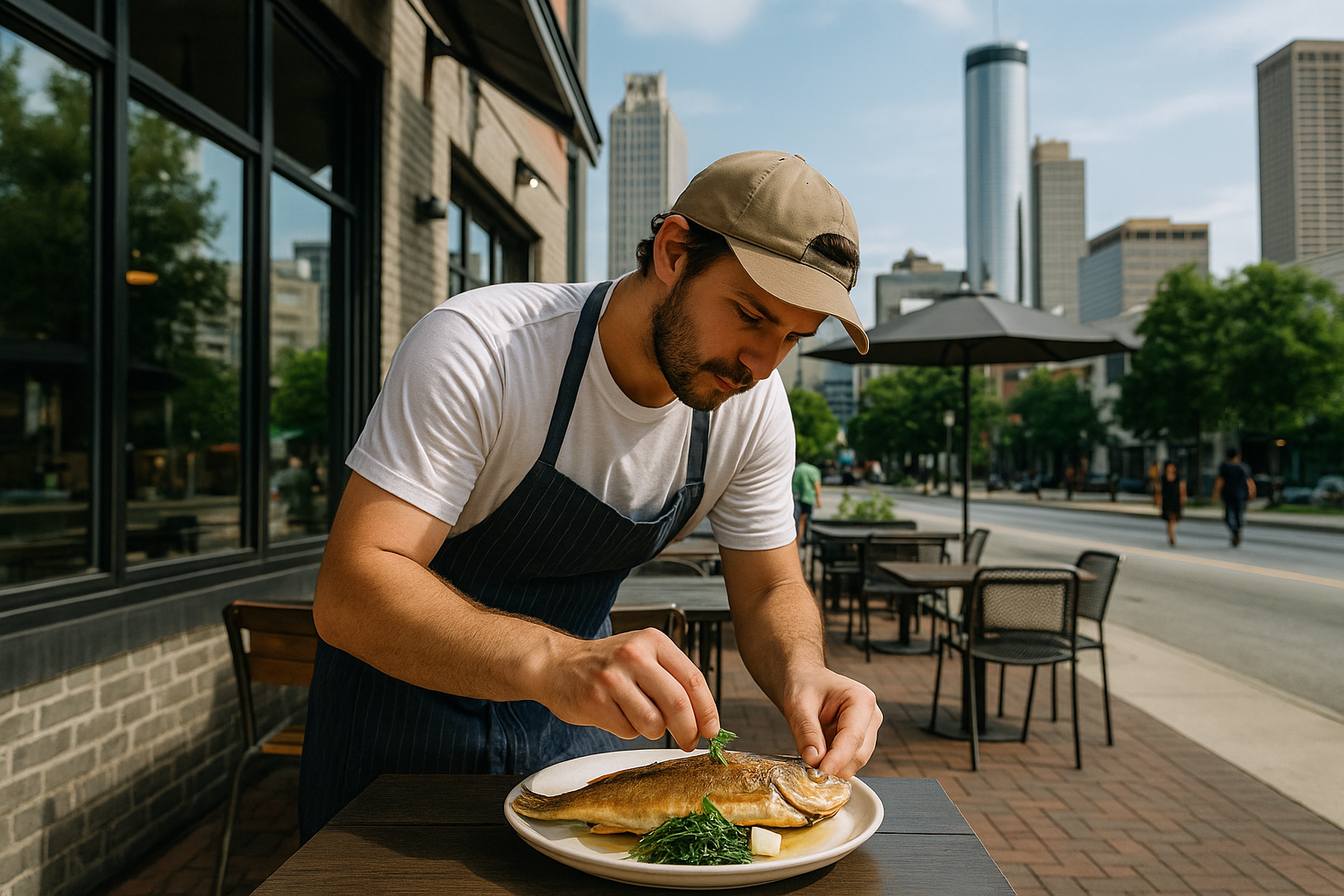
Atlanta chefs are rethinking what seafood looks like in an inland city, putting responsibly sourced trout, catfish, bass, and other freshwater fish from Georgia and the wider Southeast at the center of the plate. For diners, that can mean clearer sourcing, fresher flavor, and menus that feel more rooted in the region.
That shift lands especially well in Atlanta, where coastal cravings have long met inland reality. This is a city that loves raw bars and seafood towers, but it is also one where farmers market culture, regional pride, and sustainability have become a visible part of how people eat. In that context, freshwater fish is starting to read less like a substitute and more like a point of view.
From regional staple to modern menu
Southern freshwater fish is hardly new. Catfish, trout, bream, and striped bass have long been part of the region’s cooking vocabulary, from fry nights to more formal dining rooms. What feels current is the framing. Chefs are treating those fish with the same care and polish once reserved for imported standbys, and diners seem increasingly ready for it.
In practice, that can look like mountain trout in a delicate broth, smoked fish preparations, or crisp-skinned catfish plated with market vegetables instead of the usual fry-house setup. The strongest dishes do not try to make freshwater fish into something else. They lean into what makes it distinct.
That sensibility fits a broader recalibration already underway in Atlanta restaurants. Menus have become more explicit about sourcing, seasonality, and waste, and diners are more comfortable asking where their fish came from and how it was raised or caught. Freshwater species fit naturally into that conversation.
Why it resonates now
The case for freshwater fish is partly environmental, but it is also practical. Seafood flown long distances, overpressured species, and vague sourcing can feel out of step with the values many restaurants now claim. Fish from Georgia and nearby states can offer shorter transit times and a clearer sourcing story. That does not make every local choice sustainable by default, but it gives chefs a stronger chance to build with intention.
Atlanta diners are already primed for that language. At places like Freedom Farmers Market, shoppers regularly encounter the vocabulary of seasonality, stewardship, and regional food systems. Restaurants are increasingly applying that same scrutiny to seafood.
There is a local logic to it, too. Atlanta has a global dining scene, but it has also been sharpening its regional identity. Menus built around Southern freshwater species suggest a style of dining that feels polished without drifting into placelessness.
What chefs are doing with it
The chefs helping shape this shift are not all coming from the same angle. Some start with sustainability and responsible aquaculture. Others are working from Southern foodways and cultural memory. Many are doing both.
What connects them is a refusal to frame sustainable seafood as a compromise. In many Atlanta dining rooms, freshwater fish is showing up not because it stands in for something better, but because chefs believe it belongs there. You can see that in the language on the menu, in the specificity around species and origin, and in how confidently staff can explain the choice.
For diners, the useful cue is simple: pay attention to what a restaurant says about the fish on the plate. When menus name the species and source, that usually signals care. As more Atlanta restaurants tighten that sourcing language, regional freshwater fish appears poised to become a more familiar part of the city’s dining rhythm.
If you want to eat a little more intentionally, start there. Ask where the fish came from. Notice which restaurants treat regional freshwater species with confidence instead of apology. In a city still shaping its next food chapter, that choice is helping define what Atlanta tastes like now.
Indakno — Keeping you in the know.