



By Urbanize Atlanta Staff · Business · [Dateline]
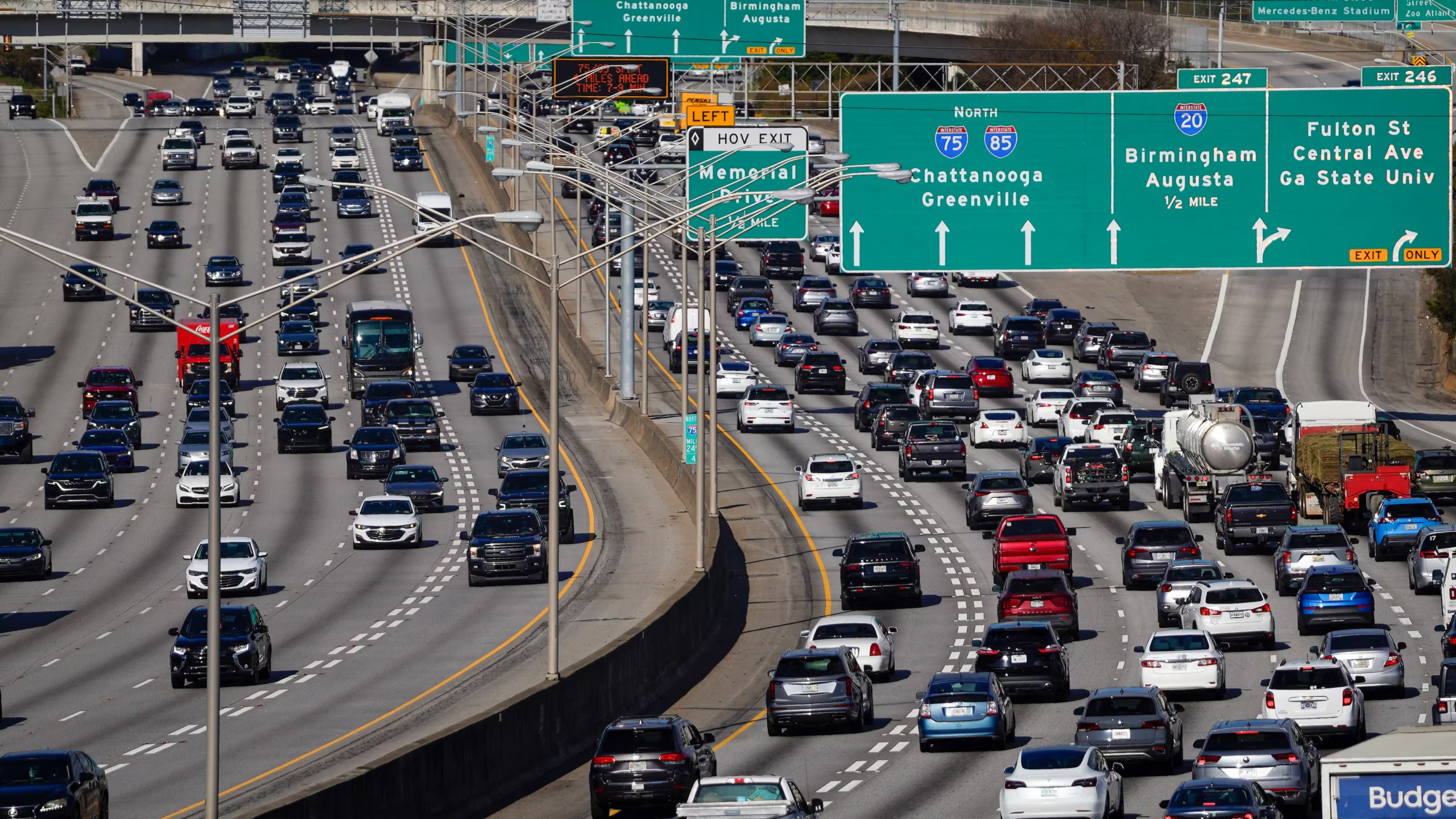
A new national congestion study highlighted by Urbanize Atlanta quietly rewrites one of metro Atlanta’s longest‑running narratives: the region no longer ranks among the five worst U.S. metros for traffic.
The jams are still there. The Connector still stalls, the top end still crawls. But where Atlanta once hovered near the top of “most gridlocked” lists, the study now shows it slipping a notch—still congested, newly eclipsed by older, denser metros and faster‑growing boomtowns.
The Know: Atlanta’s new traffic reality
The latest rankings move metro Atlanta out of the Top 5 most congested U.S. metros while keeping it firmly in the “still bad” tier.
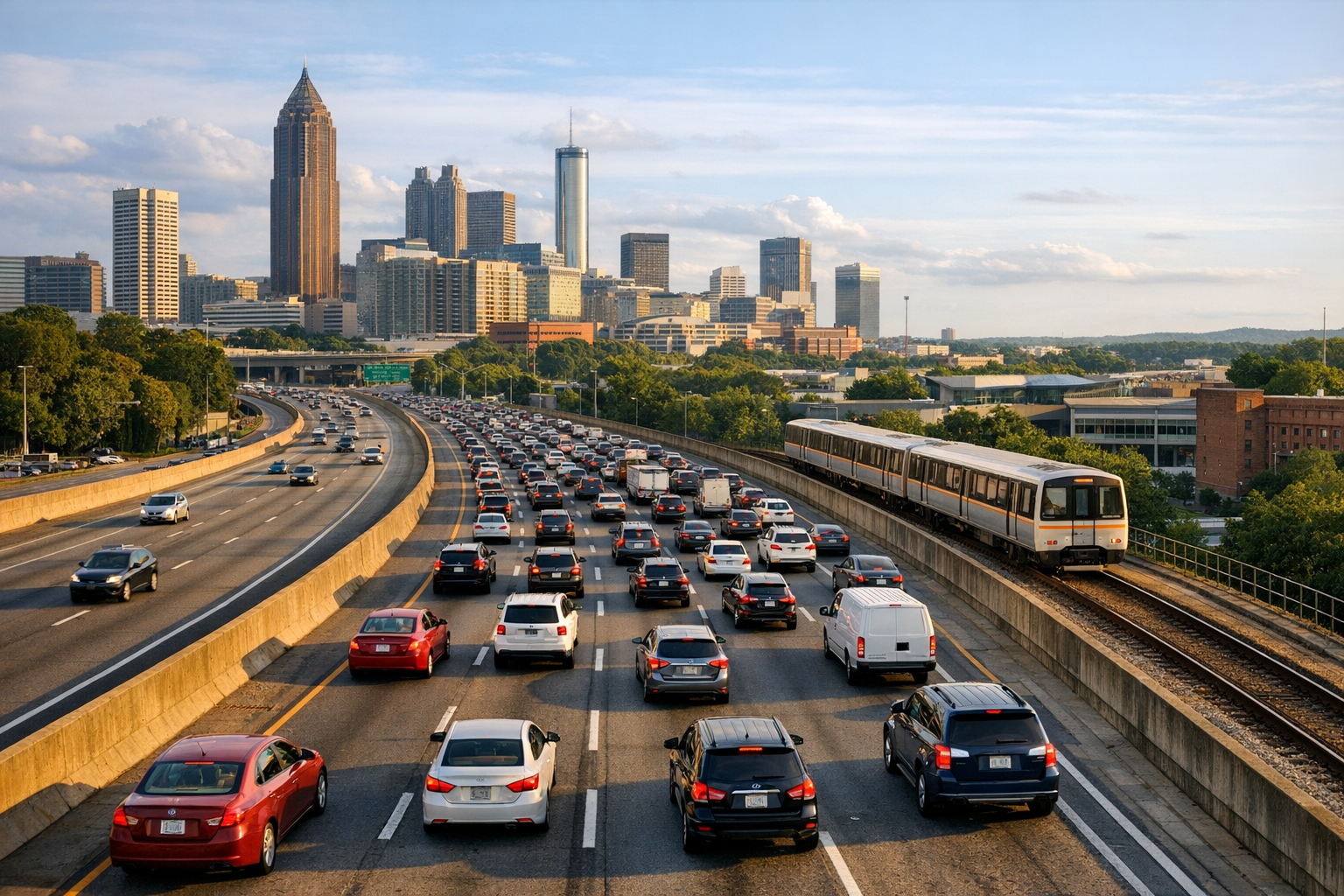
- Not the worst of the worst. Measured by hours lost in congestion and daily delay per driver, Atlanta now trails gridlock leaders such as Chicago, New York, and Los Angeles, but remains near the top.
- Same pressure points. The Downtown and Midtown Connector (I‑75/85), the top end of I‑285, I‑20 near Downtown, and the Buford Spring Connector into Buckhead still carry much of the pain.
- Hybrid work shaved the peaks. Midtown, Buckhead, and Perimeter Center now see their heaviest office traffic Tuesday through Thursday, with softer Mondays and Fridays that flatten—but don’t erase—traditional rush hours.
- The stigma lingers. For relocation consultants and site selectors, “Atlanta traffic” remains a reflexive warning. The new ranking simply arms civic boosters to argue: Atlanta is bad, but not uniquely so.
What’s actually changing on the ground
The downgrade in the “hall of shame” stems less from one marquee project than from reshaped travel patterns and other metros getting worse, faster.
Pandemic‑era workweeks stuck. Corporate Atlanta rebuilt schedules around flexibility. Instead of one tidal wave into Downtown and Midtown every morning, car volumes are spread across more hours and days. Peaks are softer, and some trips disappeared altogether.
Multiple “mini downtowns” diffuse demand. Dense, mixed‑use districts keep more people closer to where they work and go out. In‑town nodes such as Old Fourth Ward, Reynoldstown, and Inman Park pair BeltLine access with apartments and creative offices, while West Midtown’s tech‑and‑design corridor along Howell Mill lets more workers avoid the Connector. On the Northside, The Battery Atlanta, Avalon in Alpharetta, and downtown Woodstock give residents more reasons to stay local.
Transit, trails, and “15‑minute” neighborhoods chip away at car trips. The Atlanta BeltLine absorbs a growing share of errands and commutes in Poncey‑Highland, Reynoldstown, and West End. MARTA‑linked development at Edgewood/Candler Park, King Memorial, and Chamblee shows how housing and retail at stations can dilute car dependence, while inside‑the‑Perimeter neighborhoods such as Summerhill, Grant Park, and Adair Park increasingly offer enough everyday amenities that long freeway commutes are less central to daily life.
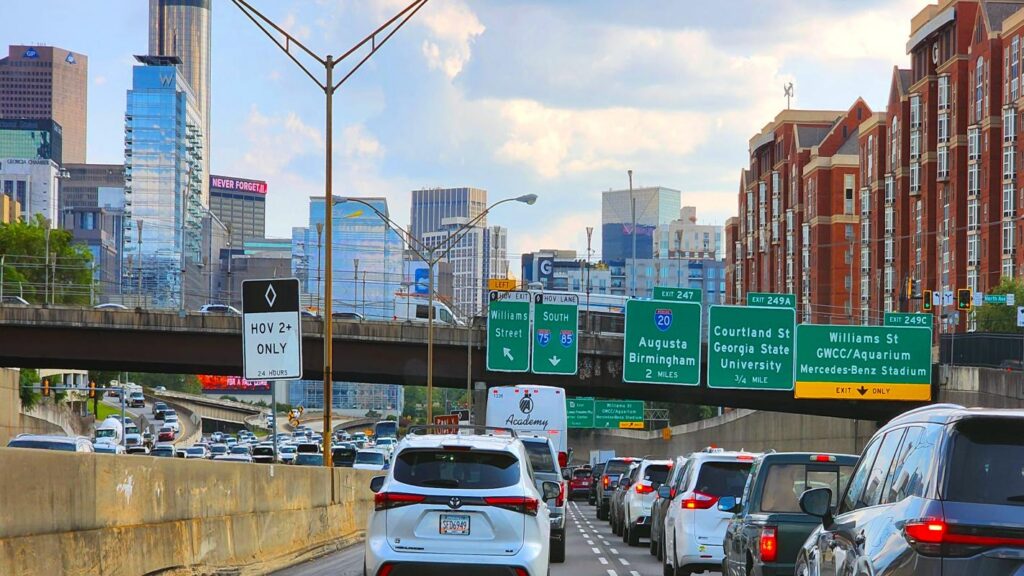
Targeted road projects ease chokepoints. GDOT’s reversible express lanes on I‑75 and I‑575 north of the city and on I‑75 south give paying drivers a release valve, siphoning part of the backup from general lanes. The ongoing rebuild of the I‑285/GA‑400 interchange targets one of the region’s worst knots at Perimeter Center and North Fulton. Meanwhile, fast‑growing metros including Austin, Miami, and Seattle have overtaken Atlanta on congestion metrics as they add people and cars faster than infrastructure.
Why it matters for deals and neighborhoods
Atlanta’s pitch has long mixed opportunity with aggravation: global airport, big‑name employers, film sets—and commutes that test patience. Dropping out of the Top 5 doesn’t erase that, but it changes how the region sells itself and how neighborhoods evolve.
Commutes are now part of the amenities war. When companies compare Class A towers in Midtown, glass at Perimeter, or West Midtown lofts, MARTA access, walkability, and BeltLine proximity now sit beside rent and parking ratios. Employers layer in shuttle links to rail, bike facilities, and flexible hours to win workers reluctant to drive in from exurban counties five days a week.
Neighborhoods capture weekday spending. As more Atlantans live and work within tighter radiuses, neighborhood districts depend less on weekend surges. Summerhill’s restaurants, Reynoldstown’s coffee shops and breweries, and BeltLine‑fronting retailers gain when nearby residents are not burning weeknights in I‑20 or Connector traffic.
The next wave will lock in today’s trends—or reverse them. The Stitch, a proposed cap over the Downtown Connector, would reconnect severed streets and create new real estate above the freeway trench, potentially shifting some trips to a denser, more walkable grid. Planned express lanes along I‑285’s northern arc, plus reworked junctions where I‑20 meets I‑285 east and west, are already influencing where logistics hubs, studios, and warehouses choose southside and westside locations. Planned MARTA bus rapid transit lines and higher‑frequency buses will help determine whether non‑drivers get credible alternatives—or only better renderings.
A less‑awful ranking makes metro Atlanta more marketable, but it can also dull urgency for big transit and land‑use decisions. Growth is still coming; whether today’s “not Top 5” status holds will hinge on how quickly the region acts.
The Know
- Who or what to know: The national congestion study highlighted by Urbanize Atlanta.
- Where it connects: Policy debates around MARTA expansion, express lanes, and major projects like The Stitch and I‑285/GA‑400.
- Why now: The findings arrive amid a reshaped workweek, record in‑town development, and new infrastructure commitments.
- Reader takeaway: Atlanta traffic is still a headache, but no longer a national outlier. For residents, employers, and investors, the next decade of transit and land‑use choices will decide whether this is a blip—or a competitive advantage worth protecting.
- Source: Read the source page