



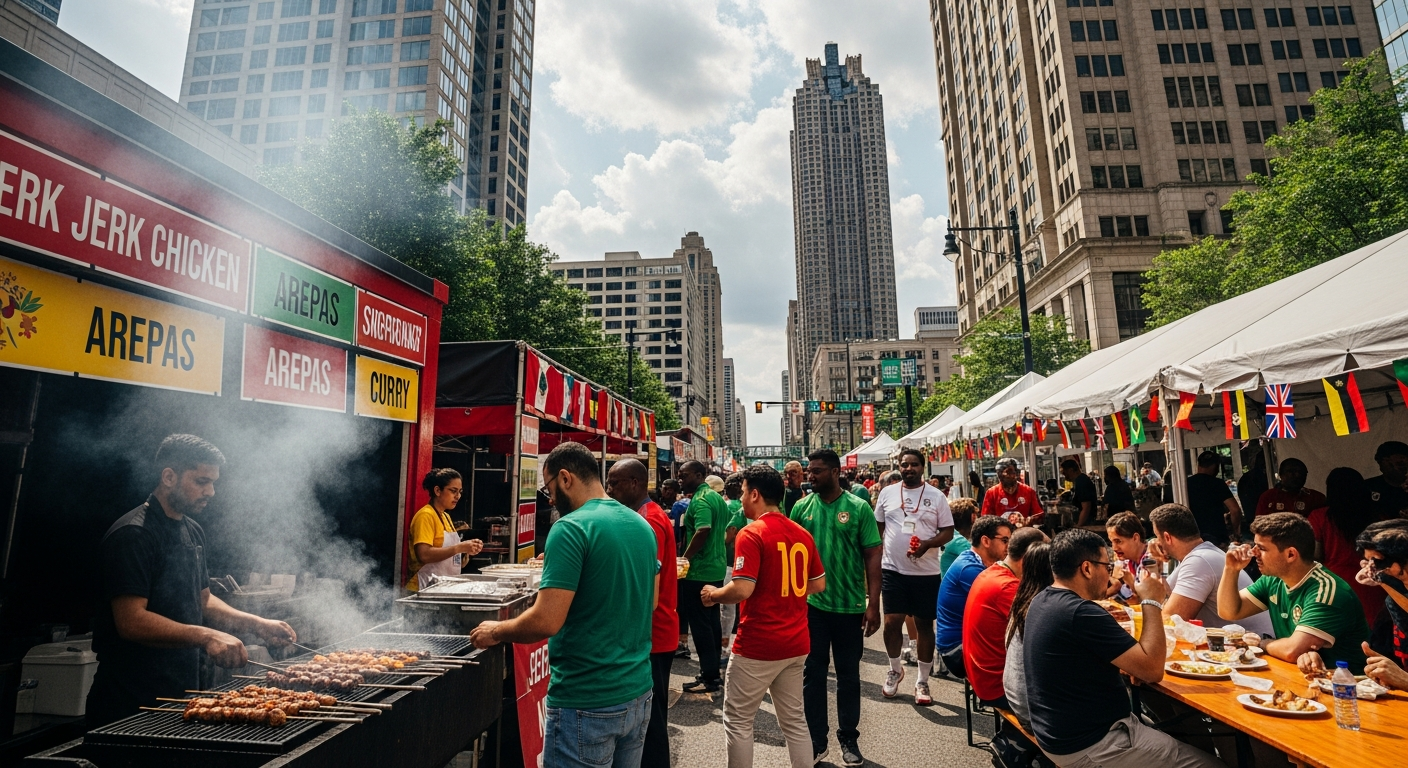
By the time the 2026 World Cup kicks off, the walk from MARTA to Mercedes-Benz Stadium is slated to feel less like a stadium shuffle and more like a downtown food festival. Just off the Ferris wheel and fountains at Centennial Olympic Park, the city is planning a temporary street of kiosks and compact kitchens: Global Grub Alley, a new food corridor at Atlanta’s official World Cup fan fest.
The idea: convert World Cup foot traffic into real revenue for local operators — and keep fans downtown instead of sending them straight back on MARTA after the final whistle.
The Know: What Global Grub Alley is
Global Grub Alley is part of Atlanta’s official FIFA World Cup 2026 fan experience, a curated strip of stalls meant to echo the mix of countries on the pitch and in the stands.
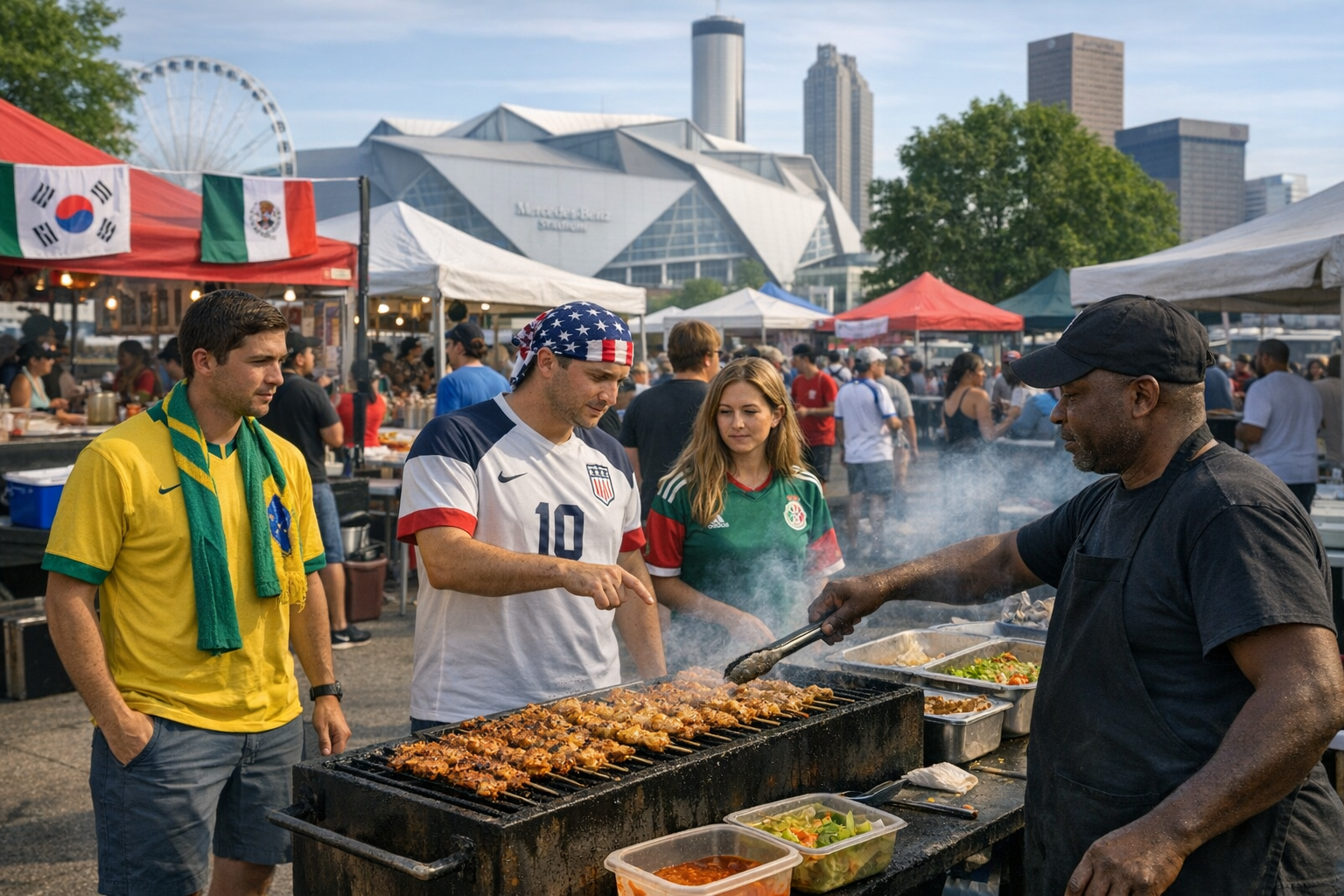
- Location: Within or along Centennial Olympic Park, steps from Mercedes-Benz Stadium, State Farm Arena and the Georgia World Congress Center.
- Concept: Atlanta-area vendors serving food tied to World Cup countries — tacos beside West African plates, Caribbean snacks near European-style street food.
- Timing: Built around Atlanta’s 2026 World Cup matches and the park’s main “Fan Fest” viewing events.
- Operator mix: Focused on small and midsize businesses set up for high-volume, festival-style service.
For food businesses, it’s a pop-up food hall with built-in crowds. For fans, it’s global street food in downtown’s most visible public space.
Downtown test case
As one of the tournament’s official host cities, Atlanta will stage multiple matches at Mercedes-Benz Stadium. Local agencies are gaming out how to move, entertain and feed tens of thousands of visitors between MARTA, the stadium and hotels clustered Downtown and in Midtown.
Global Grub Alley anchors a larger World Cup “live site” at Centennial Olympic Park, where fan zones will layer viewing screens and sponsor activations with space for people without tickets who still want that matchday crush.
Instead of scattering food trucks, the alley concentrates vendors into a single branded corridor. That lets the city cluster power, water, security and permitting in one place while giving operators more predictability than a one-off festival day. It fits a broader push to program the Downtown core beyond office hours amid stadium concerts, conventions and seasonal events.
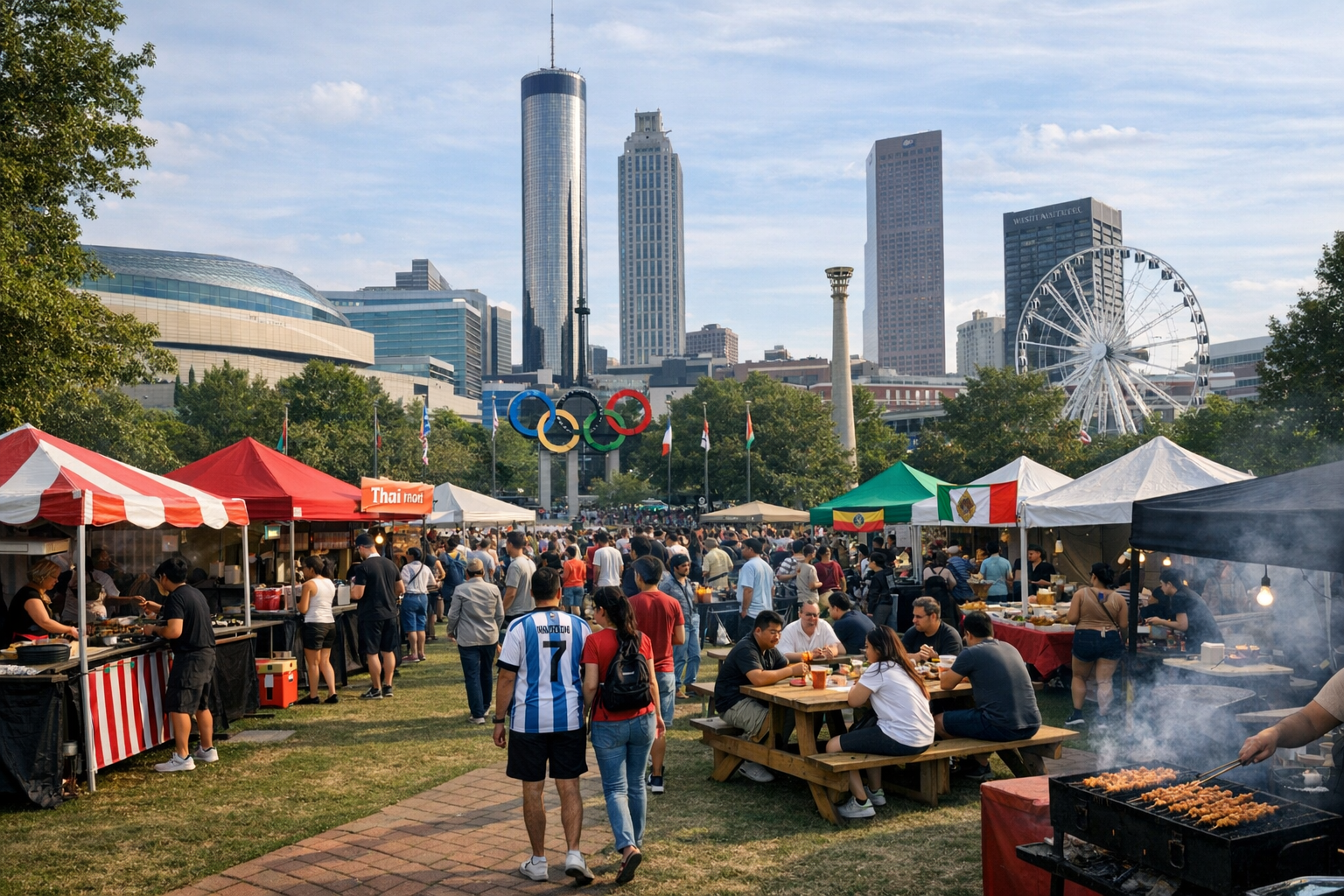
The World Cup raises the stakes — and Global Grub Alley becomes a test case for a more animated, food-forward version of downtown when the global spotlight is on.
Atlanta flavor, compressed
Many of Atlanta’s most interesting kitchens sit far from the stadium — on Buford Highway, immigrant-run strips off Cheshire Bridge, and clusters in Clarkston and along the Perimeter. For visitors whose World Cup world is hotel–MARTA–Mercedes-Benz, those corridors can feel out of reach.
Global Grub Alley is a bid to pull some of that energy into the heart of downtown. For operators who typically work outside the stadium-and-convention orbit, that could mean:
- New customers: Visitors staying near Peachtree or Luckie streets may never make it to Buford Highway, Westview or East Atlanta Village. A footprint beside Mercedes-Benz Stadium and the park puts neighborhood-born concepts in the path of the heaviest foot traffic.
- Low-commitment exposure: A restaurant based in Decatur, Stone Mountain or South Cobb can test the downtown market and build brand recognition without signing a long-term lease.
- Global on the field and on the plate: Atlanta’s soccer culture already pulls from everywhere — see the flags and chants around Atlanta United matchdays. A vendor slate spanning Latin American, African, Asian, Middle Eastern and European operators would make the fan zone feel closer to how the city actually eats.
It’s also a chance to stage a different version of Centennial Olympic Park: one anchored by local food rather than national chains, with a feel closer to a weekend on the BeltLine than a quick pre-game dash.
The tension is familiar in downtown Atlanta’s growth: whether a short-run, highly produced corridor can channel the character of those far-flung neighborhoods — or whether the World Cup window mostly benefits operators already positioned to scale up for global crowds.
What to watch
- Vendor lineup: Which neighborhoods and corridors are represented — from Buford Highway and the Westside to South Atlanta and immigrant hubs outside the Perimeter — will determine whether the alley feels truly citywide.
- Pricing: Organizers will have to balance tourist spending power with accessibility for locals. If prices skew too far into special-event territory, the alley risks reading as a closed corporate fan village instead of a downtown showcase.
- Transit and flow: With MARTA’s Dome/GWCC/Philips Arena/CNN Center and Five Points stations nearby, layout, wayfinding and crowd control will influence whether downtown workers and nearby residents swing through after work or steer clear.
- Life after 2026: If the concept clicks, it could become a template for other major weekends — SEC Championship games, Dragon Con, or large festivals at the park — giving small food businesses recurring access to big-event crowds.
If Global Grub Alley works, the World Cup won’t just showcase what happens inside Mercedes-Benz Stadium. It will turn the streets between MARTA and the match into a live demonstration of how — and where — Atlanta eats.
Indakno – Keeping You In The Know