



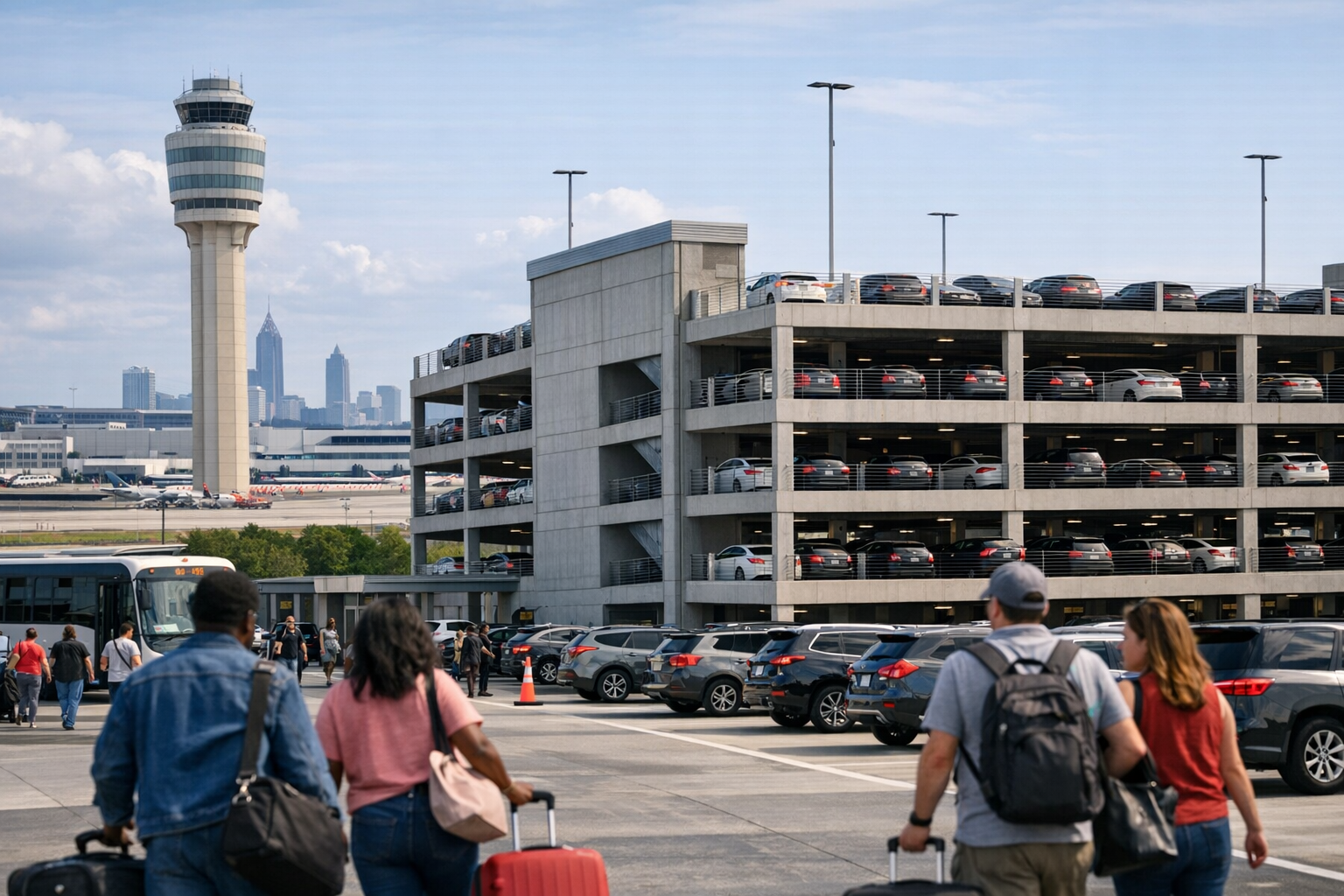
On Friday afternoons, the choreography starts early on I-85: bags in the backseat, one eye on the Connector, the other on the clock. For years, the real stress didn’t hit until you rounded the domestic loop at Hartsfield-Jackson and saw one word glowing over the decks: “FULL.”
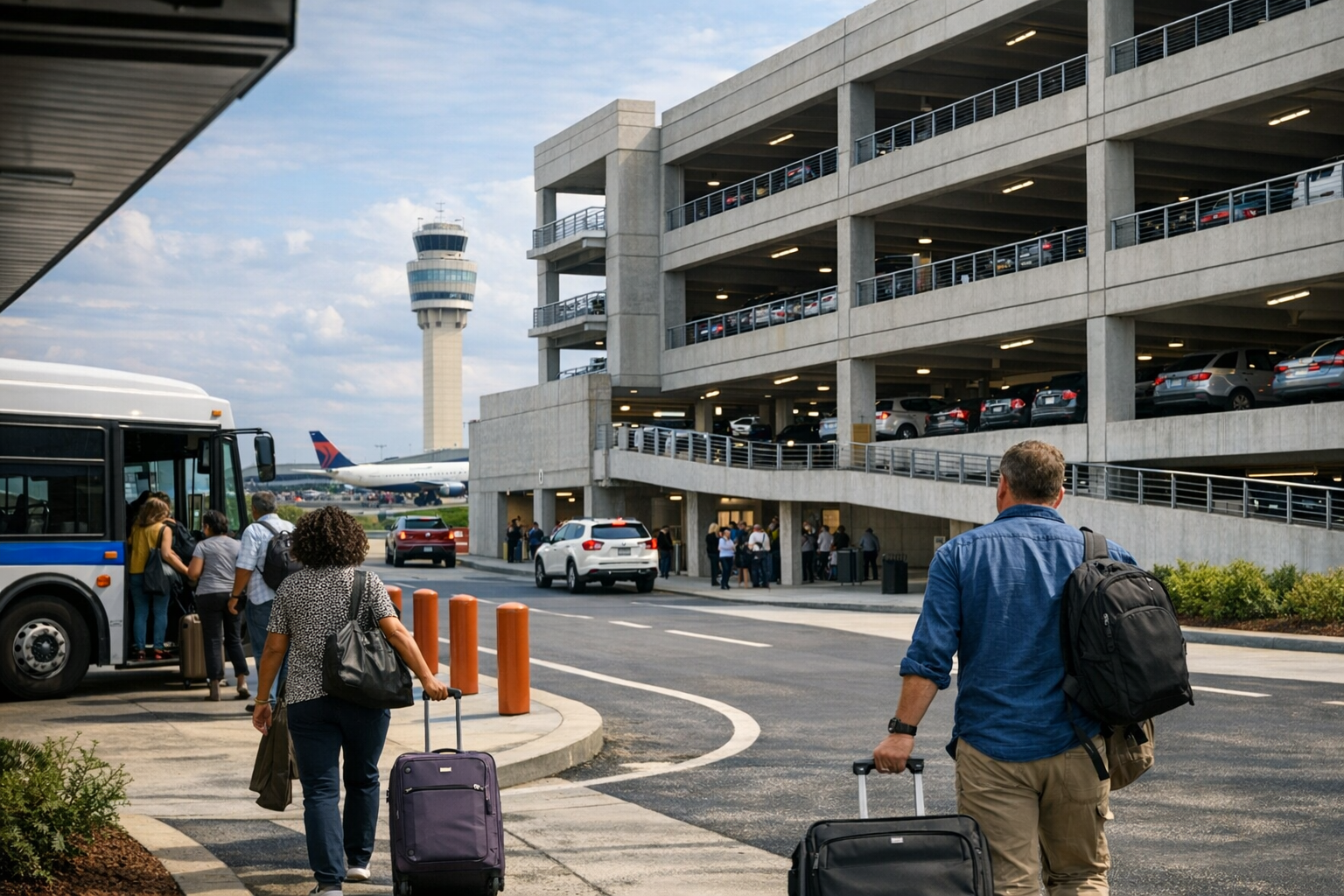
This week, that script shifts. Hartsfield-Jackson Atlanta International Airport has opened a new domestic terminal parking deck adding nearly 7,000 spaces — one of the largest single bumps in close-in parking the airport has rolled out in years, according to 95.5 WSB and ATL.
The basics
The new deck comes with a few key details for your next Domestic Terminal run:
- Nearly 7,000 new spaces are now open within walking distance of check-in.
- The deck serves the Domestic Terminal, home to Delta, Southwest, and most major U.S. carriers.
- It’s part of a multi-year replacement and modernization project after older domestic decks were demolished over structural and safety concerns.
- The goal: fewer “FULL” signs and last-second reroutes to remote lots, especially during peaks and holidays.
If you’ve been bounced from the North or South decks to ATL West or a park-and-ride at the last second, this expansion is meant to tighten the gap between the Connector and the security line — less looping the horseshoe, more parking and walking in.
Why ATL needed the boost
Hartsfield-Jackson remains the world’s busiest airport by passenger volume, a daily hub for travelers from East Point, Forest Park, and every corner of the metro. That flow didn’t slow down while crews were tearing down and rebuilding aging domestic-side structures, turning the familiar North and South approaches into a maze of detours and orange signs.
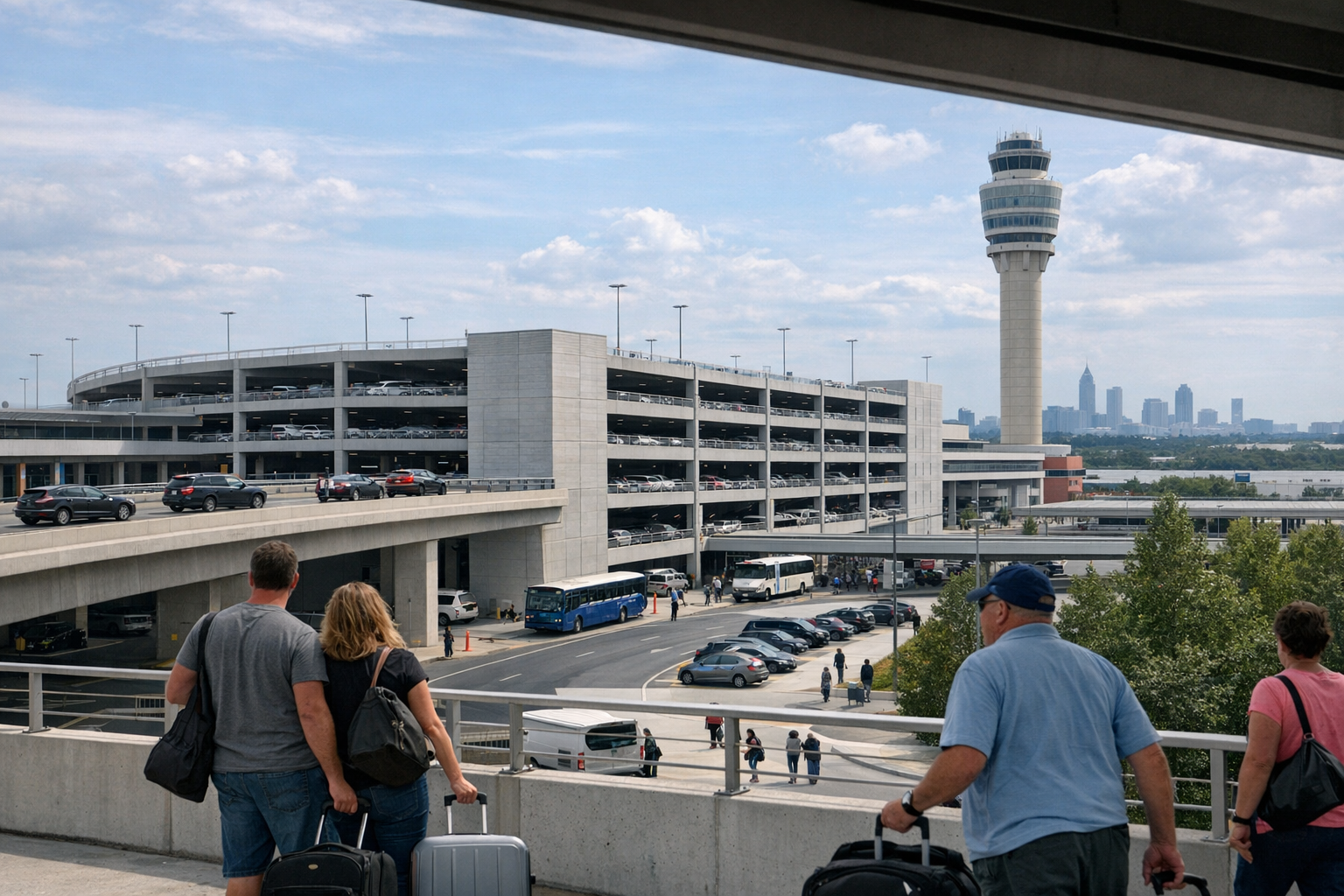
The new deck is the visible payoff: fresh capacity next to the terminal doors instead of another extension off Camp Creek Parkway. It plugs into a more layered parking setup that now includes:
- Terminal-adjacent decks for travelers who prioritize a short walk to check-in.
- Remote options like ATL West, tied into MARTA’s Airport Station and the SkyTrain for lower daily rates.
- Online and app-based guidance that shows availability and suggested routes before you reach the loop.
Parking has long been one of ATL’s biggest friction points. The trade-off has been clear: convenience up close or a lower rate out on the edges. This build-out doesn’t erase that choice, but it gives the “park-by-the-terminal” side of the equation a long overdue reset.
What it says about Atlanta right now
The new domestic deck lands at the intersection of several very Atlanta realities:
- Business travel is back in rhythm. From Midtown towers to Buckhead and the Perimeter, routine airport runs have returned. Fewer surprise detours to overflow lots smooth out the grind for people who measure weeks in roundtrips between conference rooms and concourses.
- Southside corridors get a pressure valve. Drivers coming in from College Park, Hapeville, East Point, and along Riverdale Road or Old National Highway now have more on-site capacity when minutes matter most.
- Year-round production and event traffic stays high. Ongoing film work and big-event churn across the south metro keep Hartsfield-Jackson full beyond holiday peaks. More domestic-side spaces help absorb that baseline load.
Atlanta has poured serious capital into concourses and curbside. Parking is the first and last touchpoint. If you’ve ever watched a comfortable buffer evaporate while inching around the North Terminal loop, thousands of new spaces within walking distance of security are not abstract — they’re the difference between rolling to your gate and sprinting to it.
What to know before you go
- Check availability early. Real-time counts for domestic parking — including the new deck — appear on ATL’s website and overhead signs before you enter the loop.
- Keep a backup. Remote options like ATL West remain in play for lower-cost parking, with rail and SkyTrain connections into the terminal.
- Plan for traffic, not panic. The airport expects fewer days when domestic decks top out and fewer minutes spent circling for a spot, but the usual congestion around I-75, I-85, and 285 isn’t going anywhere.
The airport’s domestic run will likely always be a little hectic — taillights stacked on the ramp, planes sliding past in the distance, group texts pinging with gate checks. The change, if this new deck does its job, is what you don’t see: fewer desperate sweeps around the loop, fewer “Where did you end up parking?” messages, and a front door to the city that feels a shade less punishing at the exact moment you pull into it.
Indakno – Keeping You In The Know