Atlanta’s public art story doesn’t end at the BeltLine. In East Atlanta Village, South Downtown, Little Five Points, and along Westside corridors, murals and painted walls do more than fill space: they show how different parts of the city see themselves. If you only follow the usual art route, you miss a more neighborhood-shaped version of Atlanta.
That matters because some of the city’s most revealing public art isn’t arranged into a single trail or built for an easy photo stop. It turns up on side streets, commercial strips, warehouse walls, and storefront facades, still closely tied to the blocks around it.
In Atlanta, that distinction carries weight. Development, branding, and cultural cachet do not always move at the same speed. The BeltLine remains a major public-art platform, but the city’s less-publicized mural pockets offer a different read—less destination-driven, more grounded in neighborhood texture.
South Downtown’s open-air reset
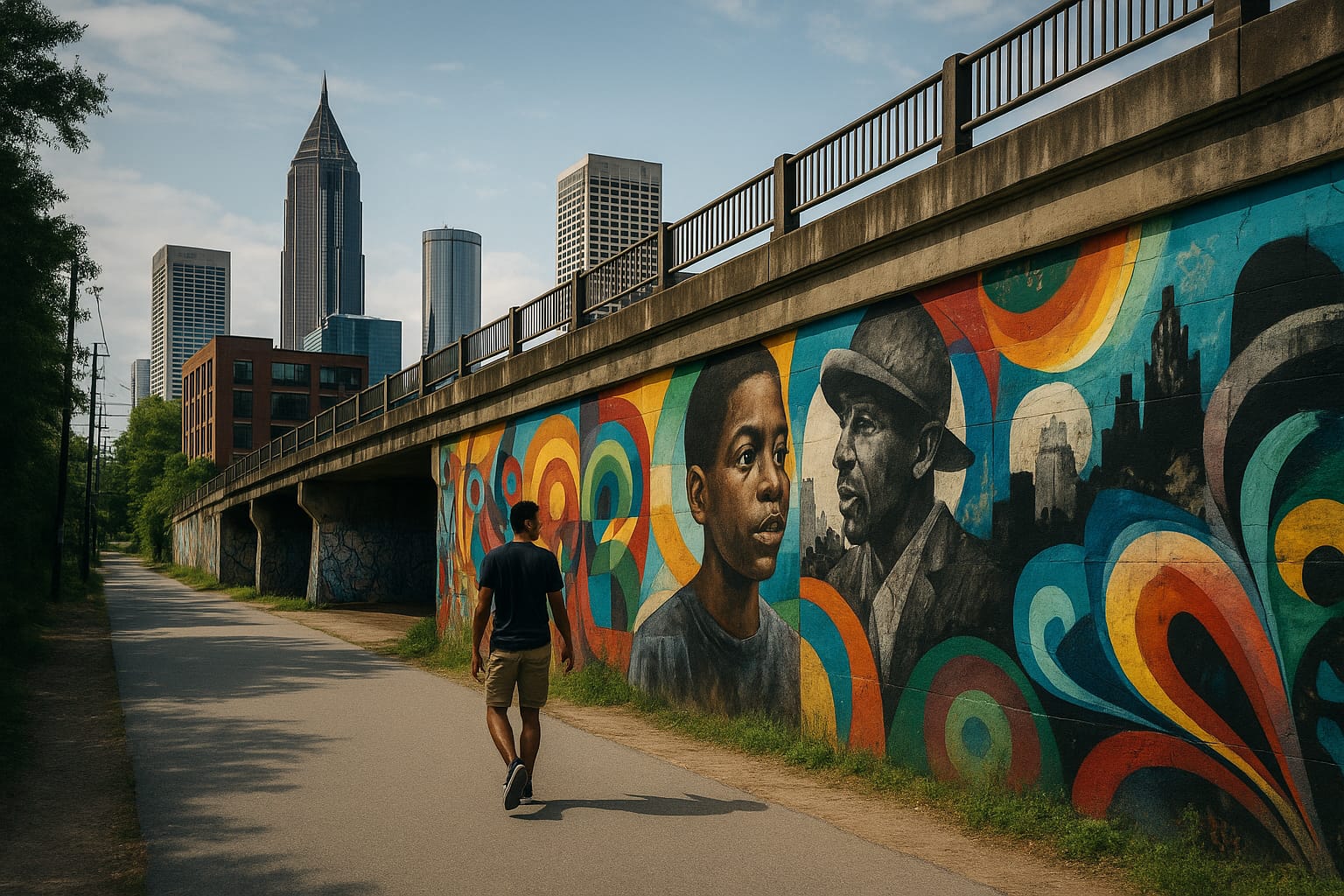
South Downtown is a sharp example of that shift. Its historic building stock and long facades leave room for large-format work, and the art does not feel incidental. It reads as part of a broader effort to make this stretch of downtown legible again to Atlantans who have long passed through it on the way to a game, a concert, or a government office.
That is part of what makes the district compelling right now. Murals here help frame a renewed public relationship with the area. Some lean graphic and contemporary; others feel rooted in Atlanta’s music, protest, and Black cultural life. The effect is less mural trail than urban conversation, with art, storefronts, preservation, and redevelopment all visible in the same frame.
It is also a reminder that public art can do practical work. It changes how a block is walked, where people pause, and what feels worth a second look.
Little Five Points and East Atlanta Village, still visually themselves
Little Five Points has long been one of Atlanta’s most expressive commercial districts, and its public art still resists polish in the best way. Posters layer over paint. Storefront graphics sit beside commissioned walls. Alleys and utility boxes can matter as much as formal mural sites. In a city increasingly eager to package creativity, Little Five still reads messier, sharper, and less managed.
That visual language has long been tied to subculture—music, skate aesthetics, independent retail, political messaging. The art does not always perform neatly for visitors. It can feel improvised, abrasive, funny, or temporary. That is part of its value. Here, public art is not just decoration; it is part of the neighborhood’s resistance to becoming visually generic.
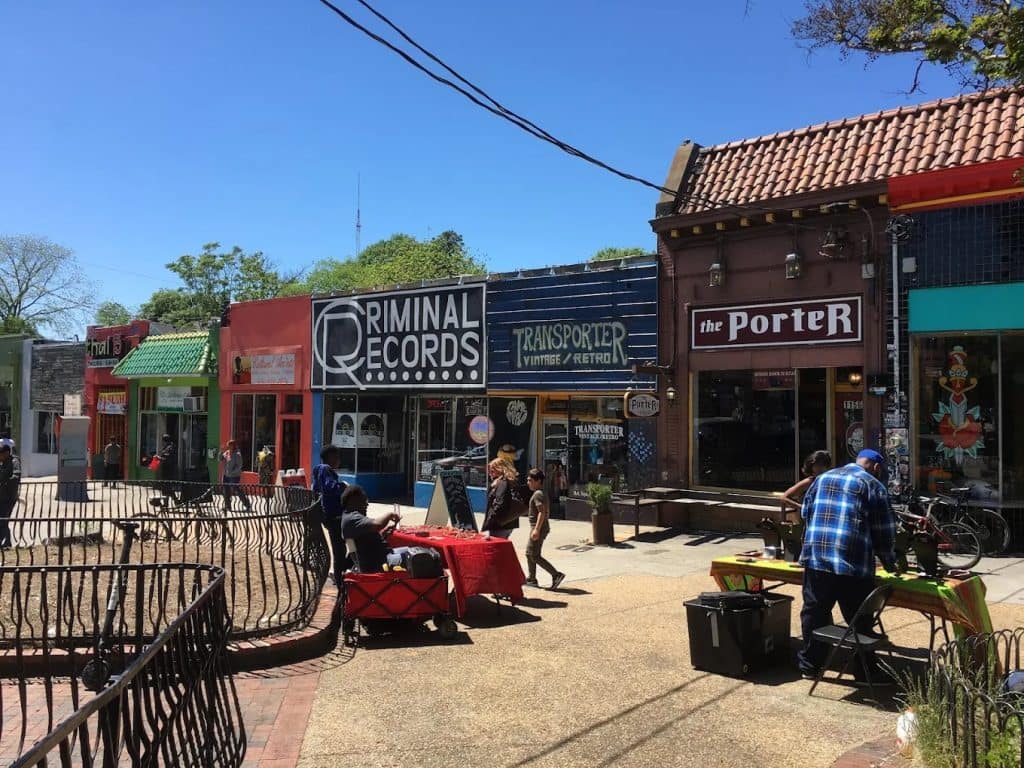
Nearby, East Atlanta Village offers a more embedded version of that same intimacy. The murals often feel woven into bars, restaurants, record-shop culture, and the neighborhood’s everyday infrastructure. The best way to see them is slowly: on a side street, before dinner, after a show, while taking the long way around the block.
Together, Little Five and East Atlanta show that scale is not the point. Some of Atlanta’s most memorable public art is not the biggest or most publicized. It is the work that still feels inseparable from neighborhood life.
Westside corridors and the question of visibility
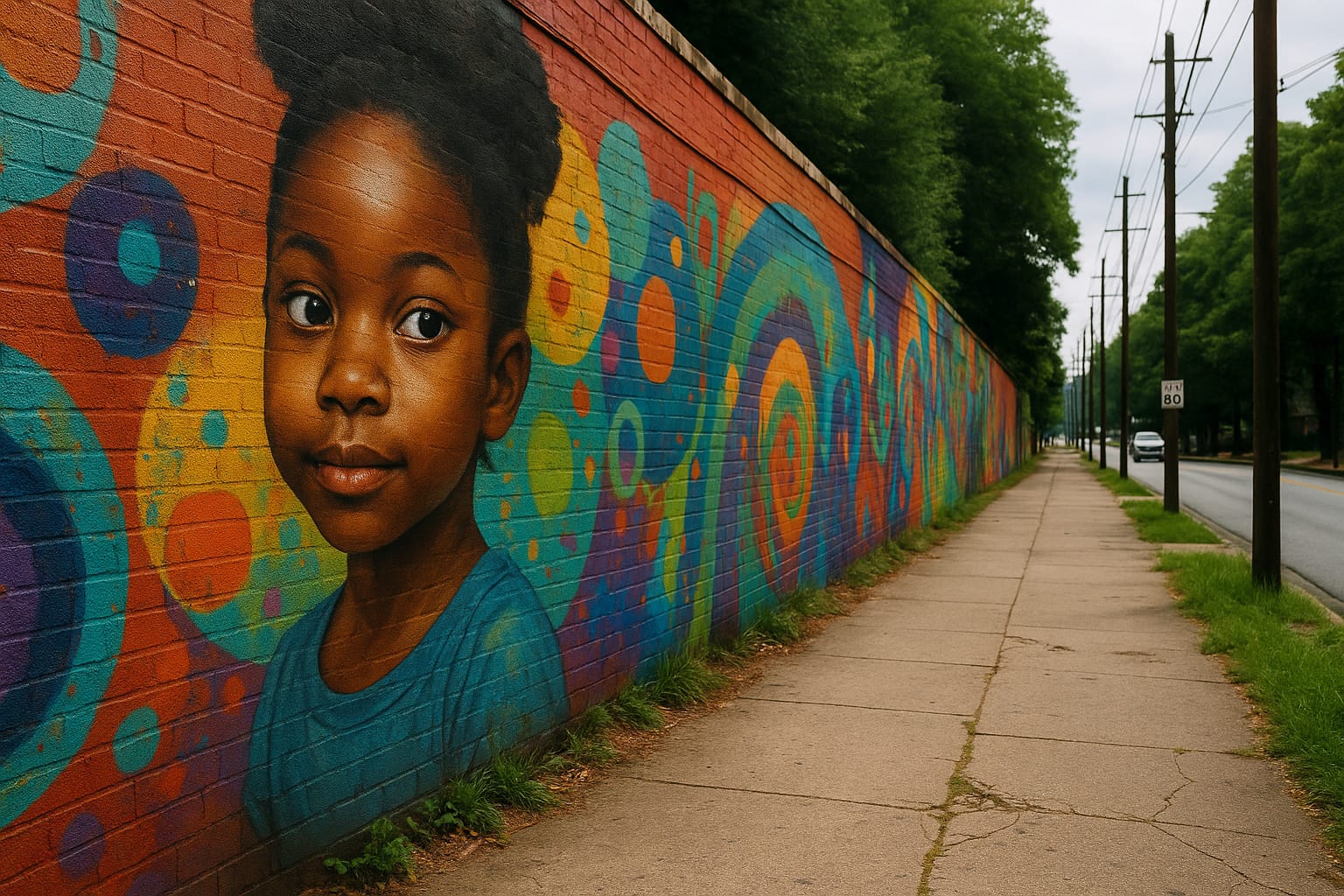
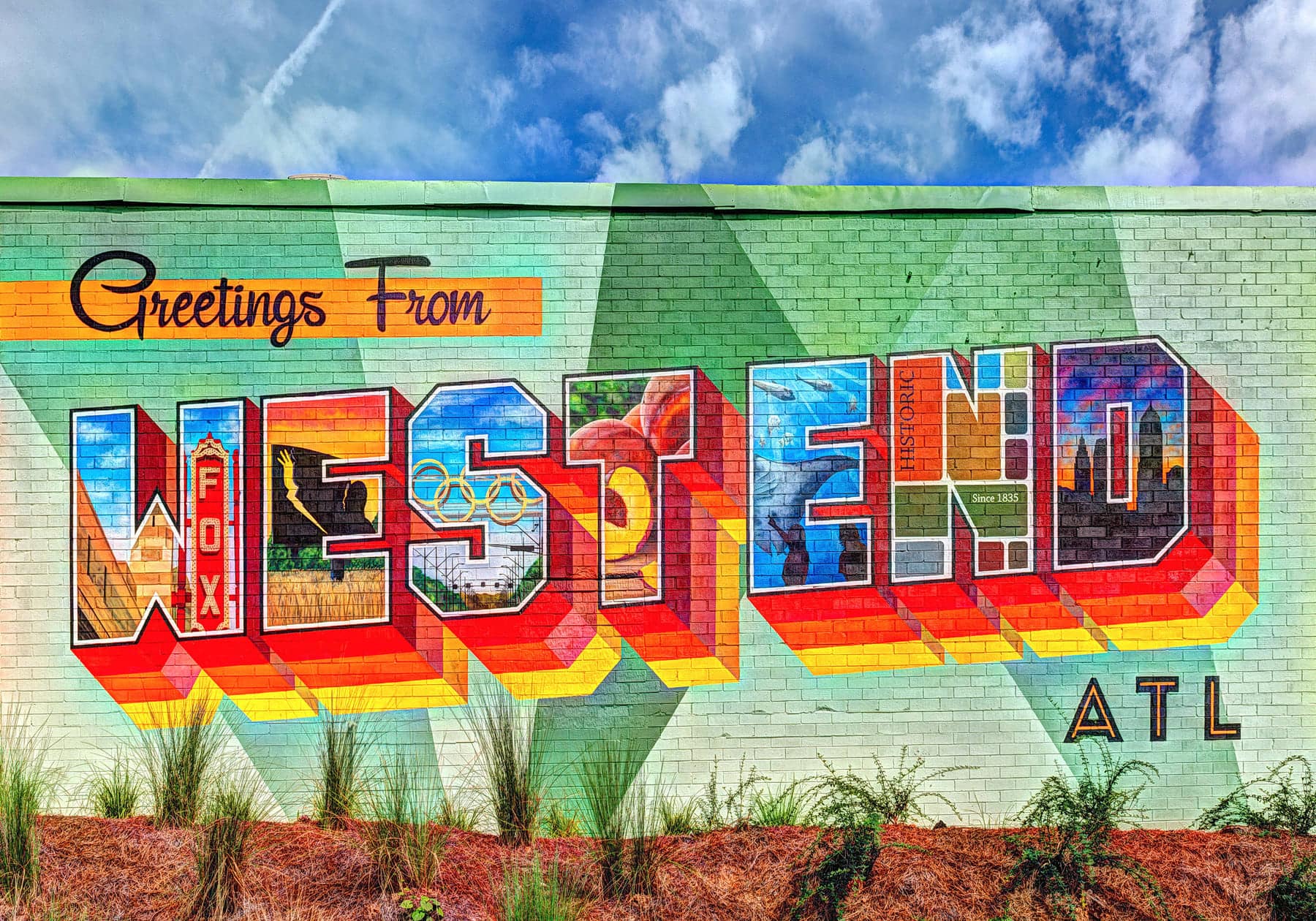
On the Westside and in southwest Atlanta, public art can carry a different charge. In these areas, murals often sit closer to community storytelling and representation. Explore beyond the city’s most trafficked arts routes, and you start to notice walls doing double duty: marking local history while insisting on present-day visibility.
That can mean portraits of civic figures, affirmations of Black identity, or work tied to neighborhood-led initiatives, youth programs, or business corridors trying to build foot traffic without surrendering local character. It is not a reason to romanticize disinvestment, and not every mural signals community power. Atlanta has also seen public art arrive ahead of change. But in these corridors, art can read less like an amenity and more like a claim.
How to see it better
Part of what makes these public art hubs easy to miss is that they are not always presented as neat, official experiences. There may be no single map and no polished signage explaining what you are looking at. For many Atlantans, that is part of the appeal.
The better approach is simple: build public art into the way you already move through the city. Pair a South Downtown walk with lunch downtown. Spend an afternoon in Little Five and look up between shop stops. In East Atlanta, take the slower route. Notice not just the murals, but the businesses, gathering places, and street life around them.
If the BeltLine gave Atlanta a highly visible public-art stage, these neighborhoods offer the deeper cut: a block-by-block picture of the city that feels less packaged and more like Atlanta in its own visual language.
Indakno — Keeping you in the know.