



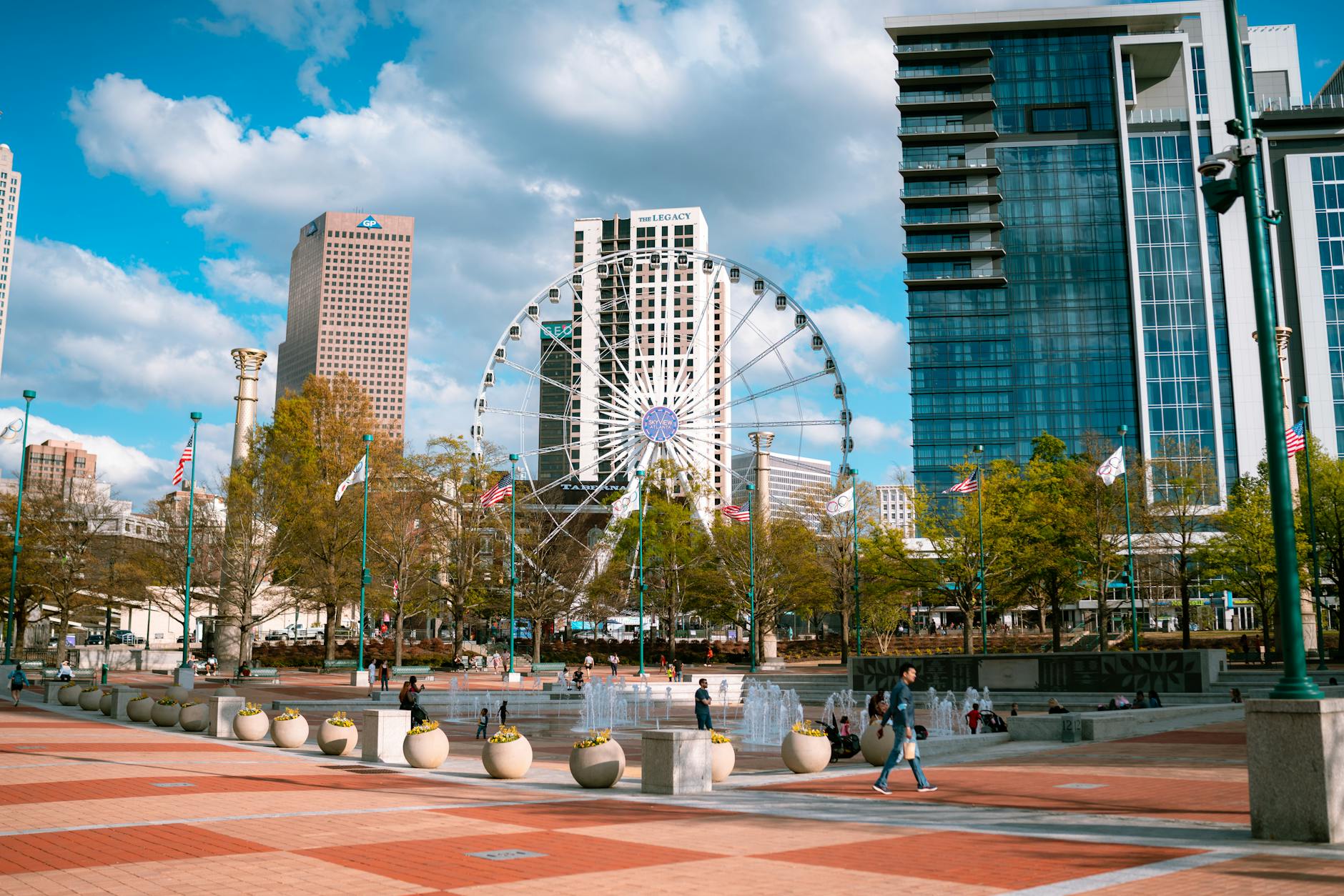
A compact downtown greenspace born from Atlanta’s Olympic moment that now functions as a pedestrian hub and event ground for visitors, conventions and everyday city life.
Centennial Olympic Park sits in the middle of Downtown Atlanta as both a park and a practical piece of the city’s visitor infrastructure. A public lawn, paths and a large interactive fountain create the everyday face of the space, while scheduled events, convention activity and permit-driven setups alter how Atlantans and visitors move through it. If you’re heading into the city for a meeting, a game or a weekend visit, the park is often where arrival, orientation and first photos happen.
Fast facts
- A central public lawn and interactive fountain anchor the park’s layout. The park’s open lawn and promenade converge on a large, interactive fountain that doubles as a gathering and photo spot. The water feature draws families, tour groups and passersby and is a common place for people to pause or cool off during warm weather.
- It functions as a practical entrance for convention and event traffic. Because the park sits beside major meeting facilities, it frequently serves as the public face for convention arrivals, outdoor receptions and wayfinding for attendees — event setups and closures are coordinated with convention schedules and can affect normal pedestrian access.
- A rotating slate of permitted programming uses the park’s open spaces. Citywide gatherings, neighborhood festivals, free and ticketed performances and other permitted events all take place in the park; that programming means the open footprint can shift from casual public green to a managed event site depending on the calendar.
- Designed for short, walkable connections to downtown attractions and transit. Pedestrian paths and multiple entry points make the park a natural short-walk hub for visitors getting to nearby hotels, museums, arenas and transit stops; it is commonly used as the first stop for people moving into Downtown on foot.
The story behind it
The park’s design balances recreational use with event flexibility. Its promenades and open lawn invite casual uses — lunch breaks, stroller walks and impromptu meet-ups — while the fountain provides an obvious focal point that people use to orient themselves. On non-event days the space feels like an urban backyard for workers, hotel guests and nearby residents. When larger gatherings are scheduled, the same open ground is reshaped by stages, tents and temporary fencing, which concentrates foot traffic and changes normal sightlines.
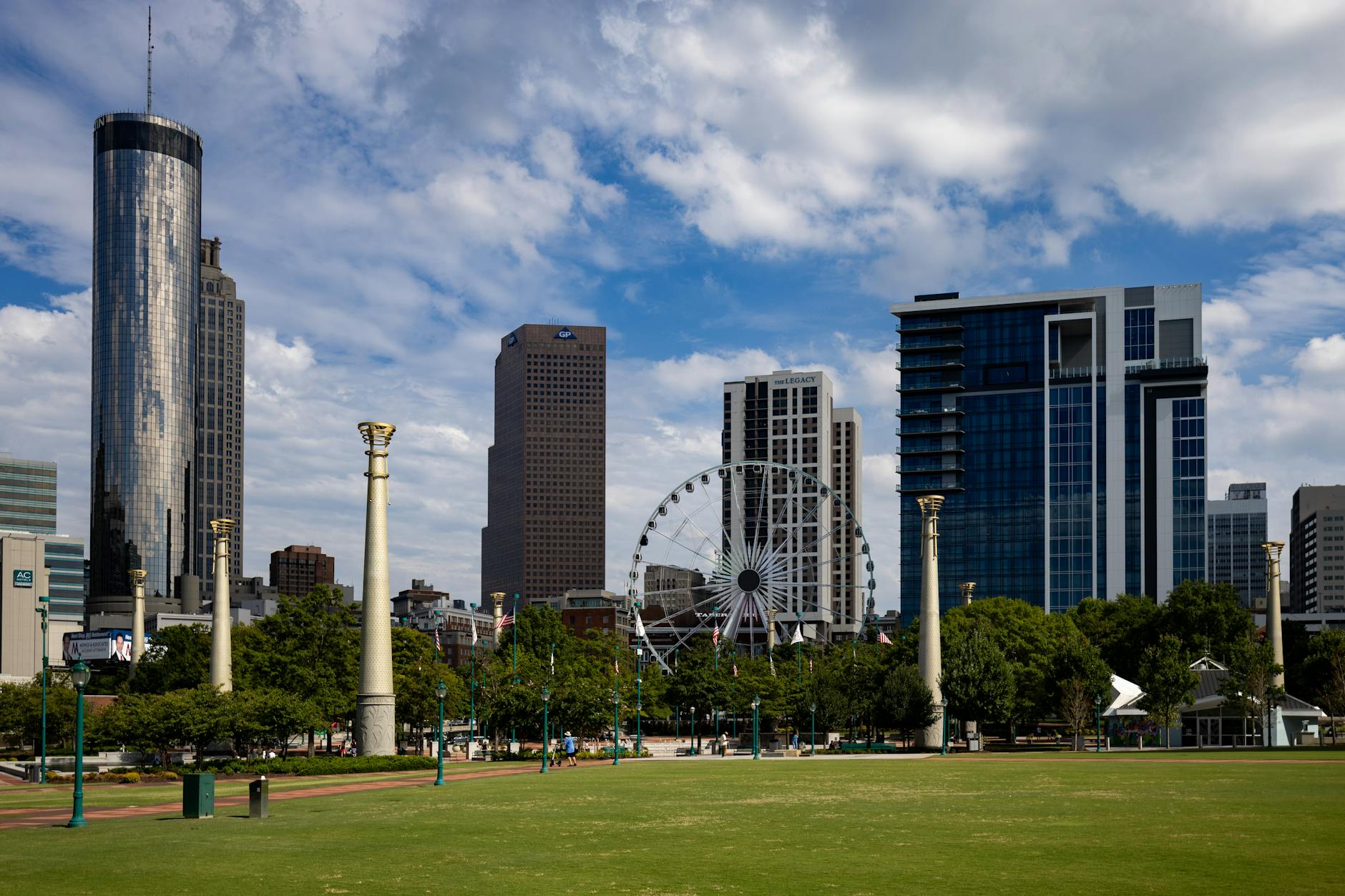
Because the park sits alongside major meeting venues, conventions and special events are part of its operating rhythm. Organizers and the agencies that manage adjacent facilities coordinate logistics so that arrivals, information tents and occasional vendor clusters appear in and around the park footprint. That coordination is why you’ll sometimes find directional signage, extra trash-and-recycling stations or temporary concessions on event days; those alterations are usually time-limited but can affect where you enter, where you park a stroller and how long it takes to cross the site.
Practical planning makes for a smoother visit. Check the park’s event calendar before arriving if your itinerary is time-sensitive, and be ready for crowds around major concerts or festival weekends. If you’re bringing children, the interactive fountain is a reliable draw — pack a change of clothes or a towel if play is likely. For convention attendees, use the park as a convenient meeting point and expect that walk times to nearby hotels and transit stops are short; for photographers and first-time visitors, early-evening light can make the fountain and skyline a cleaner backdrop than peak daytime crowds.
Keeping You In The Know