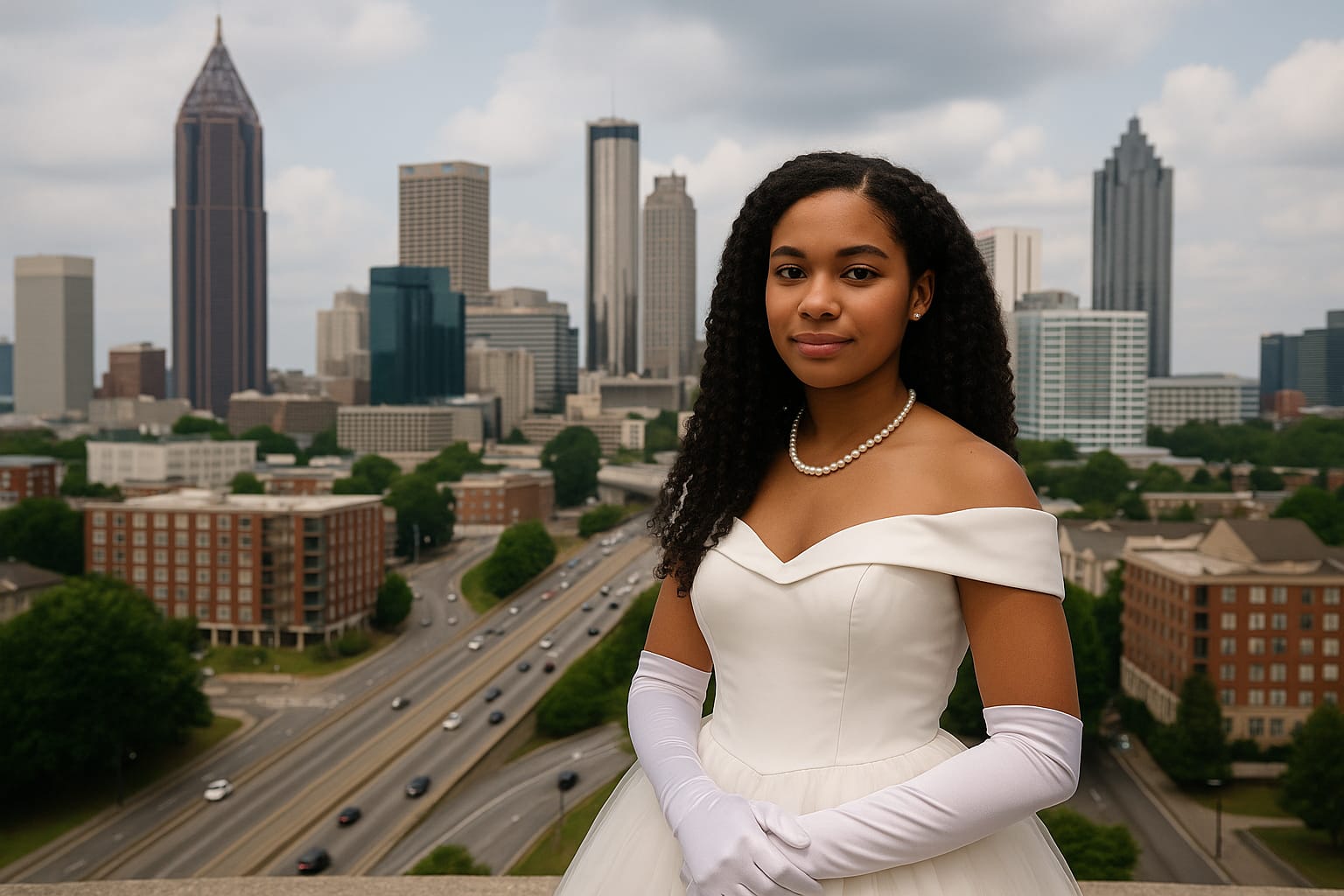
A new wave of debutante traditions in Atlanta is quietly reframing what it means to “come out.” Instead of centering a single image of elegance or social pedigree, a growing number of events are emphasizing inclusive beauty, mentorship, and civic purpose, reflecting a contemporary Black girlhood that refuses one path or one script.
That shift came into focus this spring at the Ivy Community Foundation’s Pink Cultured Pearls Cotillion, held at the Georgia International Convention Center. The event drew national attention after Yolanda Renee King—the granddaughter of Dr. Martin Luther King Jr. and Coretta Scott King—praised the cotillion for embracing the diversity of Black girls and creating space for affirmation, sisterhood, and collective growth
(NewsBreak; Essence).
A New Kind of Debut
Debutante balls have long been part of Atlanta’s civic and cultural fabric—part rite of passage, part community fundraiser, often rooted in churches, legacy organizations, and neighborhood institutions. Traditionally, these events marked a transition into adulthood while reinforcing social bonds and expectations.
What’s changing is the emphasis.
At the Pink Cultured Pearls Cotillion, the focus extended beyond presentation. Organizers structured the program around mentorship, leadership development, discipline, and community service, pairing the formal choreography and attire with values‑driven preparation. Onstage, young women with different styles, body types, hair textures, and personal ambitions were celebrated together—an intentional departure from narrow definitions of who “fits” the debutante mold
(Essence).
Reflecting on the experience, King described the moment as deeply rooted in support and shared accomplishment, emphasizing the collective bond formed among participants rather than individual display.
Why This Matters in Atlanta
Atlanta’s position as a center of Black culture, political thought, and community leadership gives these ceremonies added weight. Historically, debutante balls have been spaces where social capital is both displayed and transferred. When those spaces choose inclusion, they send a powerful signal about who belongs in the city’s future leadership class.
That message matters across Atlanta’s neighborhoods. Downtown and the Old Fourth Ward continue to evolve with new development and cultural energy, while Southwest and Southeast Atlanta sustain long‑standing family networks and civic institutions. Inclusive debutante traditions help bridge those worlds—gathering families from across the metro area into shared mentorship pipelines and affirming that leadership can emerge from many starting points.
Style, Sisterhood, and Civic Momentum
At their strongest, today’s debutante events blend pageantry with purpose. The gowns, formal processions, and etiquette training remain—because ritual still carries meaning—but they’re paired with practical outcomes: scholarships, nonprofit partnerships, cultural literacy, and professional exposure.
For Black girls in Atlanta, visibility across a range of identities is not symbolic—it’s formative. Seeing peers affirmed for different aesthetics and ambitions challenges outdated expectations and expands what a “debut” can signify. It reframes the question of what comes next, whether that path leads toward college, activism, entrepreneurship, the arts, or public service.
Organizers frequently emphasize long‑term mentorship, assigning participants guides who remain engaged beyond the event itself. That continuity—college advising, networking support, and leadership coaching—turns a single evening into a sustained investment in the city’s future.
How Families and Neighborhoods Benefit
The ripple effects extend well beyond the ballroom.
Funds raised through the cotillion support scholarships and community initiatives, while the visibility afforded to participants often opens doors to internships and leadership opportunities within Atlanta‑based organizations. The networks formed among families, educators, civic leaders, and sponsors become community assets—activated throughout the year, not just during cotillion season.
For neighborhoods focused on retaining talent and cultivating local leadership, these traditions provide a connective thread. They link individual achievement with collective responsibility, reinforcing Atlanta’s long‑standing culture of civic participation.
Looking Ahead
Debutante balls remain fixtures on Atlanta’s cultural calendar. What’s evolving is not the tradition itself, but its intent. More events are embracing diversity, mentorship, and service—reflecting the full lives of the young women they celebrate.
The public praise from Yolanda Renee King—whose family legacy is inseparable from Atlanta’s civil‑rights history—spotlighted a local effort to expand opportunity without abandoning ritual. It served as a reminder that tradition is not static, and that celebration can be a form of civic momentum.
As Atlanta’s families and organizers continue to reimagine rites of passage, the city benefits from a broader, more inclusive leadership pipeline. When more girls are seen, supported, and prepared to lead, Atlanta’s future grows stronger.
—Indakno: covering the neighborhoods, people, and cultural shifts moving Atlanta forward