



On a cool weeknight in Decatur, the glow isn’t just from the MARTA sign. Match replays bounce off pub windows around the Square, kids in oversized jerseys weave through café tables, and parents keep one eye on stoppage time. Twenty minutes west, former warehouses in West Midtown are doing the same work—projectors bolted to brick, fans shoulder‑to‑shoulder in food halls, brewery patios turning into impromptu supporter sections.
Two summers out from the 2026 World Cup, these aren’t one‑off watch parties. With U.S. Soccer’s national training center planned for the Southside, neighborhood rituals are starting to feel like the city’s real matchday infrastructure.
The Know: U.S. Soccer’s Southside campus
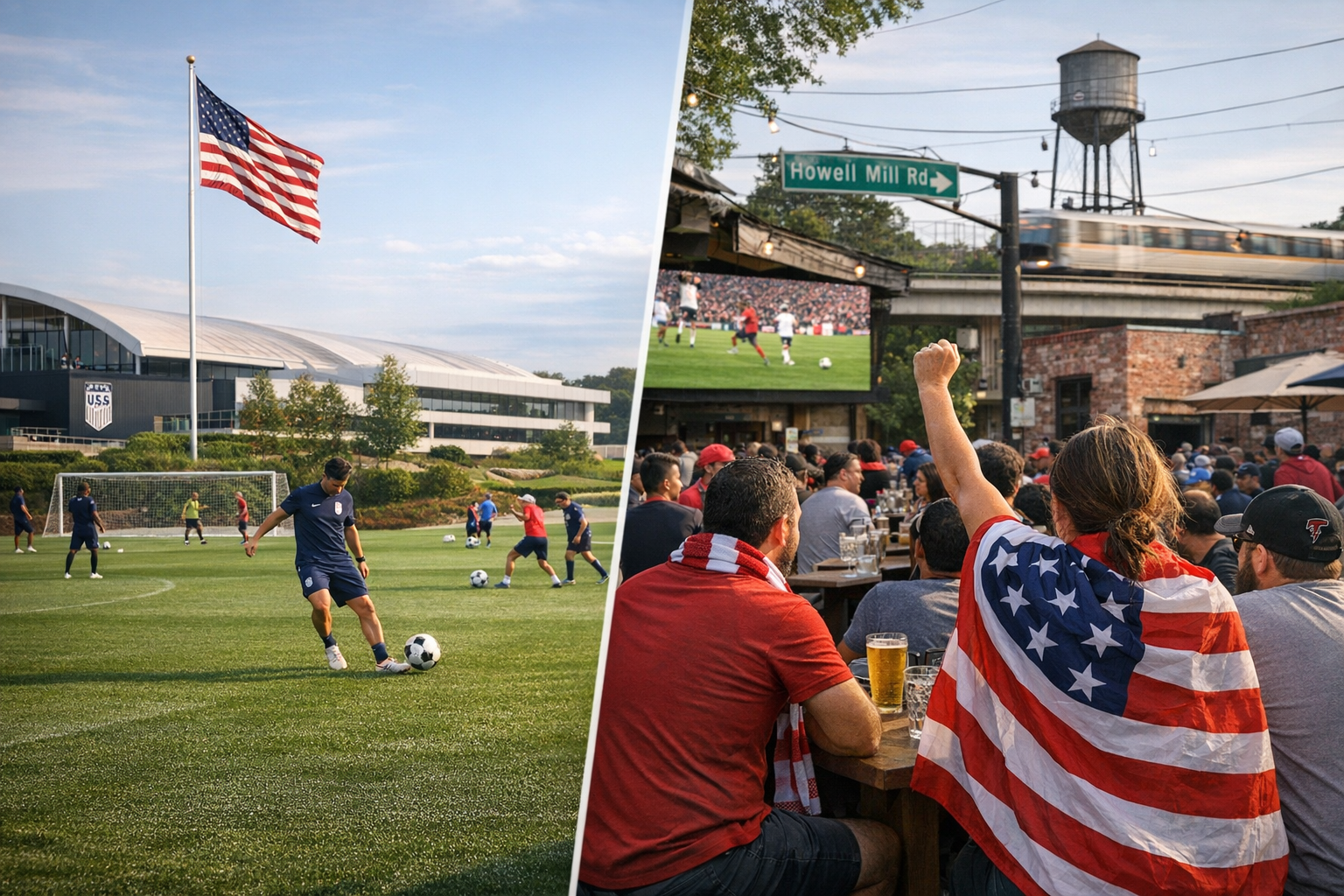
U.S. Soccer’s national training center on Atlanta’s Southside plants the sport’s governing body in an area long defined by warehouses and airport logistics. The complex is designed as a consolidated home base for national team training, youth development, and federation operations—one metro campus instead of scattered sites.
That means national squads rotating through year‑round, staff commuting from nearby neighborhoods, and a steady stream of visitors introduced to the Southside as something more than a blur between downtown and Hartsfield‑Jackson. For residents from Hapeville and College Park into Clayton County, the project joins a wave of investment that’s revising how the area shows up in Atlantans’ mental maps.
With that visibility come familiar questions. How do team buses and service vehicles change already stressed corridors? Do nearby commercial strips pick up new small businesses catering to visiting staff and superfans? And does the campus function as a walled‑off symbol, or do clinics, open trainings, or community fields meaningfully touch long‑time residents?
However those details land, the training center effectively makes the Southside part of the World Cup’s backstage, tying global tournaments to local streets, school calendars, and airport‑adjacent shifts.
Decatur: walkable matchday rituals
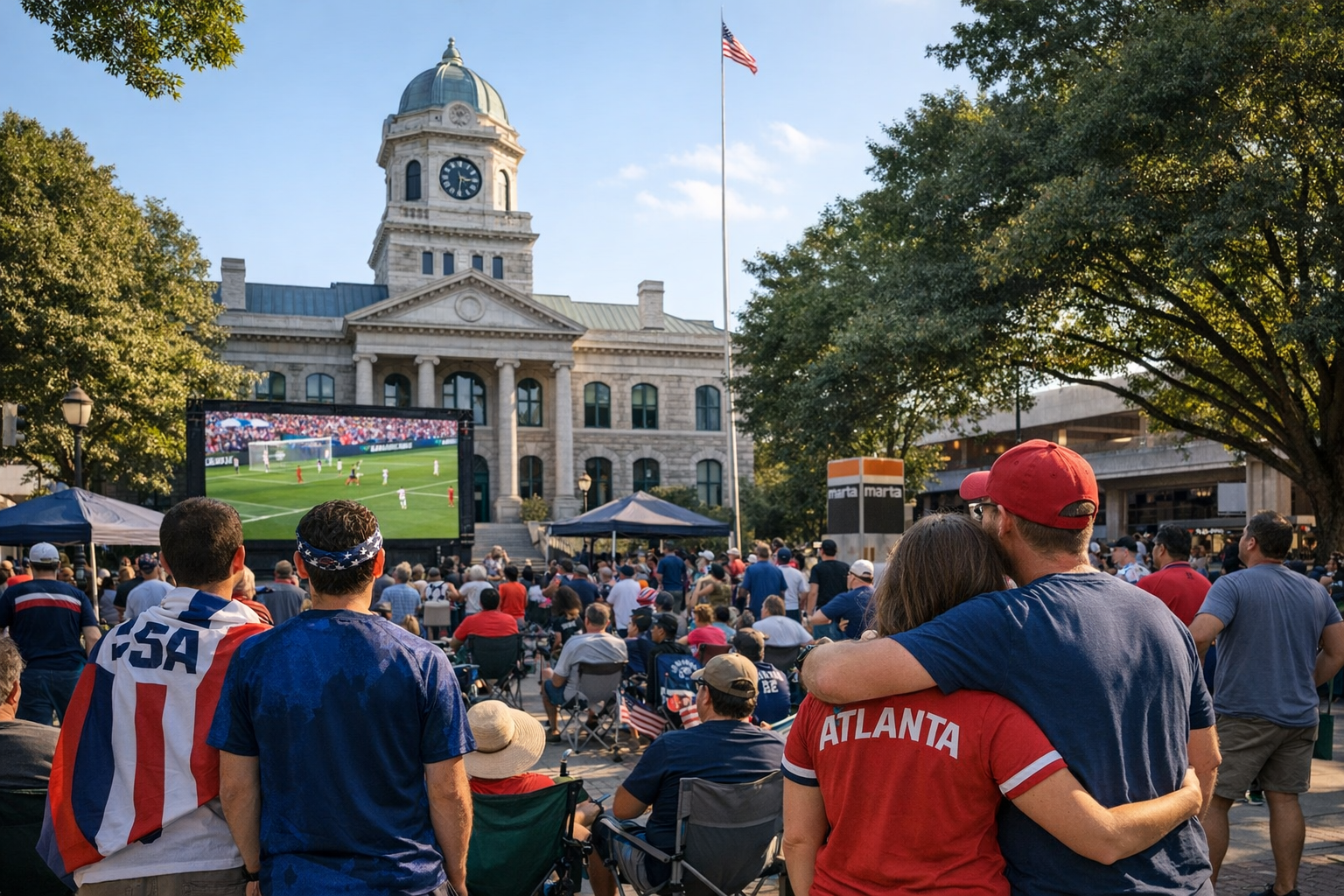
In Decatur, tournament viewing slides into a neighborhood that already defaults to walking. On matchdays, you can trace the game by watching the sidewalks: families pushing strollers down Church Street, kids in rec‑league kits jogging to keep up, cyclists dodging rideshare drop‑offs at the Square.
Bars and restaurants lean in. TVs migrate to patios; doors stay propped so commentary mixes with buskers and bus brakes by the MARTA station. For big international windows, everything scales—earlier openings, more flags in the windows—but the routine stays familiar.
The compact grid makes screen‑hopping part of the ritual. If one pub fills, fans drift a block over, cutting through alleys or pausing at the tracks when freight trains roll through. Between matches, people spill into the Square; kids sprint the lawn while adults trade lineup notes and compare national team kits.
That five‑minute radius also makes Decatur useful for lower‑key World Cup tie‑ins. Community groups and rec teams don’t need special venues; they use the same coffee shops and patios they already claim after Saturday games. The promise isn’t an official fan zone so much as a guarantee that the match is always within walking distance, no parking deck calculus required.
West Midtown: industrial shells, standing‑room patios
Across town, West Midtown offers a different rhythm: food halls stitched into old industrial buildings, breweries with gravel lots, restaurants tucked under lofts that still hint at factory floors.
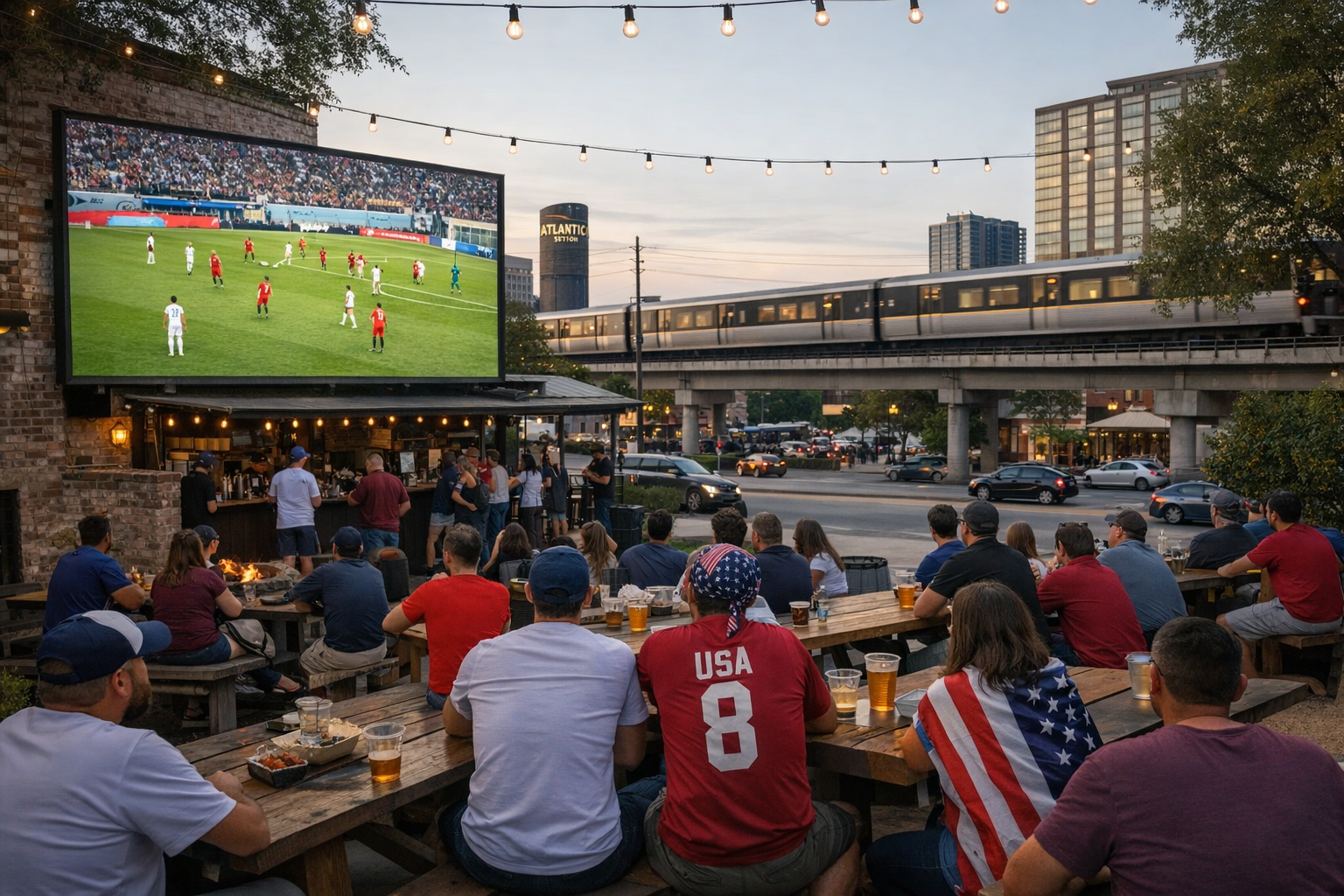
When a big match kicks off, projectors light up brick walls inside food halls and along covered patios. Fans filter in from Howell Mill and Marietta Street, wedging cars into tight lots or hopping out of rideshares at loading docks that now double as front doors. Inside, micro‑communities overlap—co‑workers at high‑tops, supporter‑group scarves on railings, parents orbiting big screens while kids hover near dessert counters.
Breweries and taprooms treat patios as unofficial supporter sections. Picnic tables become grandstands; people crane for a view of wall‑mounted TVs while nearby rail lines add a low rumble under the broadcast. Garage doors stay raised even on cool nights, and overflow crowds spill into gravel or grass patches that become standing‑room terraces.
Heading into 2026, that indoor‑outdoor mesh and quick access from the Connector make West Midtown a likely magnet for larger viewing days. One giant screen can quietly claim an entire afternoon—brunch for the early kickoff, snacks during the second match, a late‑night crowd drifting in for the last whistle.
Your matchday: connecting the dots
- Use transit where it works: Decatur’s MARTA station delivers you straight to the Square. On the Southside and in West Midtown, check bus and rail options early and build buffer around kickoff.
- Think in loops, not single stops: In Decatur, a short walk covers multiple patios and screens. In West Midtown, expect to move between food halls, side‑street breweries, and nearby restaurants, with tight parking and ride‑hail clusters along Howell Mill and Marietta Street.
- Track the official plan—and the local read: The City of Atlanta’s 2026 FIFA World Cup information page and coverage from Rough Draft Atlanta outline transportation, fan events, and Southside campus details that will shape how and where you watch.
Atlanta already knows big games—MLS Cup runs, summer friendlies, packed nights at Mercedes‑Benz Stadium. What’s shifting is the connective tissue. The Southside’s new training center pulls global soccer infrastructure into the city’s daily orbit. Decatur turns stroller‑friendly streets and a MARTA hub into a neighborhood fan zone. West Midtown stacks industrial shells and patios into standing‑room clusters that feel built for group viewing.
As 2026 approaches, “matchday in Atlanta” is less a trip to a single venue and more a network of familiar corners where TVs glow, glasses clink, and a global game feels like it’s always been part of the block.