



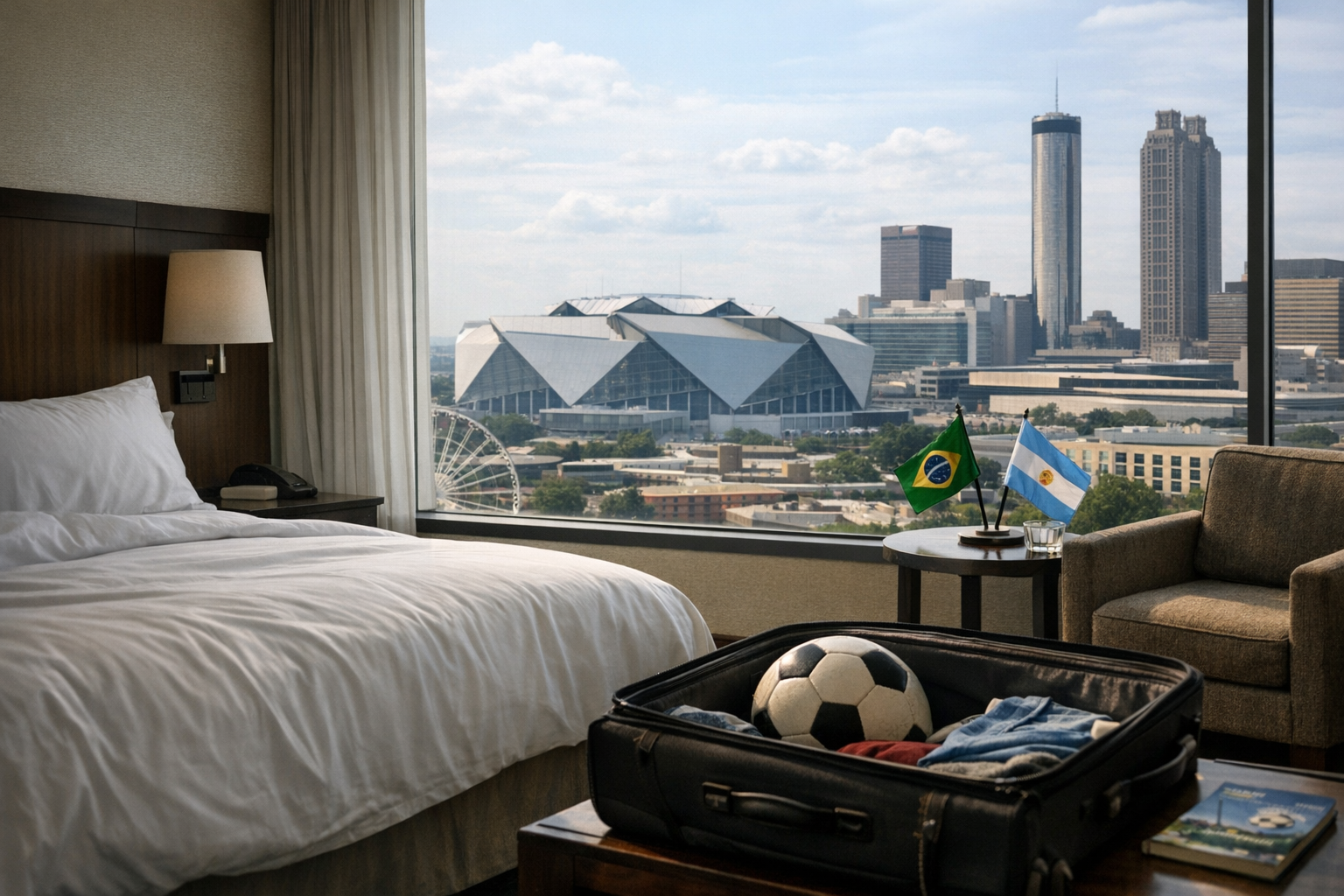
Photo: Mercedes-Benz Stadium and downtown Atlanta skyline.
Atlanta is on the 2026 FIFA World Cup map. Mercedes-Benz Stadium will host tournament matches, but booking sites aren’t flashing the usual “sold out.” Metro Atlanta’s short‑term rentals and hotels are, for now, still wide open — an early read on Atlanta as a host, and the version of the city it’s about to show the world.
The Know: rooms, rates and demand
- World Cup timeline: Mercedes-Benz Stadium is set for multiple 2026 matches. Exact dates and team assignments — the real booking trigger — will land closer to the tournament.
- Current bookings: Inventory closest to the stadium — hotels tied to the GWCC, towers around Centennial Olympic Park and lofts in Downtown and Castleberry Hill — is feeling the earliest pressure. Push into West Midtown, East Atlanta, the Southside or up toward the Perimeter and those same weeks stay comparatively open.
- Price vs. demand: Rates are climbing around the GWCC campus and central hotel towers but haven’t hit past mega‑event extremes.
- Where visitors are looking: Early interest clusters around Downtown, Midtown, the GWCC complex and MARTA‑accessible hubs like Buckhead and the airport hotel ring.
International fans rarely lock in housing before they know where their teams will play. Until FIFA releases match details, supporters choosing between Atlanta and other North American host cities don’t know whether Mercedes-Benz Stadium will be a guaranteed stop or just one option on a longer route.
That uneven demand is forcing both national brands and individual hosts to recalibrate. Instead of counting on automatic sellouts, they’re thinking less like passive landlords and more like active hosts, focused on the version of Atlanta visitors actually want — and how easy it is to reach it without a car.
A different Atlanta on display
Atlanta has already absorbed the 1996 Olympics, championship games at the Benz, Final Fours and SEC football weekends. But the World Cup arrives in a city that looks different from the one that lit the Olympic cauldron.
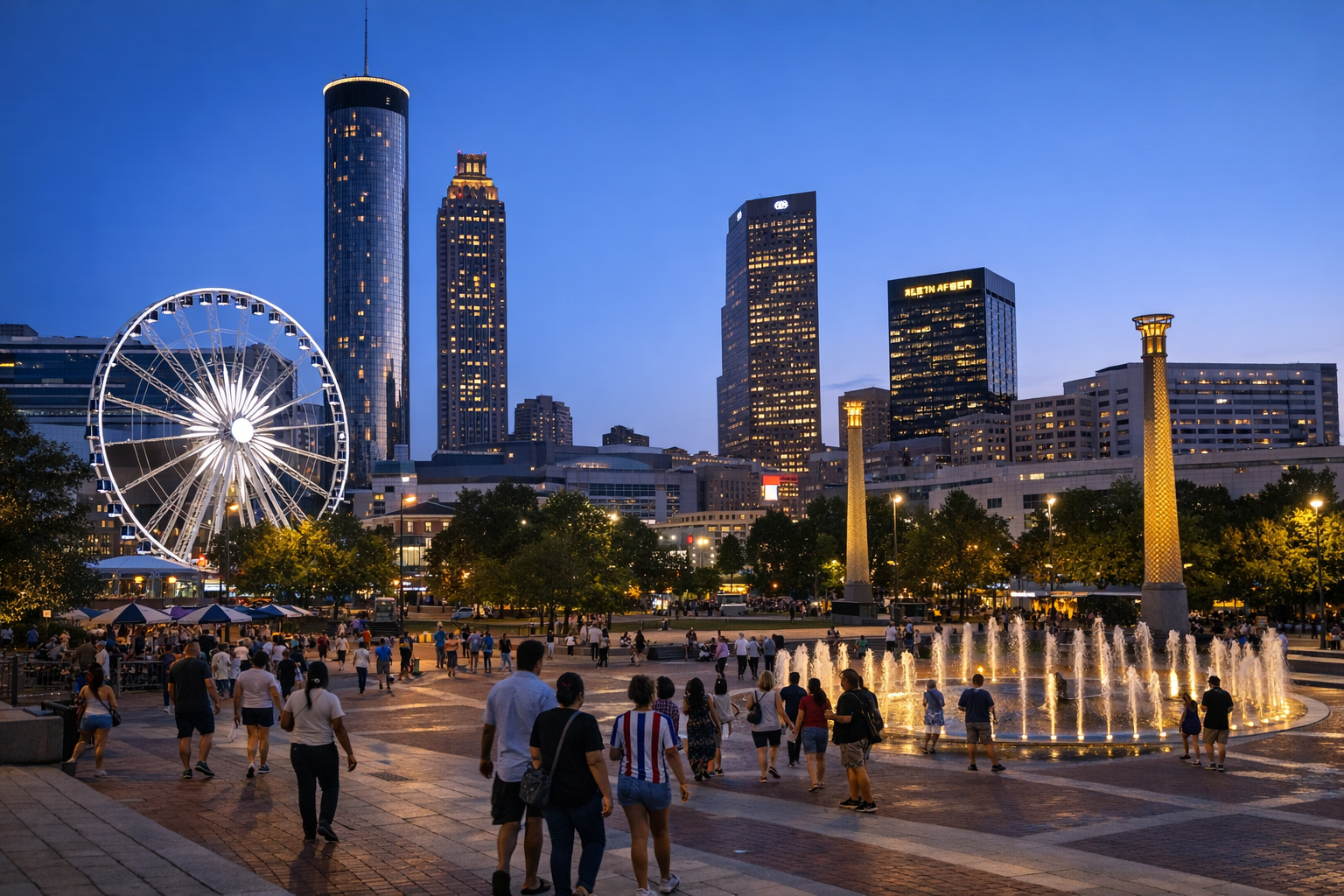
The Atlanta BeltLine has turned old rail corridors into a public‑art spine. The restaurant map now runs far beyond Downtown and Buckhead, from Buford Highway strip malls to Southside dining rooms. Downtown is still working out a post‑9‑to‑5 identity as office workers stay home more, even as Midtown’s skyline rises and neighborhoods like Summerhill, West End and East Atlanta Village pull more nightlife and everyday energy.
Where fans stay will shape the city they meet. A visitor in a rental along the BeltLine might build a week around morning runs, neighborhood patios and quick MARTA hops from Inman Park, King Memorial or West End to the stadium. Someone based in Buckhead might spend more time on rooftop bars, Lenox‑area shopping and Peachtree Road diners.
This slower booking phase gives Atlanta time to define that experience deliberately. Cultural institutions — from the High Museum in Midtown to the Atlanta History Center in Buckhead — have an opening to plan soccer‑adjacent programming for a global crowd.
Atlanta’s opportunity in the open calendar
The open calendar gives Atlanta’s arts community room to get ready. Nonprofits like ArtsATL are already tracking how World Cup energy is showing up on walls and stages, from new murals to pop‑up performances.
For visitors, that means match days can double as culture days: a morning walking BeltLine public art, an afternoon at the High Museum or the Center for Puppetry Arts, an evening show at a neighborhood venue — all within a rideshare or train ride of Mercedes-Benz Stadium.
- Match days plus museums: If you’re planning to attend World Cup matches at Mercedes-Benz Stadium, build in time for nearby cultural stops. MARTA’s east–west line connects stadium service to stations within reach of the High Museum and Midtown arts district; Buckhead trains and short rideshares put the Atlanta History Center on the same itinerary.
- Stay near what you want to see: For walkable art, patios and easy access to fan zones, look for rooms near the Eastside or Westside trails of the Atlanta BeltLine. Travelers who prefer a more traditional museum‑and‑shopping trip may gravitate toward Midtown or Buckhead, where theaters, galleries and restaurants cluster along Peachtree.
The open rooms are a reminder that the World Cup is not just a tourism windfall waiting to be cashed. It’s a test of how ready Atlanta is to knit its venues, neighborhoods and cultural institutions into one coherent trip — so visitors leave with a version of the city that feels less like an international backdrop and more like a place worth returning to once the final whistle blows.
Indakno – Keeping You In The Know