



Culture | Atlanta Magazine
Hope Booth at Ponce City Market: A Quiet Moment of Care on Atlanta’s BeltLine
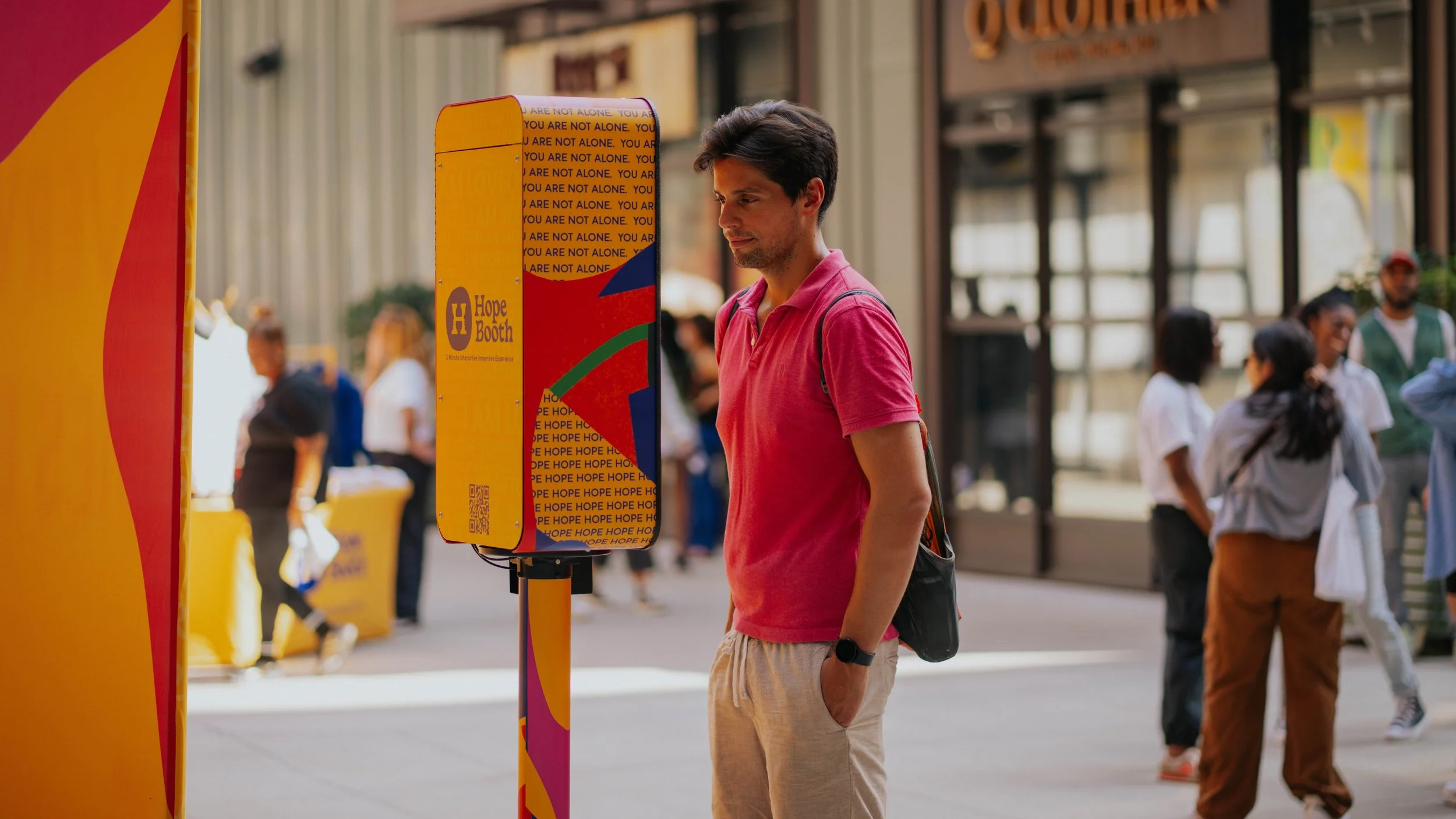
On a bright afternoon at Ponce City Market, where food hall crowds spill onto the Atlanta BeltLine Eastside Trail, a small, glowing booth sits just off the path. It doesn’t sell anything. Step inside the Hope Booth, pull the door shut, lift the receiver, and a calm voice reminds you—plainly, directly—that you’re not alone.
This phone-booth-sized structure on the BeltLine-facing side of the Old Fourth Ward landmark is part public art, part mental health tool. Wedged between the clatter of the central food hall and the constant motion on the trail, it’s designed as a quiet interruption: a pocket of attention in the middle of the city’s churn.
The Know: What you’ll find inside
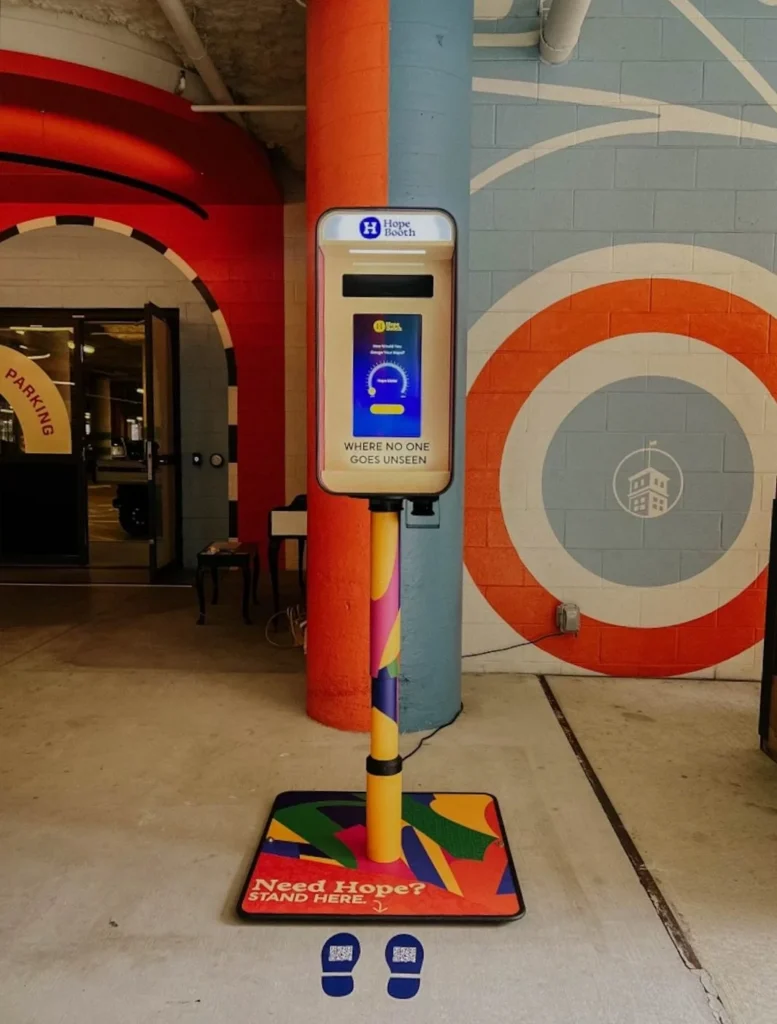
- What it is: A walk-in, high-tech “phone booth” that delivers a short, hope-centered message meant to interrupt spirals of stress or loneliness.
- Where: Along the BeltLine-facing side of Ponce City Market in the Old Fourth Ward, just off the Eastside Trail.
- How it works: Close the door, pick up the receiver, follow simple prompts, and receive a three- to five-minute audio-visual message.
- Experience: Screens and lighting turn the booth into a small, enveloping set. The sound is intimate, like a friend on the line.
- Cost & access: Free and open to anyone passing by. No app, account, or sign-up.
Inside, the soundscape shifts. The echo from Ponce’s brick corridors, music from nearby shops, and wheels on the trail recede. Focused audio and close walls create a room where a hopeful message can actually land—a kind of content you might stream on your phone, relocated to a human-scale space built for listening.
The design assumes anxiety, grief, or overload don’t wait for appointments. They show up at lunch, mid-errand, in the middle of a weekend crowd. By placing a mental health touchpoint directly in the path of daily life—between a pastry run and a walk toward Inman Park—the booth lowers the threshold to get a little help. No paperwork, no waiting room, no need to explain why you stepped away.
Atlanta context: A soft interruption on the BeltLine
The Hope Booth’s placement at Ponce City Market is a pointed Atlanta choice. The building anchors a stretch of the BeltLine where Old Fourth Ward, Inman Park, Midtown, and Virginia-Highland meet. Tech workers coming down from upstairs offices, families off North Avenue, cyclists headed toward Krog Street or Reynoldstown—they all pass within a few feet of its door. Seeking a few minutes of reassurance becomes as casual as grabbing a snack.
The installation nods to a local tradition of pairing everyday spaces with quiet care: church basements on Cascade, barbershops along Auburn Avenue, neighborhood meetings in rec centers, public forums at places like the Atlanta History Center. The Hope Booth extends that lineage into the city’s newer “third places” along the BeltLine, where people now linger between home and work.
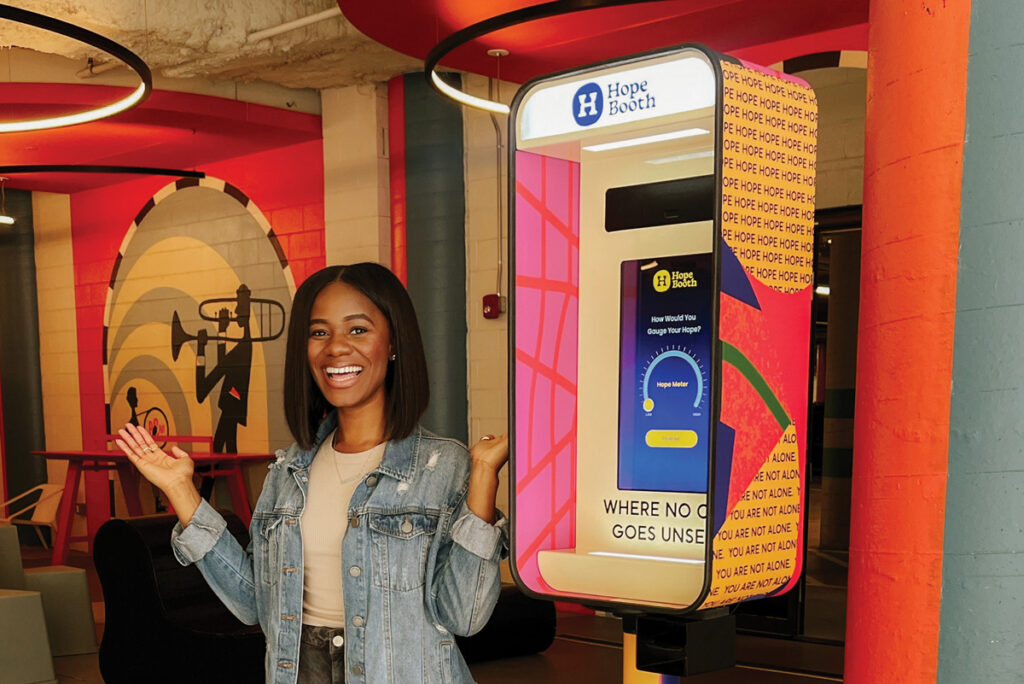
It also fits the city’s evolving public art scene. Efforts like Art on the Atlanta BeltLine have shown how murals, sculptures, and performances can turn infrastructure into gathering space. A mural asks you to look; the Hope Booth asks you to enter, shifting public art from something you pass to something you inhabit—framed as care rather than commerce.
The location holds tension. The BeltLine at Ponce has become shorthand for Atlanta’s boom: cranes, condos, and rising costs that edge out longtime neighbors even as new amenities arrive. A free, walk-in mental health resource tucked into one of the city’s priciest corridors underlines both realities at once—a small act of care inside a landscape not everyone can afford to fully enjoy.
Reader payoff: A tool, not a cure
The Hope Booth doesn’t pretend to be therapy. It’s a tool: something you can do in three to five minutes when the city starts to feel like too much. For people who already use the Eastside Trail as a kind of moving meditation from Piedmont Park down toward Memorial Drive, it offers a different reset—a literal room you can step into.
Because it lives at one of Atlanta’s busiest intersections of food, retail, and recreation, the booth normalizes the idea that needing encouragement is ordinary. Mental health doesn’t sit off to the side in waiting rooms and wellness apps; it appears alongside coffee runs, grocery lists, and post-work loops on the trail.
In a city wired for hustle, the Hope Booth offers a brief counter-program. You step off the path, close a door, let a stranger’s carefully crafted words wash over you, and then rejoin the flow—maybe not transformed, but a little lighter than before.
How to go
- Location: BeltLine-facing side of Ponce City Market, directly off the Atlanta BeltLine Eastside Trail in Old Fourth Ward.
- Access: Reachable by foot or bike along the trail, or from Ponce City Market’s Central Food Hall corridor that opens onto the BeltLine.
- Time needed: Each experience runs about three to five minutes; a short pause in a loop around the market or a trip down the trail.