



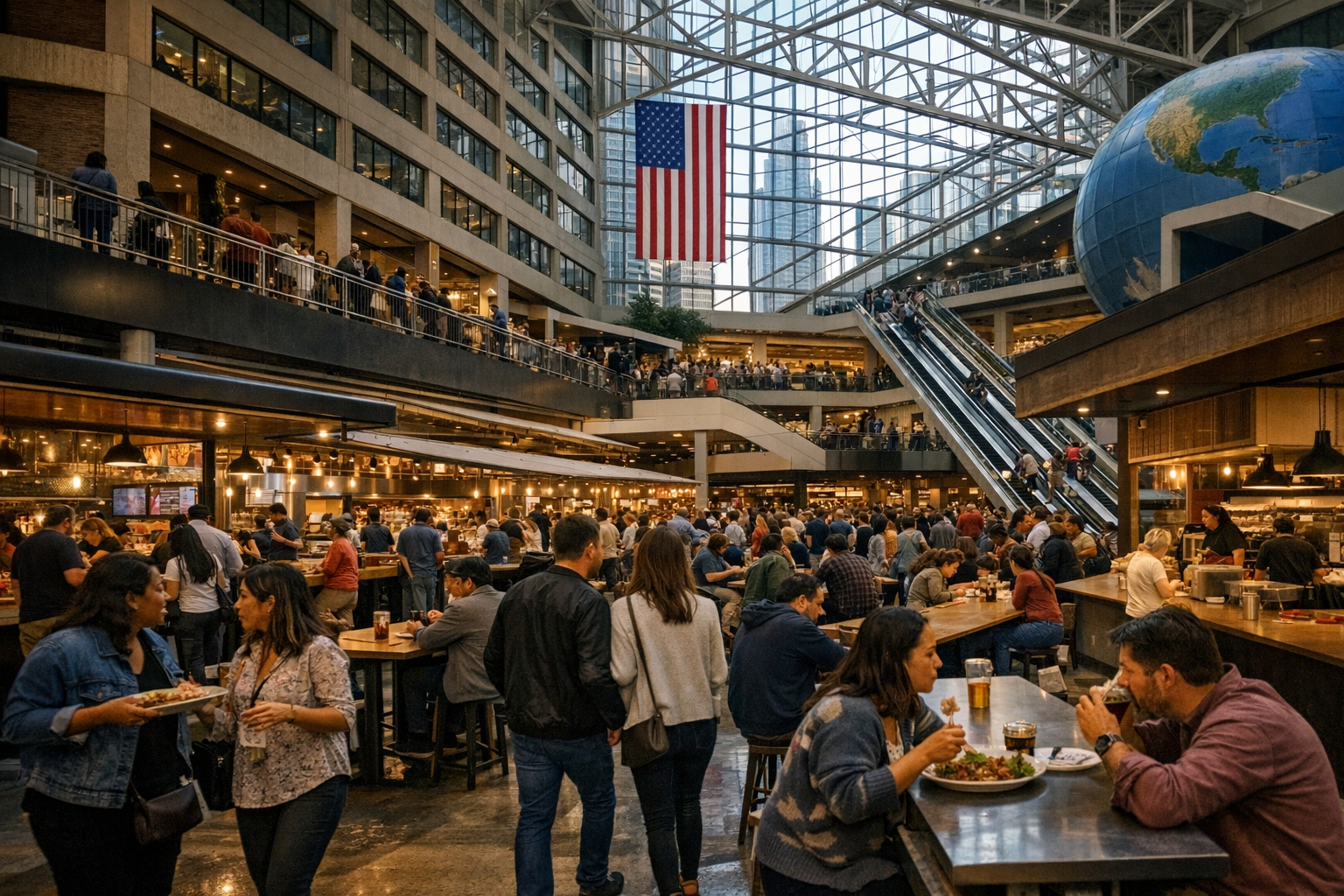
The escalators still glide past glass and steel at Marietta Street and Centennial Olympic Park Drive. But instead of tourists queuing for CNN studio tours with trays from national chains, the atrium of the former CNN Center is being reset as a civic dining room for downtown Atlanta. Rebranded as The CTR, the complex is reopening with a food hall tuned to State Farm Arena crowds, Georgia World Congress Center conventioneers, park‑day families, and office workers used to sprinting toward the nearest fast‑food counter before tipoff.
This corner of downtown—wedged between Mercedes‑Benz Stadium, Centennial Olympic Park, and the Gulch—is in the middle of a reset. With Centennial Yards rising and major events on the horizon, converting an aging tour‑bus food court into a walkable place to eat is a bet on street‑level life rather than broadcast spectacle.
The Know: From newsroom lobby to civic food hall
For years, the building’s ground floor was a controlled corridor between parking decks, hotel elevators, and arena entrances. Food meant familiar logos and quick counter service for ticket‑holders, not locals. The CTR’s food hall concept flips that script, using the same lofty atrium as a public living room instead of a holding pen for visitors.
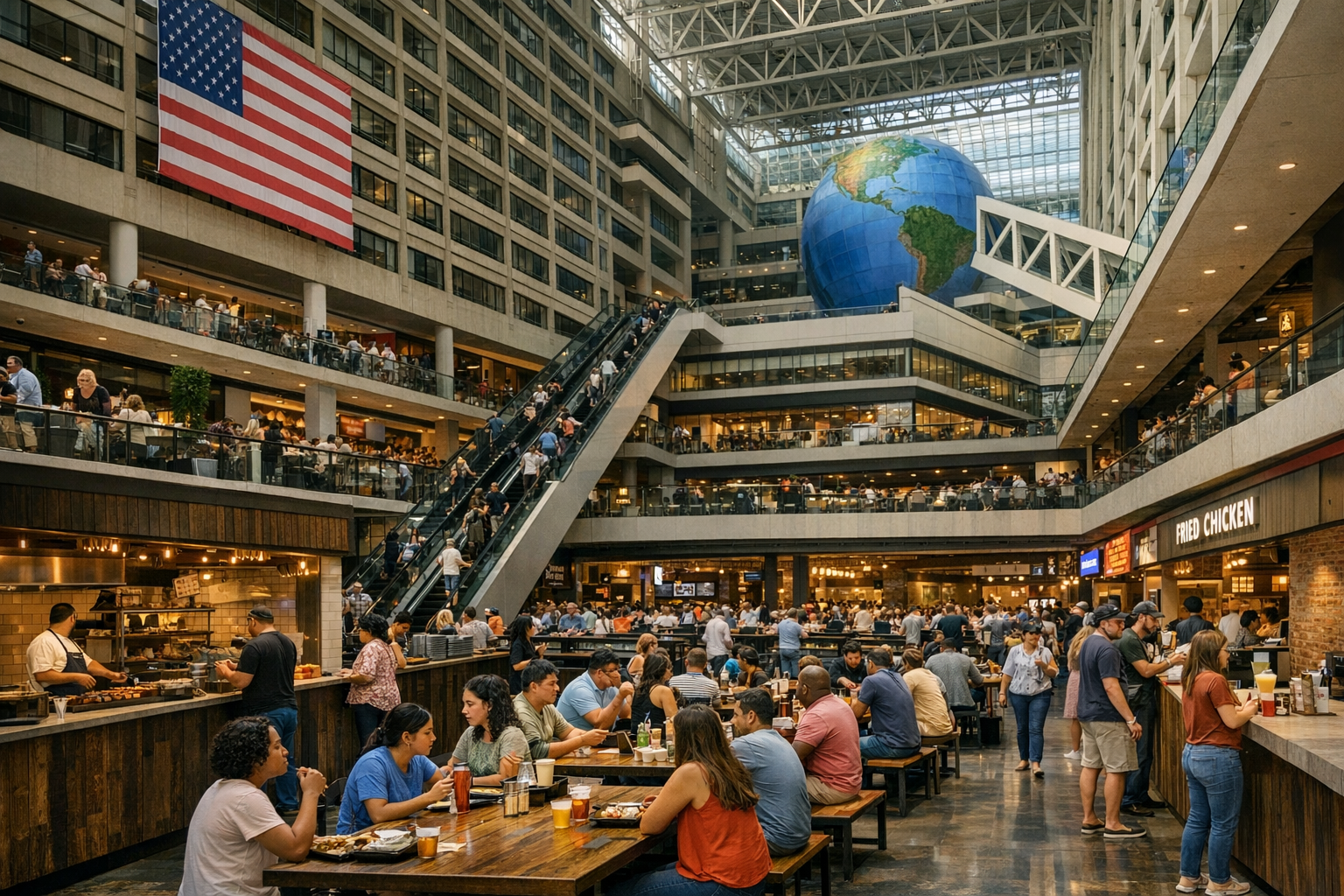
The layout now encourages lingering. A mix of stalls, bars, and communal tables is designed for a quick pre‑game bite, a coffee after a conference panel, or a casual meetup for people who live in Fairlie‑Poplar, Castleberry Hill, or nearby student housing. If downtown once felt like a set of sealed venues, The CTR aims to be shared ground—somewhere you go even when you don’t have tickets in hand.
What to eat and how to use it
Food halls live or die on their operators, and The CTR leans into recognizable Atlanta cravings: fast‑casual comfort, regionally inflected flavors, and menus that can satisfy a mixed group on a tight clock. The roster is expected to evolve, but the intent is clear—fewer interchangeable chains, more concepts with local identity and ties to the broader dining scene.
Expect flexible, handheld food: wings and burgers for arena‑goers, salads and grain bowls for convention‑center power‑lunchers, tacos and rice plates for families and groups between panels. This hall doesn’t have the luxury of being niche; it has to feed hotel guests, visiting teams’ staffers, students on a budget, and parents with strollers in the same hour.
The best‑case scenario is a lineup of independent or small‑group operators who know high‑volume service without losing personality—existing neighborhood favorites using The CTR as their downtown outpost, or concepts that nod to nearby Westside and Castleberry Hill communities. The model isn’t Ponce City Market or Krog Street Market; it’s a hall tuned to weekday lunch rushes, NBA and WNBA spikes, and waves of conventioneers with 45 minutes to eat.
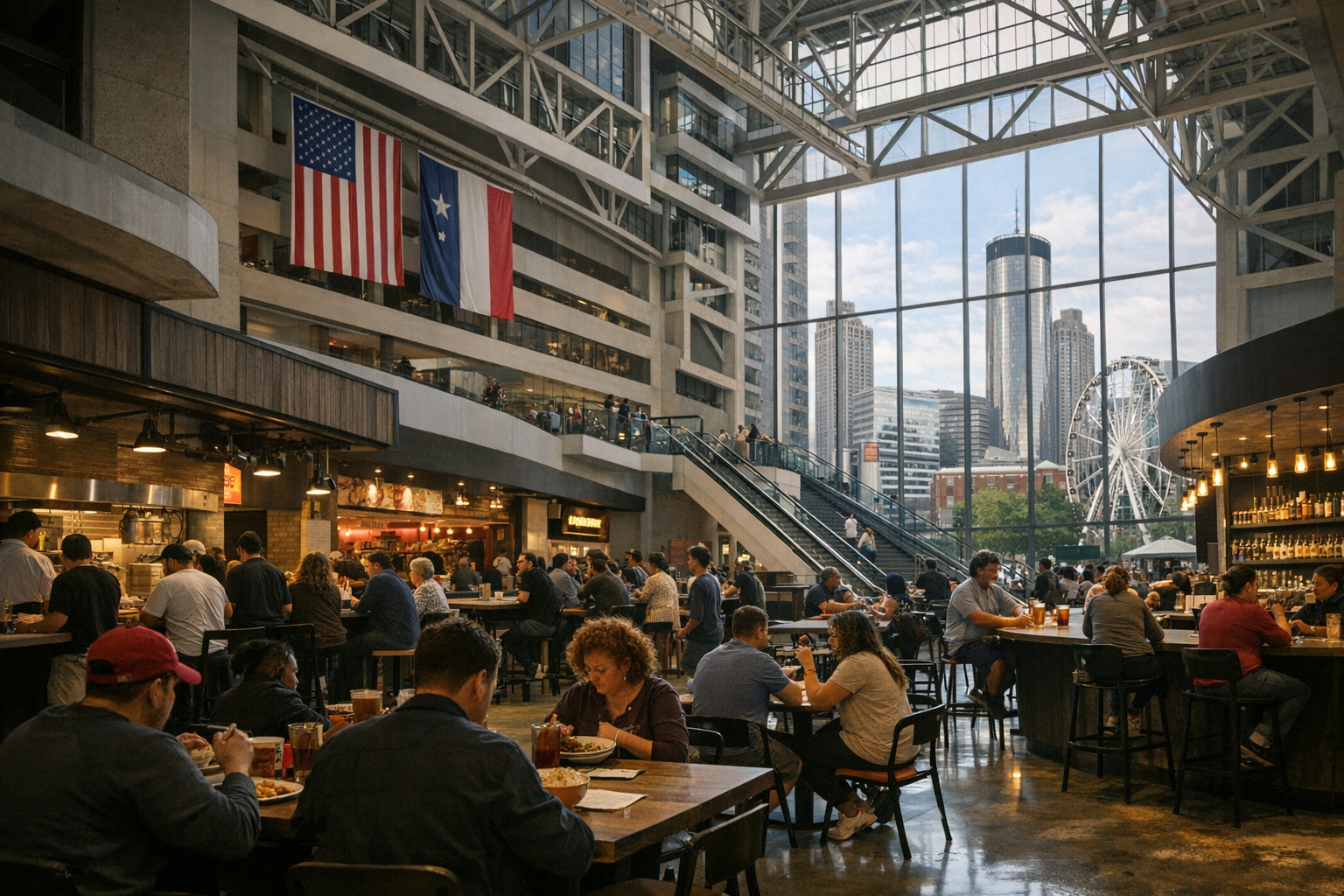
- Use it as your downtown hub: If you’re heading to State Farm Arena, the Georgia World Congress Center, or Centennial Olympic Park, plan The CTR as your main food stop. Build in time before or after your event so each person can choose a stall that fits their budget and schedule.
- Convention play: GWCC veterans know nearby lines can be brutal. The CTR adds capacity within walking distance, with multiple queues instead of one overrun doorway.
- Park‑day base camp: Pair a morning at the park or the College Football Hall of Fame with an indoor break for iced coffee, snacks, and air‑conditioning before heading back out.
- Transit connection: Arrive via MARTA at Five Points or GWCC/CNN Center and treat The CTR as a meeting point between trains, rideshares, and events.
Parking will always hinge on event timing and open decks, but the longer‑term goal of projects like The CTR and Centennial Yards is simple: once you’re here, you shouldn’t need your car again to get to your hotel, meeting, game, and dinner.
Why this matters for downtown Atlanta
Atlanta’s food halls have largely clustered on the BeltLine and intown neighborhoods with strong residential bases. The CTR represents something different: a dining heart dropped into one of the city’s most tourist‑heavy, event‑driven blocks, with aspirations beyond pure transaction.
Done well, it’s a downtown platform for operators who might not otherwise gamble on a standalone address here but can work with shared infrastructure and constant foot traffic. It’s also a test of a shifting mindset. For years, people came to this part of downtown “for” something—a game, a concert, a conference—then left. The CTR suggests a different pattern: come to be in the city, to eat and watch the crowd, even when there’s no marquee on the arena.
There are still unknowns: which vendors will define the hall’s character, how late the doors will stay open, whether the mix can stay nimble as more residents move in. But turning a closed‑off corporate lobby into a public dining room is a quiet, visible reimagining of one of Atlanta’s most televised corners.
For now, think of The CTR as a new downtown tool—part food court replacement, part civic canteen, and a signal that the neighborhood at the foot of the arenas and the park is finally growing a life between the big moments.