



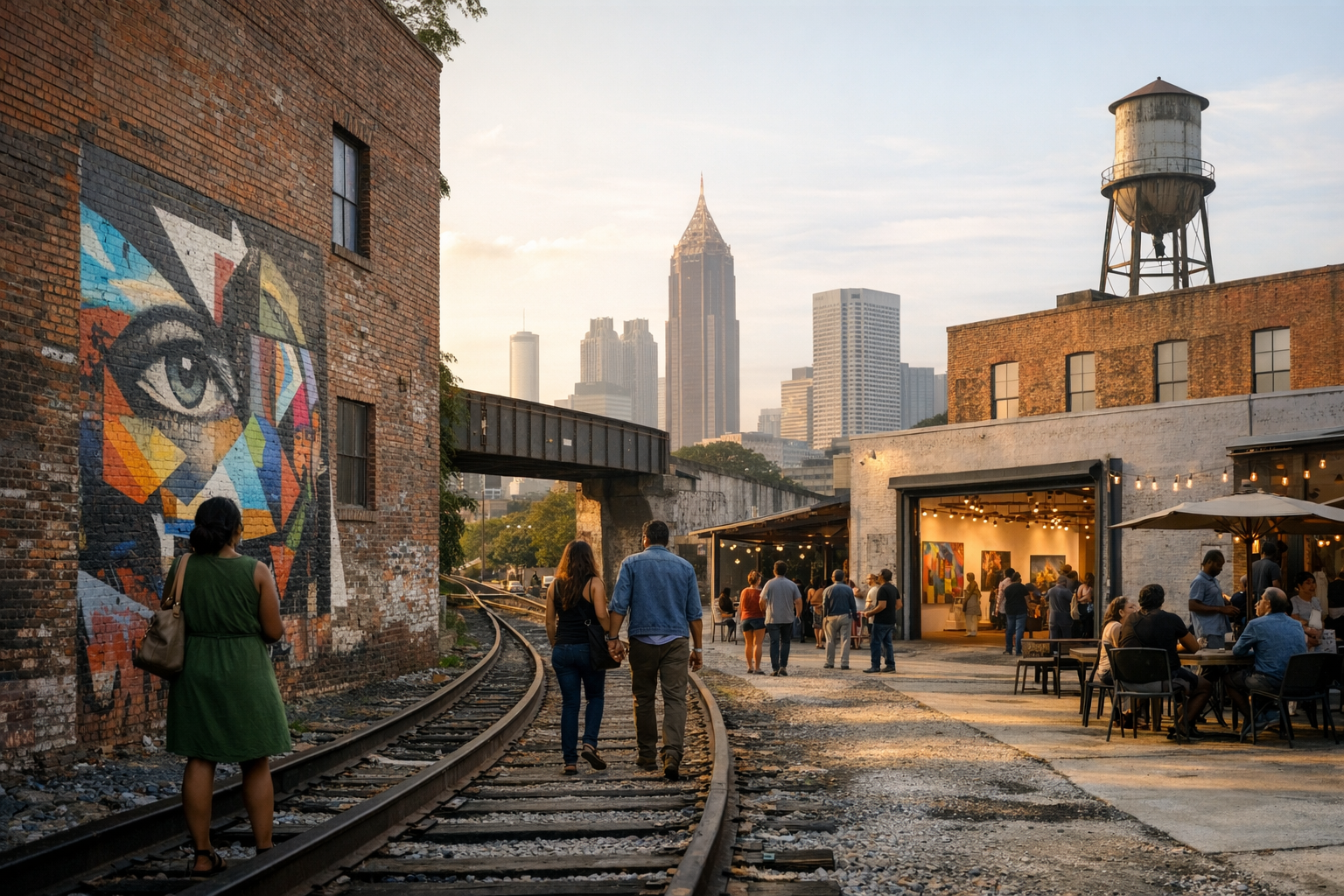
On Second Fridays in Castleberry Hill, the streets can feel louder than the freight trains. Gallery doors on Peters and Walker prop open; music drifts from a loft; video spills across a brick wall that once held cotton, not concept pieces. By your third stop you’ve seen three versions of Atlanta—historic, postindustrial, and whatever’s being invented upstairs in real time.
Head a few minutes northwest and the rhythm shifts. Along Marietta Street and Howell Mill, the Westside’s converted factories tuck galleries between design showrooms, studios, and restaurants. A roll‑up door hides a project space; a white cube perches above a loading dock. You can step out of a quiet sculpture room into the glare of a gas station just as a freight train pushes through.
Between Castleberry Hill and the Westside, Atlanta pressure‑tests its visual culture. Midtown anchors like the High Museum of Art and the Atlanta History Center hold major collections; these warehouse corridors are where curators take risks, where “Atlanta art” is an argument, and where the city’s next aesthetics show up on brick, concrete, and drywall long before they reach a Midtown gallery talk.
The Know: Two Corridors, Two Rhythms
Castleberry Hill: dense, walkable, local. Just southwest of downtown, Castleberry Hill is a tight grid of historic warehouses and lofts off Peters and Walker. Brick storefronts, loading docks, murals, and buzzer‑entry studios sit close enough that you can cross the neighborhood in minutes. Long known for Black‑owned creative spaces and independent galleries carved from old commercial buildings, it’s the kind of place where you recognize faces from one doorway to the next.
During the monthly art stroll, you park once and move on foot—from a commercial gallery to an experimental project room to dinner—with studio windows and alleyway murals stitching the route together. Conceptual photography, abstract painting, pop‑up installations, sidewalk performances, and doorway conversations compress into a single moving crowd.
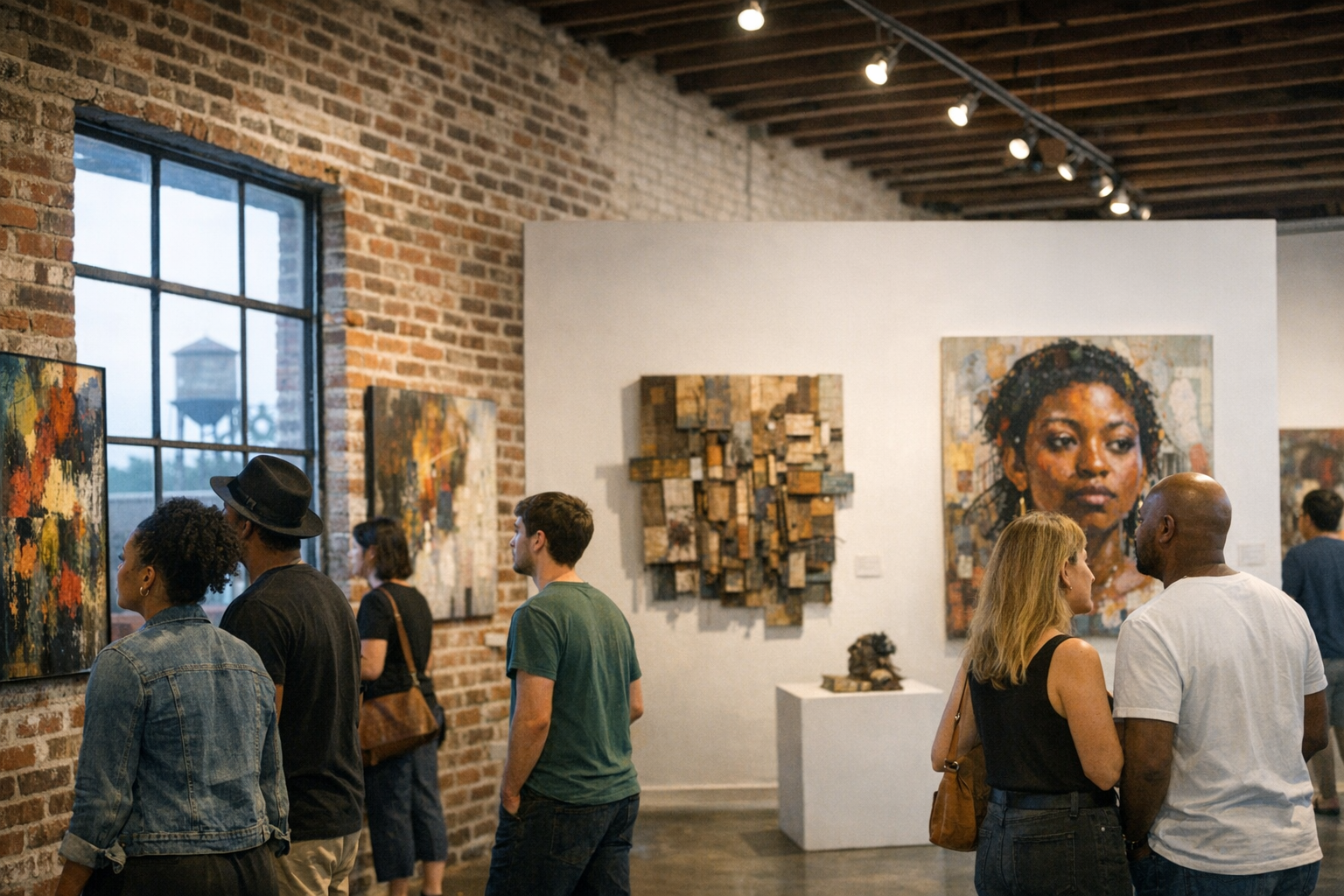
Marietta Street / Westside: built for cross‑pollination. The Westside, roughly tracing Marietta Street and Howell Mill Road, is looser—art spaces woven into adaptive‑reuse warehouses, food halls, creative offices, and production facilities. As former factories shifted into mixed‑use hubs, artists and gallerists filled the in‑between spaces: upper floors above branding agencies, corners of warehouse complexes, bays tucked behind storefronts.
A sculptural installation might appear inside a design showroom; a pop‑up exhibition might take over a studio building for a weekend; a commission might be folded into new construction. Contemporary galleries, creative campuses, and production studios share air with freight trains and commuter traffic.
Institutional gravity, without the institution feel. Outlets like ArtsATL track what happens in these rooms and how it feeds back into citywide venues through reviews, artist profiles, and previews. Museums like the High and the Atlanta History Center pull work in from around the world; Castleberry Hill and the Westside send artists, ideas, and already‑tested conversations back out. A solo show in a Castleberry warehouse or a group exhibition off Marietta can sit on the path toward a museum acquisition or a future institutional show.
How to go
- Start with the institutions. Use the High Museum’s events calendar and the Atlanta History Center’s events listings to time your visit around talks, film screenings, or exhibition openings that connect directly to Atlanta artists and themes.
- Layer in neighborhood exploration. Before you head to Castleberry Hill or the Westside, scan the ArtsATL calendar for gallery openings, pop‑up shows, and public art events nearby so you can walk from a major institution into smaller warehouse spaces on the same day.
Brick, Rail, and Risk
Castleberry Hill’s art life starts with its buildings. Former cotton and hardware warehouses now hold white‑walled galleries, studios, and live‑work lofts. High ceilings and freight doors suit large painting, installation, and sculpture; alleys and loading docks double as stages or temporary mural walls. The neighborhood’s scale means you see the same people all night, whether they’re installing work, pouring drinks, or arguing on the sidewalk.
That proximity keeps the conversation hot. A tight cluster of galleries, studios, and creative businesses means artists are constantly in each other’s spaces—seeing shows the day they open, sharing visitors, debating in person what “Atlanta art” can be. Emerging painters get full rooms. Photographers, sculptors, video artists, and performers share walls and opening nights, pushing curators to put different practices in dialogue and keeping the work accountable to neighbors as much as to visiting curators.
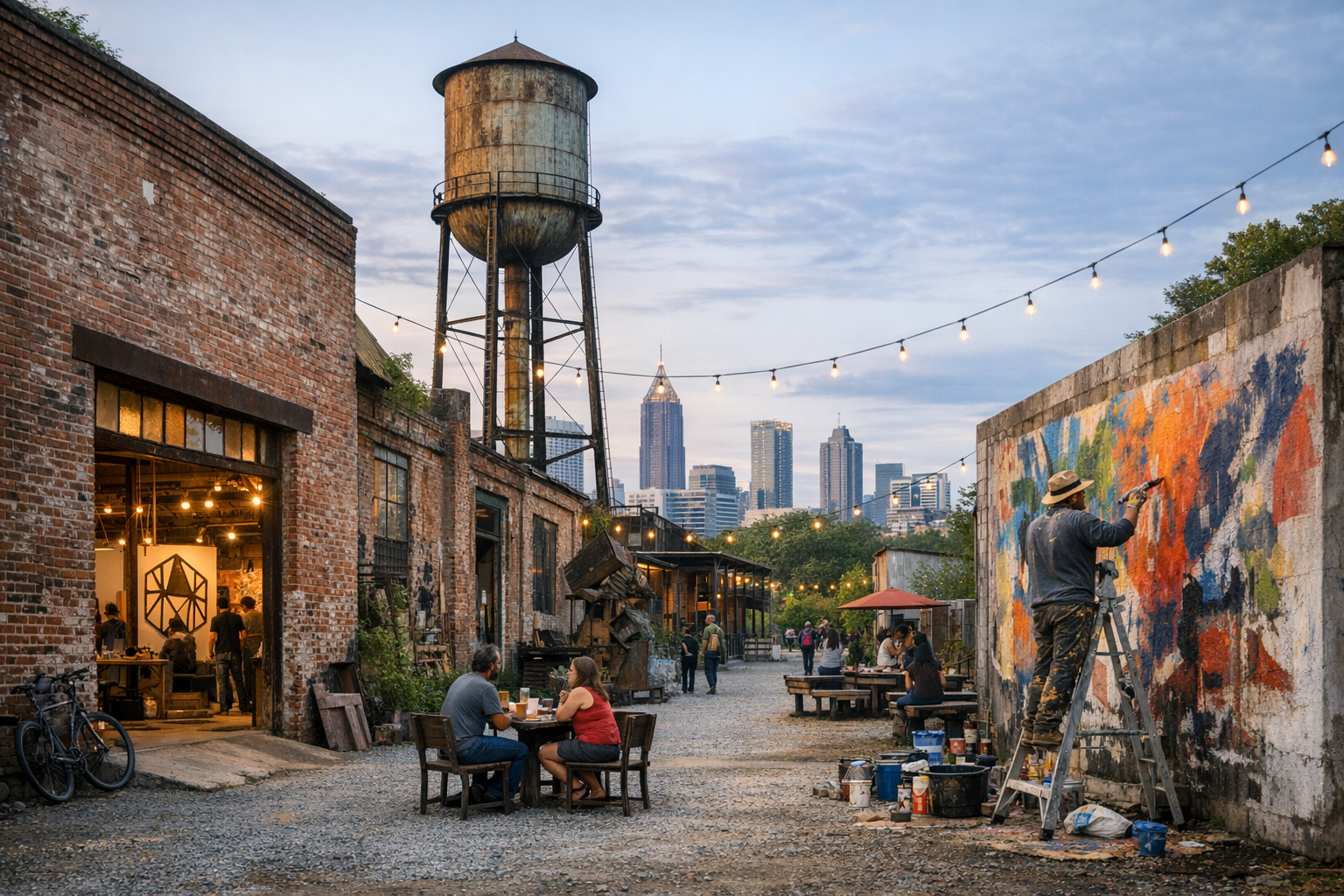
Up the road, the Westside’s art story tracks closely with redevelopment. As manufacturing and distribution spaces along Marietta Street became food halls, lofts, and creative offices, artists slipped into the seams—upstairs from a branding firm, around the corner from a brewery, behind anonymous roll‑up doors. Some galleries focus on emerging regional talent; others bring in nationally recognized names; many toggle between Atlanta‑focused experiments and broader conversations in contemporary art.
That physical mix creates a particular kind of friction. A mural might stretch across a wall tagged for redevelopment; a gleaming lobby installation might sit a block from a raw, one‑night‑only show staged in a still‑rough bay. It’s an Atlanta look: concrete, rail, and red clay sharing the frame with white walls and polished floors. Westside‑adjacent segments of Art on the Atlanta BeltLine extend that conversation outdoors, with sculptures, murals, and performance projects echoing themes you’ll find inside—land use, transit, Black Southern life, neighborhood change.
Atlanta angle: Reading the Corridors
There’s a throughline between a one‑night pop‑up in Castleberry, a group show off Marietta, and a future wall at the High. It runs through the curators, writers, and artists programming these rooms and the way Atlanta’s built environment keeps forcing the art back into public view.
In Castleberry Hill, that thread might look like a young painter testing a first solo in a loft‑scale gallery, with neighborhood kids peering through the front windows and other artists dropping in from studios upstairs. On the Westside, it might be a sculptor splitting time between a warehouse project space and an outdoor commission along the Atlanta BeltLine, watching how the work lands with cyclists, commuters, and collectors in turn.
For Atlanta readers, the payoff is recognizing that these corridors aren’t just backdrops for gallery nights—they’re labs for what eventually shows up on major museum walls and in citywide conversations. Walk them with that in mind, and every loading dock, rail line, and brick façade becomes part of the artwork.