



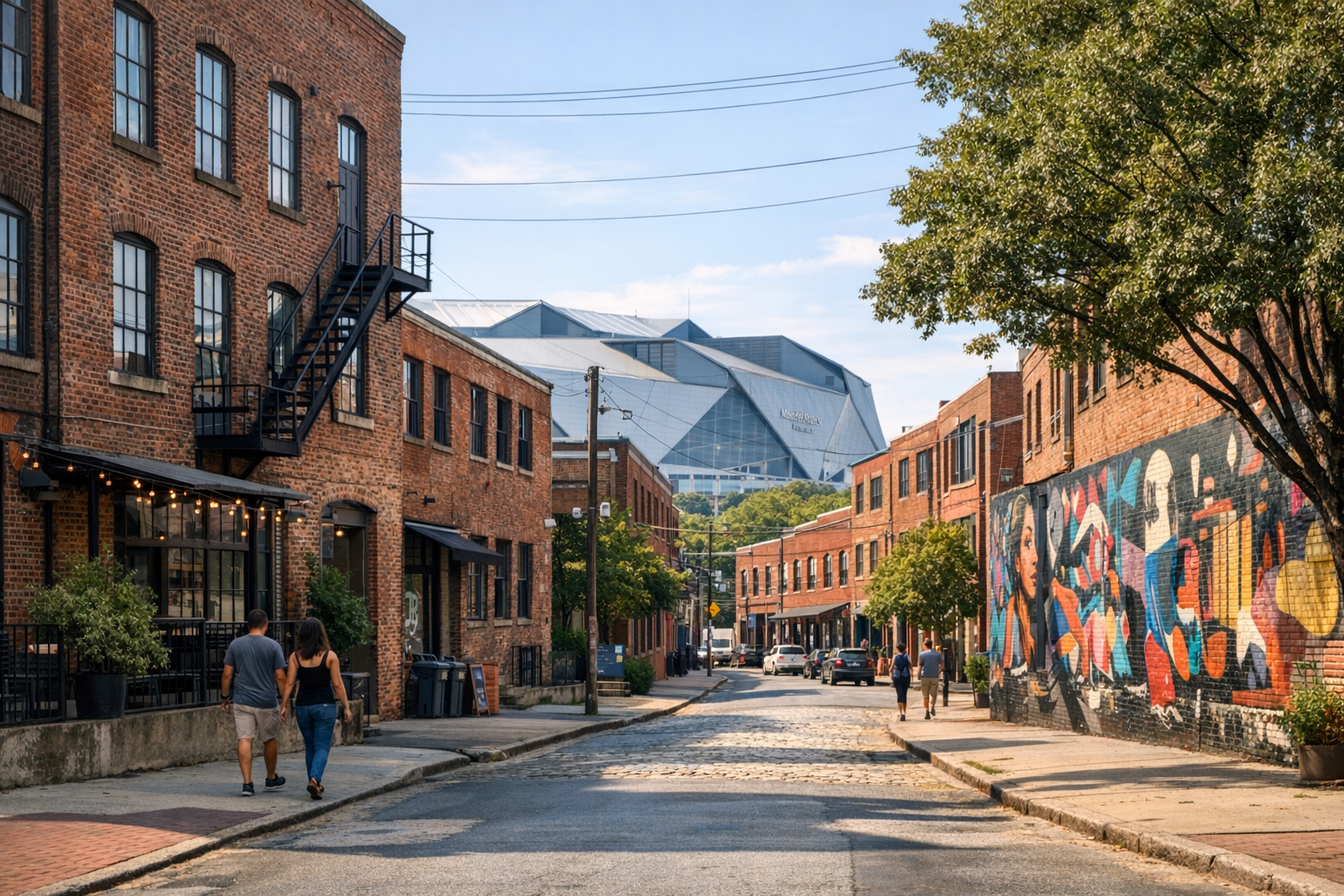
Just south of Downtown, Castleberry Hill blends loft living, art spaces, and old warehouse streets with the foot traffic of Mercedes-Benz Stadium events, giving the area a distinct in-town rhythm.
Castleberry Hill sits in the narrow space where Atlanta’s older industrial fabric meets the city’s event economy. Walk its blocks and the street level changes quickly: brick warehouses, loft buildings, gallery doors, and the steady pull of Downtown just nearby. The neighborhood feels shaped by movement—people heading to games, dinners, openings, and late nights—yet it keeps its own scale. That mix is part of its identity: a place where historic buildings, art, and stadium crowds share the same streets.
Fast facts
- Castleberry Hill is an intown neighborhood with a warehouse-district feel. Its streets read differently from nearby office corridors. The buildings, textures, and block patterns give the area a converted-industrial atmosphere that feels tied to Atlanta’s older downtown edge, even as the neighborhood remains active and lived-in.
- The neighborhood is known for art spaces and lofts. That mix shapes how the area functions day to day. Galleries, studios, and loft buildings bring a creative residential and commercial layer to streets that also serve visitors, making Castleberry Hill feel both working and inhabited.
- Castleberry Hill sits near Downtown and Mercedes-Benz Stadium. Its location places it within reach of major venues without becoming part of them. That proximity matters in Atlanta, where a short walk can shift someone from neighborhood sidewalks to event gates, transit flows, and downtown foot traffic.
- Event days change the pace of the neighborhood. Castleberry Hill often benefits from stadium traffic, with crowds moving through nearby blocks before and after games or other large gatherings. The neighborhood absorbs that energy while still holding onto a distinct identity of its own.
- Castleberry Hill connects art, nightlife, sports crowds, and historic buildings. That overlap is what makes the area feel distinctly Atlanta. The same streets can support a gallery visit, a dinner stop, and a post-event walk, all against a backdrop of older structures that remind you the city has been layered here for a long time.
The Atlanta angle
Castleberry Hill works as a threshold neighborhood, one that helps explain how Atlanta’s downtown edge stays active beyond office hours. It is close enough to major venues to catch the flow of people, but its warehouse-scale buildings and street pattern keep it from dissolving into pure event space. That balance gives residents, business owners, and visitors a place that feels useful in different ways at different times of day. In the afternoon, it can read as a quiet pocket of studios and lofts. By evening, the same blocks can take on the rhythm of restaurant traffic, gallery openings, and stadium spillover moving through the sidewalks.
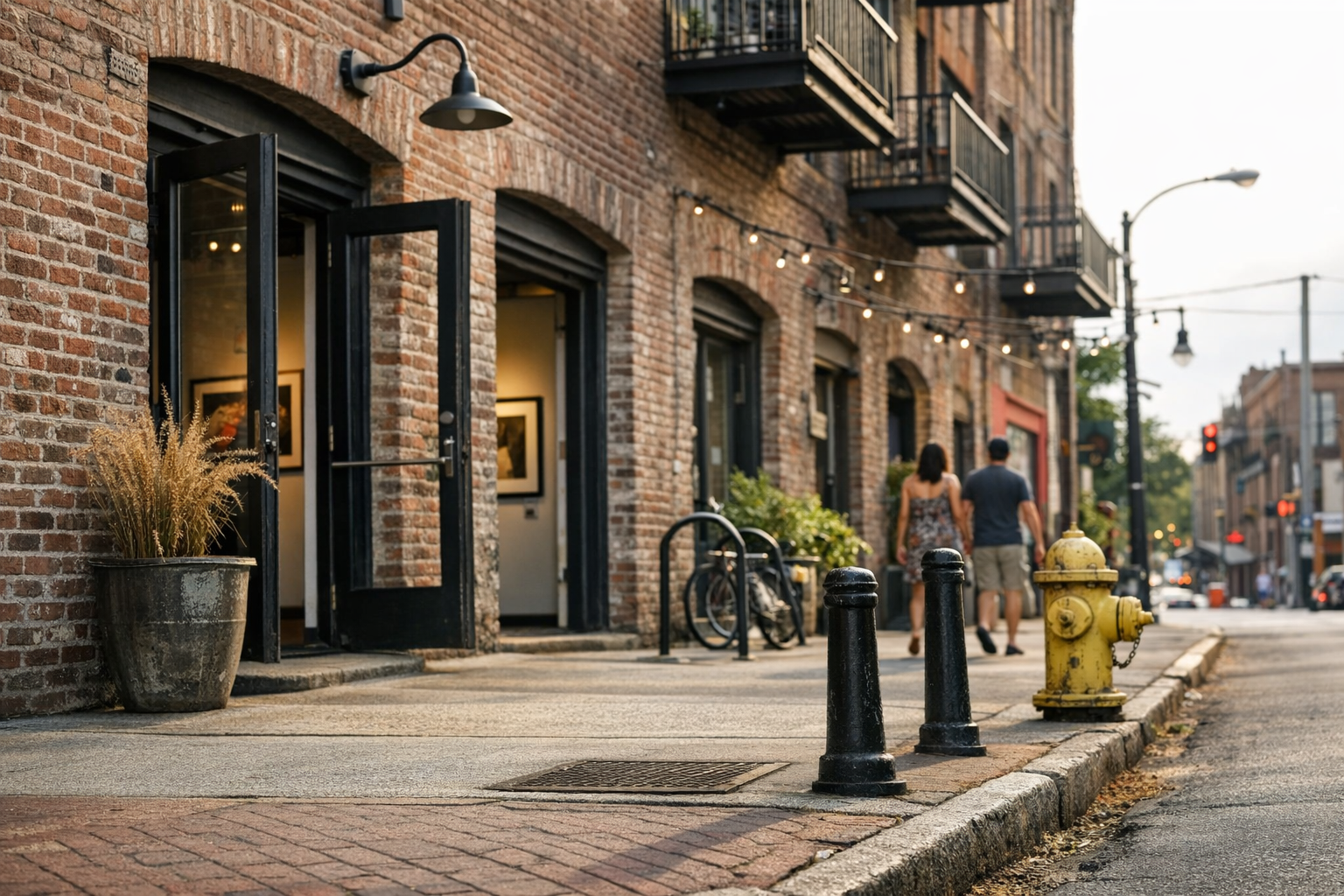
For Atlanta, Castleberry Hill shows how old buildings can still organize new urban life. The neighborhood’s identity comes from reuse, proximity, and layered function: art spaces beside housing, nightlife beside historic structures, and major-event energy just a few blocks away. That combination matters because it reflects a city that keeps adapting without completely erasing what came before. Castleberry Hill does not feel separate from downtown Atlanta so much as interwoven with it. It is part of the city’s everyday map, where people experience Atlanta not as a single center, but as a set of connected streets and uses that shift from block to block.
Keeping You In The Know