



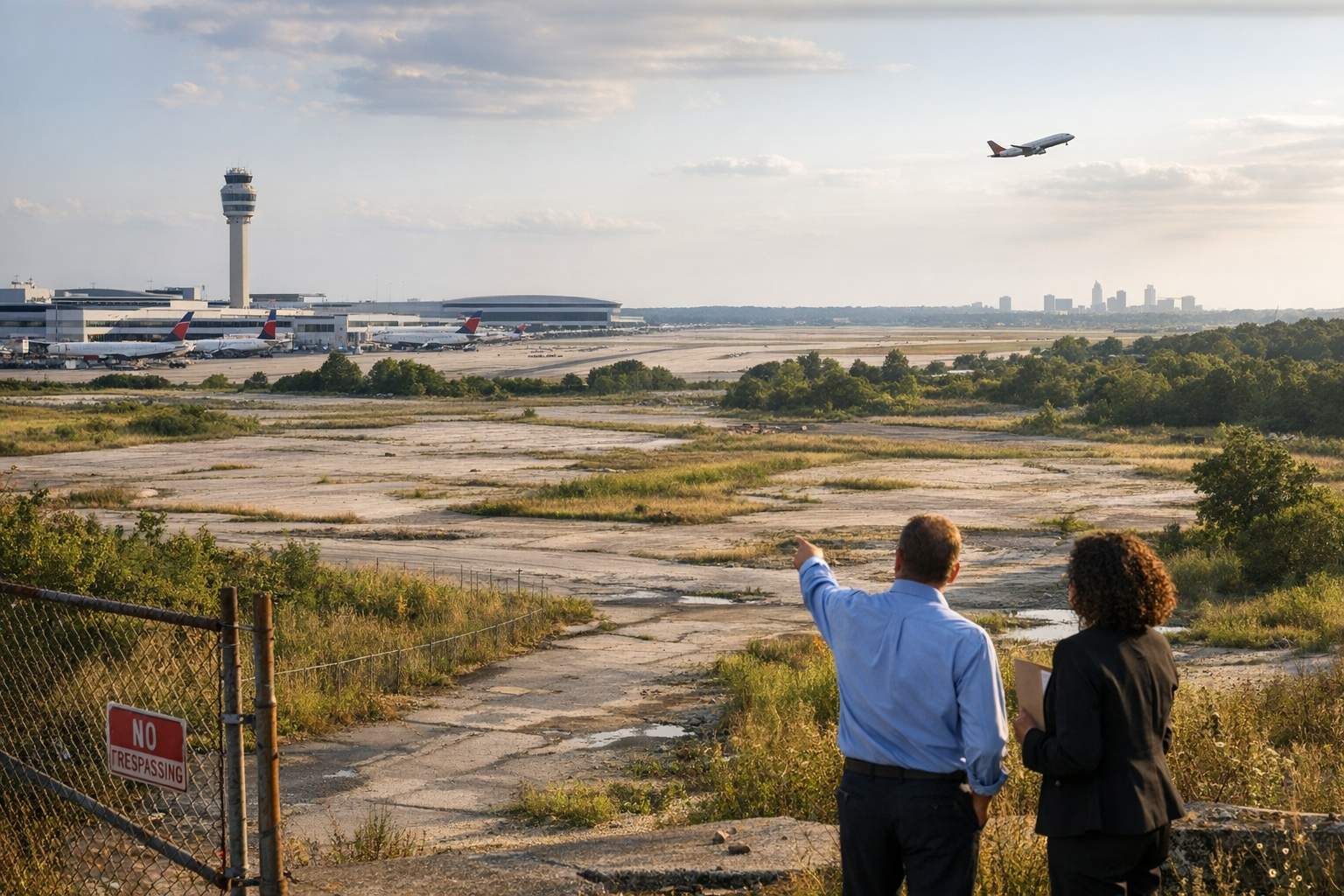
West of the Hartsfield-Jackson runways, beyond the hotels and parking decks, College Park controls a sweep of underused land that still reads as a blank spot on the map. The city has now put that blank officially on the market.
College Park is seeking development teams for roughly 311 acres on the airport’s edge — a once-stalled “Airport City” concept that, if realized, would be one of the largest new mixed-use districts on Atlanta’s southside.
If you fly often, work near Hartsfield-Jackson, or are betting on the southside’s long game, this is a project to track for what it could do to jobs, traffic, and everyday life around the airport.
The Know: 311 Acres Back in Play
The site sits inside College Park city limits, immediately west of Hartsfield-Jackson and the Georgia International Convention Center. For years, the city floated it as Airport City, a dense, airport-driven business district. Roads and utilities advanced, land was assembled — but transformative private development never followed.
Now, as reported by Bisnow, College Park has reset the approach, issuing a request for proposals aimed at a single master developer instead of piecemeal deals. Planning documents now frame the 311 acres as a walkable mixed-use district rather than a pure office or industrial park.
The timing is pointed. Hartsfield-Jackson remains one of metro Atlanta’s dominant job engines, yet the southside has not seen the concentrated private investment that reshaped the BeltLine and Westside. With a mega-site at the world’s busiest airport, College Park has something many intown areas no longer do: scale.
What College Park Wants Built
City leaders are pitching a long-term, phased district mixing offices tied to airport operations, logistics and tech space, hotels, retail, and housing. The RFP gives flexibility but is explicit on a few points:
- True mixed-use. Not a warehouse farm, but a blend of commercial, office, hotel, and residential space with targeted ground-floor retail.
- Walkable street grid. An urban-style network of streets, sidewalks, and public spaces so people can realistically move between offices, hotels, housing, and transit on foot.
- Airport-adjacent, not airport-only. The airport is the anchor, but the goal is a district that functions as both employment center and neighborhood after hours.
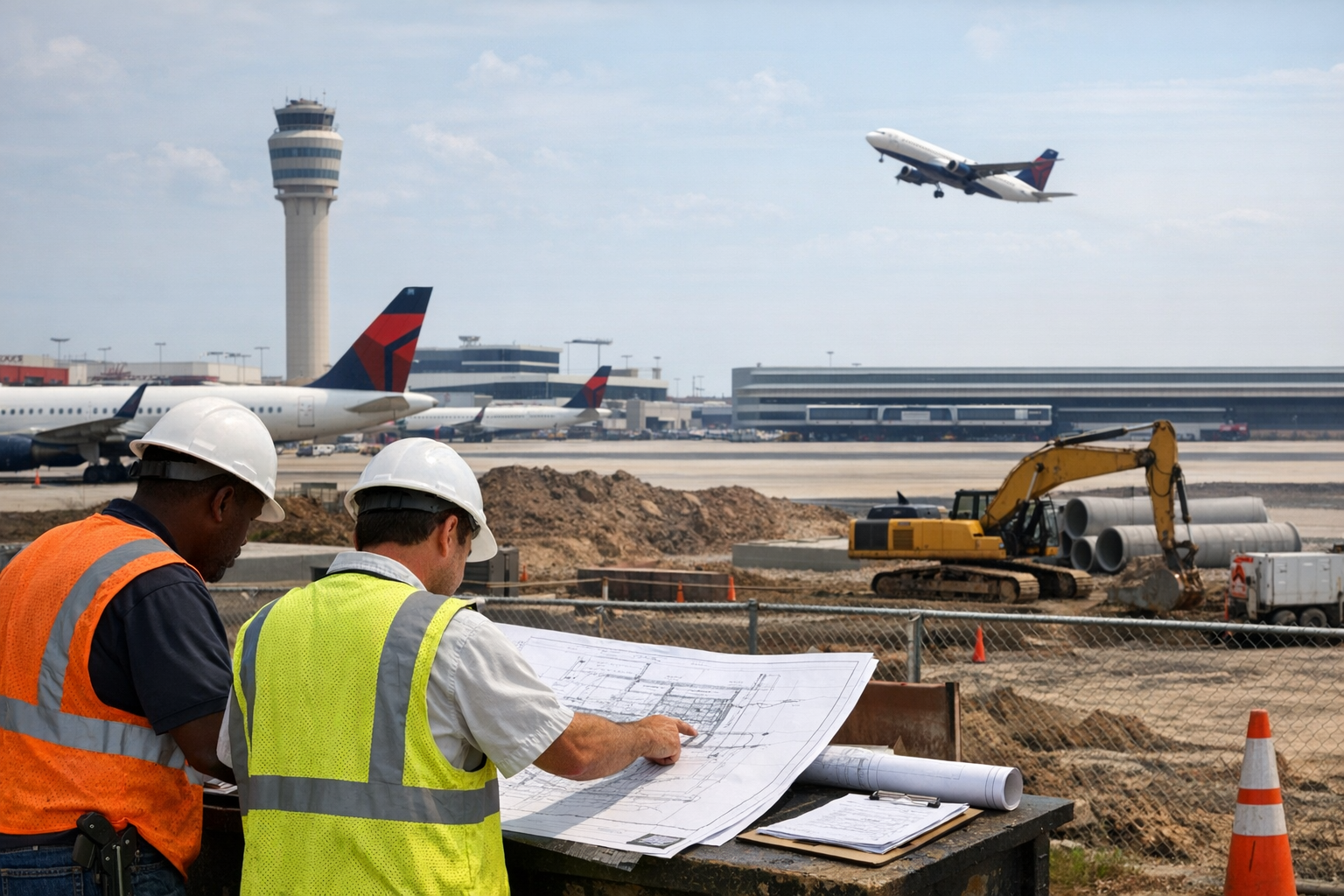
Details on height, density, and phasing will fall to the selected team, subject to financing and approvals. For now, the 311 acres are largely prepped: improved access roads, utilities underway, land mostly assembled, with zoning expectations set.
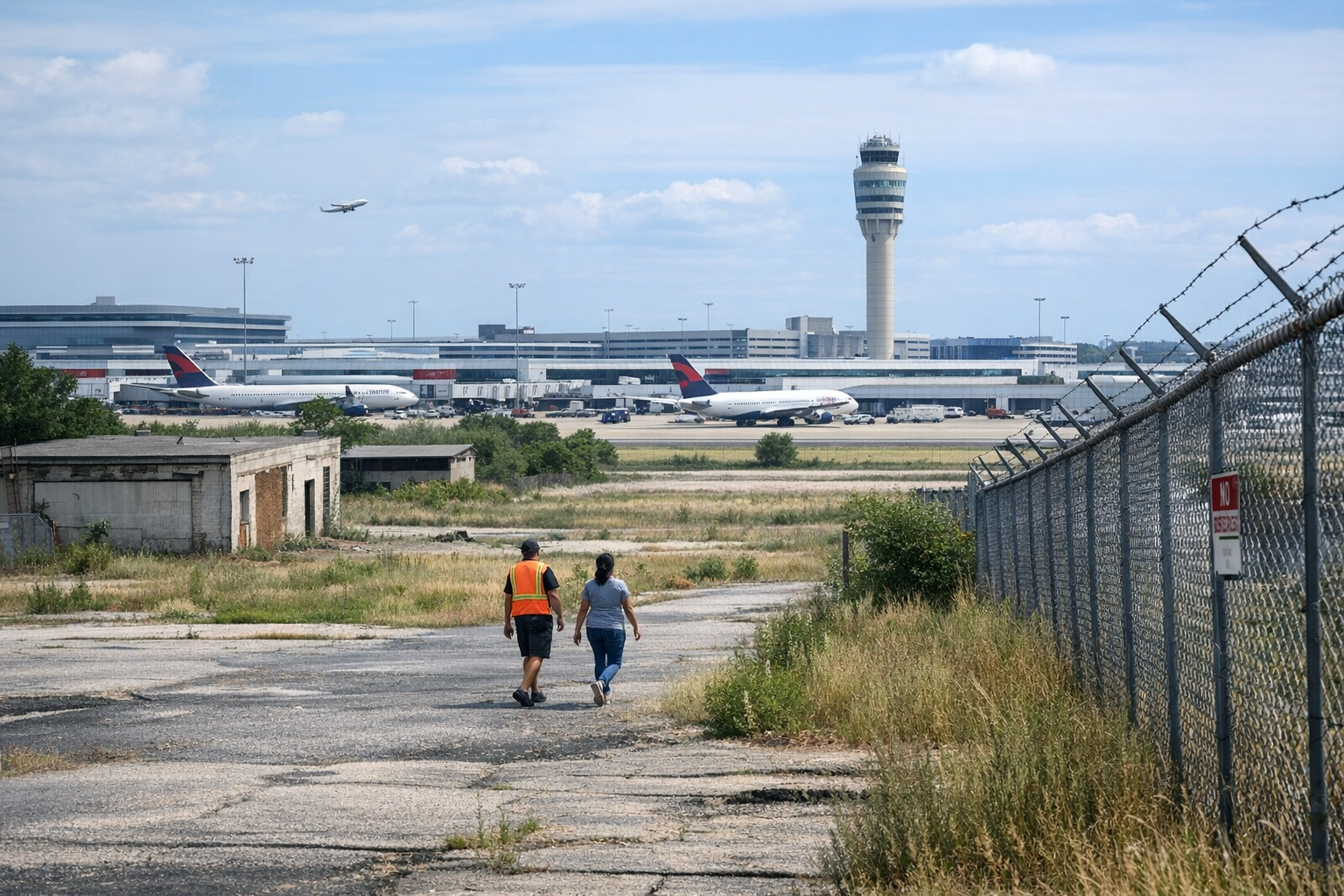
On the ground, it’s still more patchwork than skyline — cleared tracts, upgraded streets, and older structures in the shadow of airport hotels. The value is less what’s built today than the sheer size of entitled land at an interchange where most sites are already spoken for.
What Changes on the Ground
For southside residents, airport workers, and anyone in travel, logistics, or hospitality, the impact will register in jobs, traffic, and housing options more than in renderings.
Jobs and daytime population. A sizable office and commercial cluster could pull new workers into College Park, strengthening demand on Main Street and nearby corridors and making it easier to support restaurants, services, and entertainment that serve both locals and frequent flyers.
Housing close to work and MARTA. If the residential piece arrives as envisioned, the project could add apartments within a short drive — and potentially shuttle or transit links — to airport terminals and the College Park MARTA station. For weekly travelers and shift workers, that kind of proximity is still rare in Atlanta.
A visible southside bet. For the last decade, most marquee projects have clustered north or east of Downtown. A 311-acre district at the airport’s front door would plant a visible flag on the southside. The open question is whether it knits into surrounding neighborhoods or reads as a self-contained island beside the tarmac.
For younger Atlantans who spend a lot of time at Hartsfield-Jackson — flying out, commuting to work, or hosting out-of-town friends — this kind of buildout could eventually mean more hotel choices, meeting spaces, and places to eat or grab a drink without detouring into the core of the city.
How to go
- Follow project updates, RFP milestones, and future public meeting notices on the City of College Park’s official site at the Office of Economic Development.
- If you live or work nearby, watch the city’s meeting calendar and planning agendas for information on zoning, site plans, and community input sessions that will shape how the district connects to existing neighborhoods.
The RFP is an early move; any full buildout will stretch over years. The milestones to watch: which development partner College Park selects, how the first site plans and phasing are drawn, and when the initial groundbreakings actually hit the calendar. Those signals will show whether this long-discussed mega-site stays theoretical — or finally redraws how Atlanta’s southside meets the airport.
Indakno – Keeping You In The Know