



Culture
On a weeknight along Buford Highway, the parking lot tells the story. Smoke from Korean barbecue drifts over a Guatemalan panadería; a Vietnamese phở shop sends out star-anise steam that mingles with al pastor carved from a trompo next door. Inside aging strip malls, families linger over hot pots and seafood towers while someone hauls a farmers market bag back to a minivan under buzzing fluorescent lights. It feels a long way—culturally, if not in miles—from the landscaped paths and skyline selfies of the Atlanta BeltLine. Yet the city’s most famous loop now echoes what Buford Highway has done for decades: put immigrant kitchens at the center of how Atlanta eats.
How immigrant food became Atlanta’s everyday
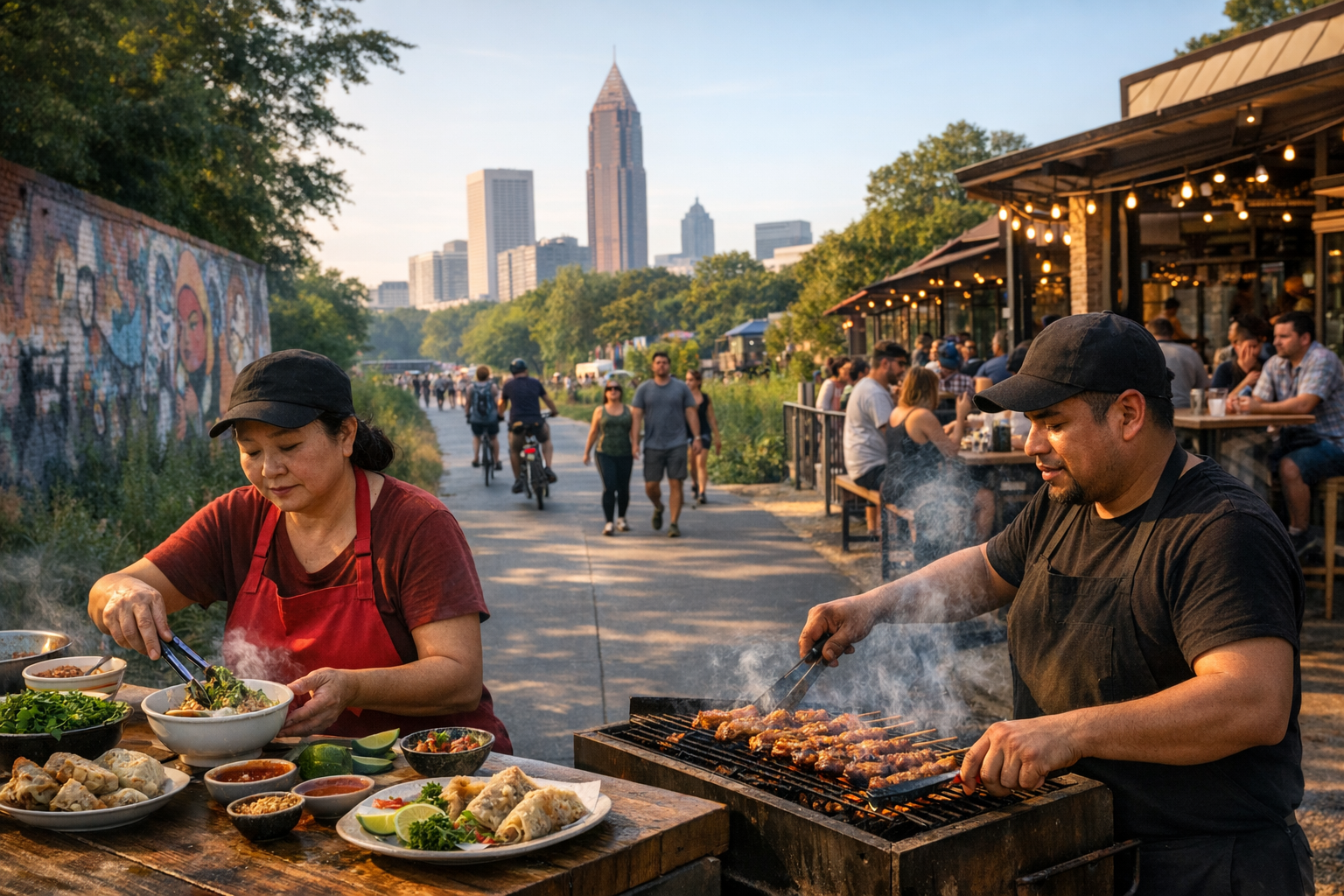
Atlanta’s national food reputation still rests on Southern touchstones—meat-and-threes, fried chicken, lemon pepper wings. But trace how locals actually eat and another map appears. Office workers detour to Doraville for kimbap and soondubu, soccer teams refuel at late-night taquerías, and weekend BeltLine walkers queue for birria, momos, and elote from shipping-container kitchens and park-adjacent stalls.
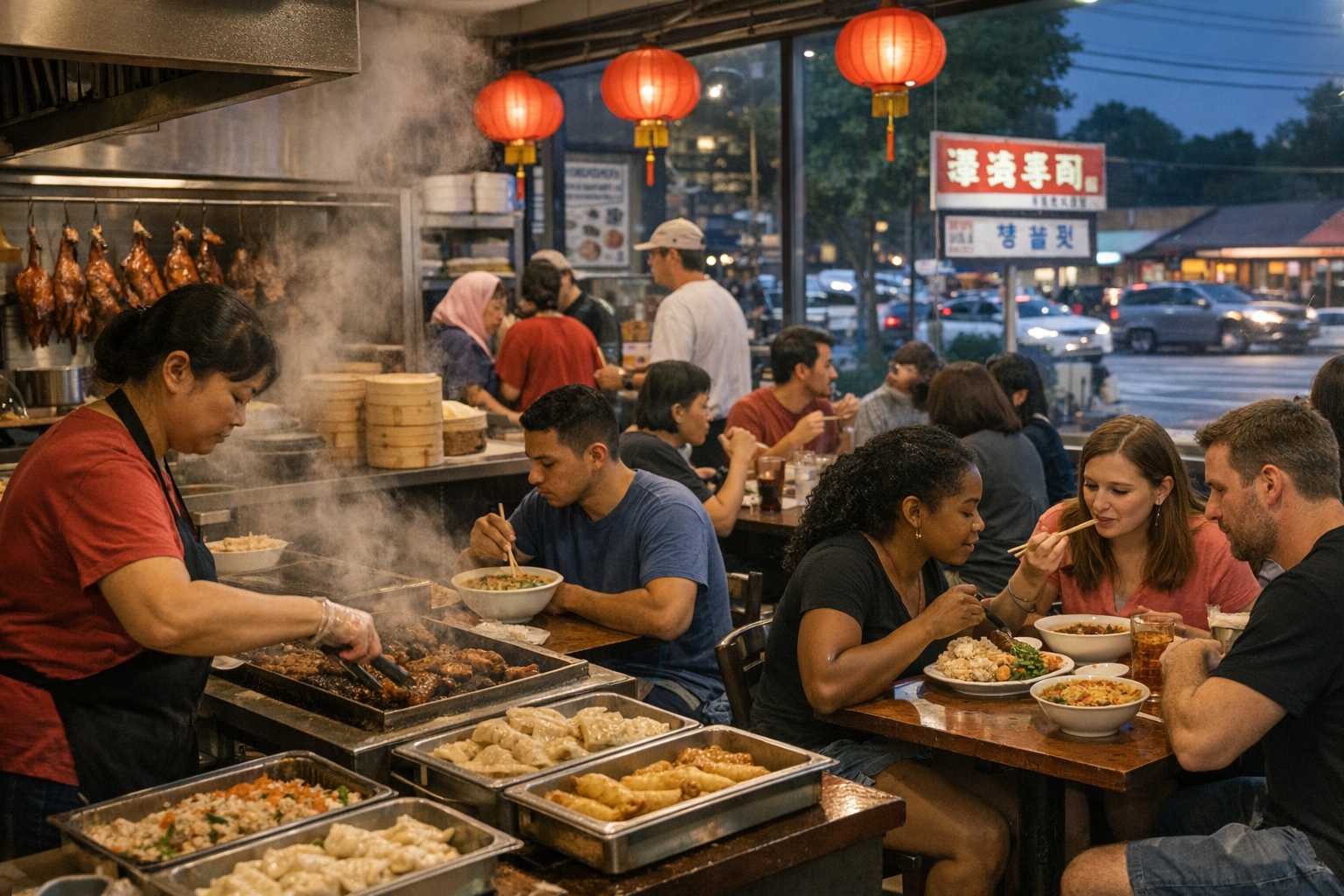
Many of those flavors arrived as necessity, not trend. Families opened restaurants to serve their own neighborhoods first—Vietnamese cafés for new arrivals in DeKalb County, Cantonese seafood halls for weddings and Lunar New Year banquets, pupuserías and taquerías near construction corridors as the metro boomed. Over time, those spaces became bilingual: menus translated, hours extended, dining rooms tuned to curious Atlantans from across the region.
In a metro reshaped by immigration from Norcross to Forest Park, food is often the easiest entry point. A Buford Highway lunch can tell you as much about Atlanta’s present as a trip to the Atlanta History Center tells you about its past.
The Know: Buford Highway vs. BeltLine
- Buford Highway is the classroom. Generations of Atlantans tried their first Korean barbecue, Chinese hot pot, Malaysian laksa, or Oaxacan tlayuda here. Unassuming plazas hide sprawling menus and region-specific cooking.
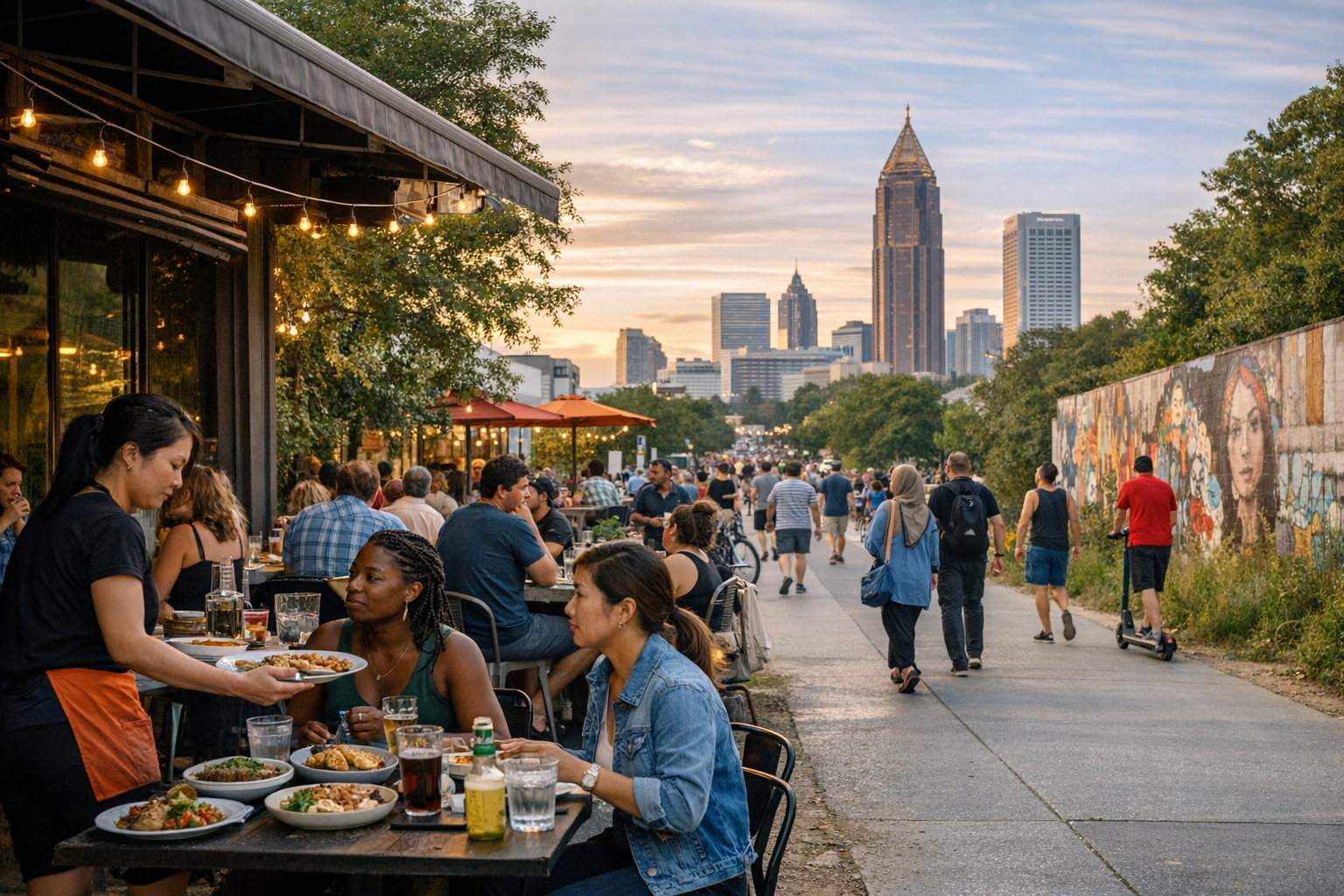
- The BeltLine is the loudspeaker. As immigrant-run spots open in food halls, walk-up windows, and patios along the trail, dishes that were once “destination eats” become part of casual snacking and date-night circuits.
- Together, they define Atlanta-normal. When a dish moves from a suburban food court to a stall by Krog Street, it stops reading as niche and starts feeling like a local staple.
- Your dollar is a vote. Where you choose to eat—who you follow from Buford Highway to the BeltLine and back—helps sustain the markets, bakeries, and small groceries that keep these communities rooted.
Buford Highway: the original global corridor
Drive Buford Highway through Brookhaven, Chamblee, and Doraville and you pass Spanish-language billboards, Korean church signs, Vietnamese salons, West African markets—an atlas in mid-century roadside concrete. Nothing about the facades says “destination dining,” yet this corridor quietly set the bar for ambitious everyday eating in Atlanta.
Its power is density. Step out of a Chinese bakery with a hot pineapple bun and you’re at a taco counter in minutes; wander a pan-Asian supermarket, then cross a narrow access road for Guatemalan coffee and pan dulce. The proximity makes experimentation easy: swap your usual phở shop for the noodle house next door, your go-to tacos for a place with lamb barbacoa only on weekends.
On busy weekends, Buford Highway doubles as informal cultural center: church vans in the lots, high school friends reuniting over hot pot, multi-generational families stretching long tables for birthday banquets. Even without the language, you recognize the choreography—sizzling platters, shared stews, a dessert you suddenly notice on every table. It’s a reminder that “Atlanta food” has always been metro food, crossing county lines the way locals cross I-285 for a craving.
Eating with intention
If immigrant kitchens already define how Atlanta eats, the question on a random Tuesday is what you do with that knowledge. A few habits can sharpen both your meals and your sense of the city:
- Link the loop and the highway. Discover a new dumpling or taco along the BeltLine, then dedicate another night to a more traditional version on Buford Highway or in Clarkston, Norcross, or Duluth.
- Pair culture with dinner. Anchor a day around exhibitions at the High Museum of Art or the History Center, or a show at the Center for Puppetry Arts, then choose immigrant-owned spots nearby instead of defaulting to national chains.
- Go past the greatest hits. Once you’ve had phở or tacos al pastor, ask about regional specialties or weekend-only dishes—the ones that most closely mirror hometown cooking.
- Include markets in your map. The groceries, bakeries, and butcher counters stocking spices, produce, and cuts you won’t see at big-box stores are as crucial to Atlanta’s food identity as any marquee restaurant.
Atlanta’s galleries, museums, and festivals tell one version of who lives here. Dinner tells another, written strip mall by strip mall, patio by patio, pop-up by pop-up. From Buford Highway to the BeltLine, immigrant kitchens have quietly expanded what “normal” looks like on the city’s table—kimchi jjigae beside collards, injera alongside cornbread, churros as a post-museum ritual instead of just ice cream. Living here now means those choices are close at hand, and every meal is a small vote for the kind of food city Atlanta decides to be.