



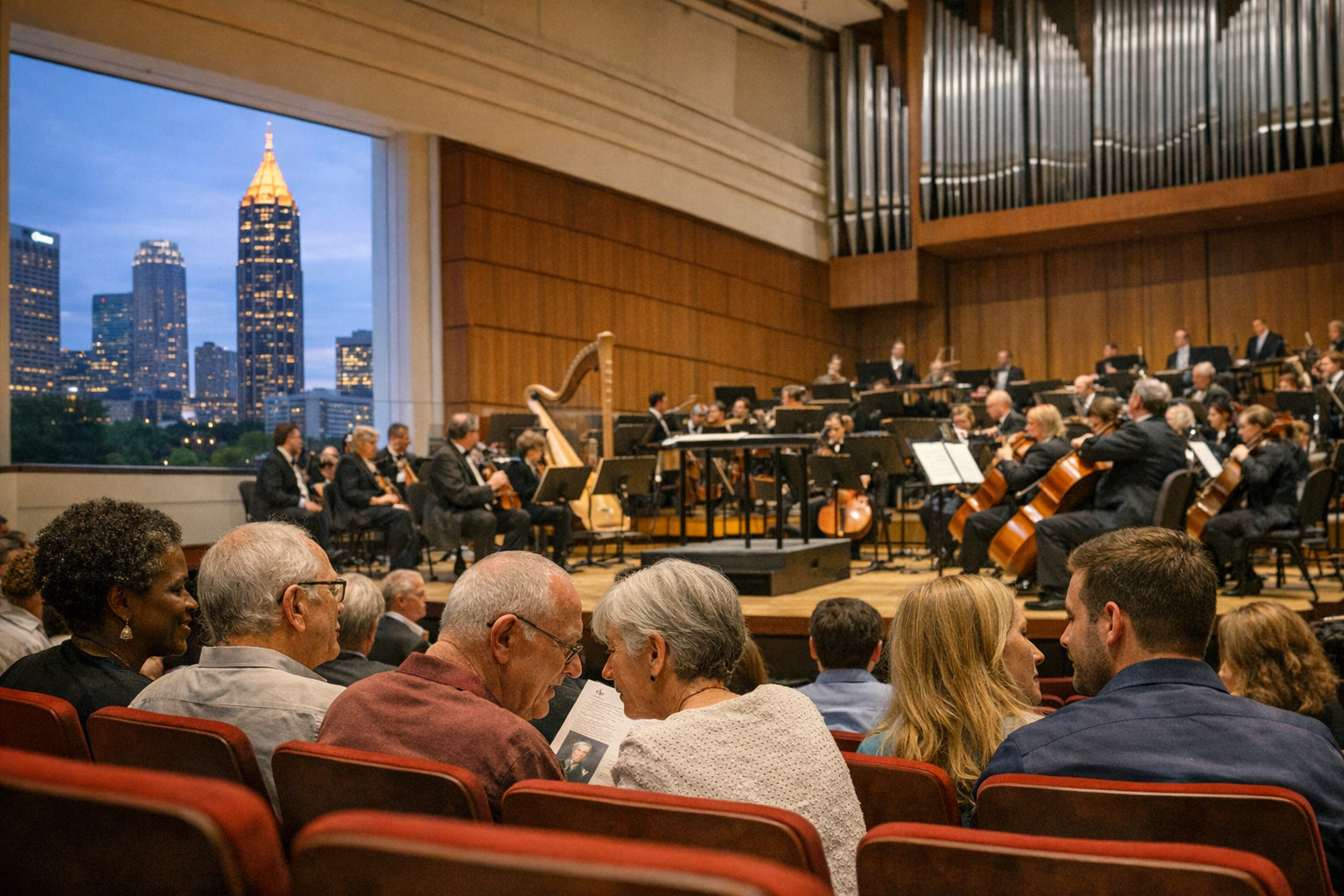
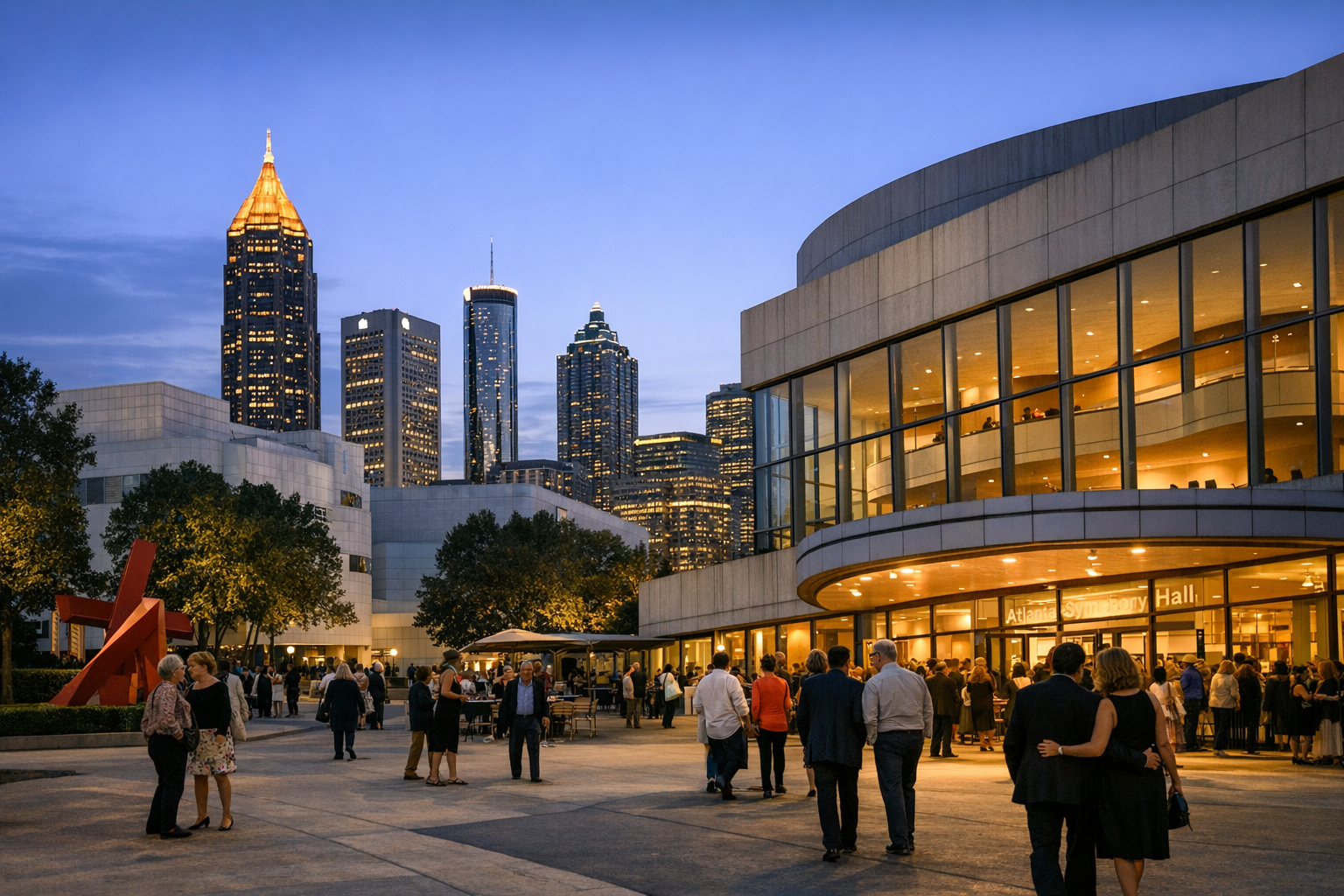
On a humid Friday in Midtown, the sidewalks around 14th and Peachtree churn with pre-show logistics. MARTA riders climb the Arts Center Station stairs, rideshares idle in front of the Woodruff Arts Center, and the line at the bar across from Colony Square suddenly doubles. A few minutes later, all that motion condenses into one room. Inside Atlanta Symphony Hall, as Nathalie Stutzmann walks to the podium, conversations cut mid-sentence and programs snap shut. The pause that follows isn’t polite; it’s charged, like the city has decided, briefly, to listen to the same thing at the same time.
Under Stutzmann’s tenure as music director of the Atlanta Symphony Orchestra, that moment has become its own kind of Atlanta ritual. A night at Woodruff feels less like a cultural box to check than a high-stakes exchange between stage and seats, with the outcome unknown until the last chord dies out.
“Stutzmann Conducts Tchaikovsky,” part of the Delta Classical series, is where that energy lands with particular force. Tchaikovsky’s heart-on-sleeve scores meet a conductor drawn to sharp contours and emotional clarity—a match that suits a city comfortable with large feelings and large projects rising along the same stretch of Peachtree.
The essentials
- What: “Stutzmann Conducts Tchaikovsky,” with the Atlanta Symphony Orchestra led by Music Director Nathalie Stutzmann.
- Where: Atlanta Symphony Hall at the Woodruff Arts Center in Midtown.
- Why it matters: Stutzmann’s taut, theatrical take on Romantic repertoire—Tchaikovsky, Brahms, Beethoven—has helped sharpen the ASO’s sound and profile.
- Good to know: An ASO concert folds easily into a Midtown arts night, with the High Museum of Art, Alliance Theatre, and nearby dining all within a short walk.
- Tickets & details: Full program, dates, and tickets: Stutzmann Conducts Tchaikovsky (Atlanta Symphony Orchestra Direct).
Why Tchaikovsky, why Stutzmann
Tchaikovsky writes for impact: plush strings, melodies that linger for days, finales that feel built to rattle the light fixtures. It’s music that can turn into background beauty if a conductor lets it glide. Stutzmann has made her Atlanta name by refusing that soft focus.
Her past life as a contralto shapes how she handles this repertoire. Lines unfold like sung phrases, with audible breaths and arcs that crest naturally instead of simply swelling in volume. Coverage in outlets like ArtsATL has pointed to her rhythmic bite and unwillingness to let familiar pieces drift on autopilot, favoring narrative tension over glossy sheen.
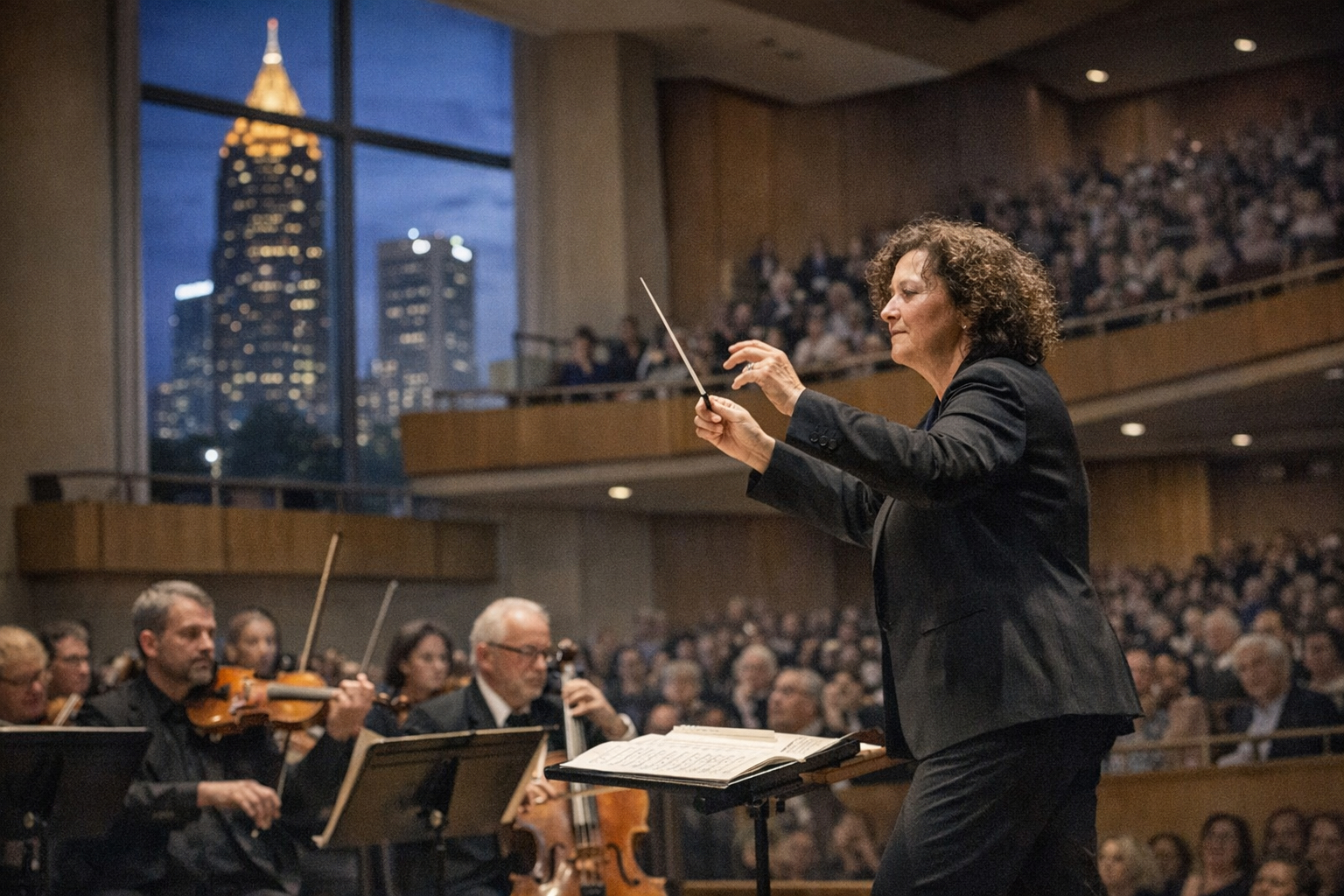
Tchaikovsky rewards that vigilance. His scores pivot fast—from a single oboe thread or muted strings to brass outbursts engineered to shake a hall. Under Stutzmann, those turns register as decisions, not mood swings. Since she took over as music director, the orchestra’s ensemble feel has tightened: attacks land with more precision, inner lines come through, and brass cut in like commentary instead of undifferentiated power.
That emphasis has nudged the ASO’s center of gravity. An ensemble known nationally for its choral legacy now spends more of its marquee energy on symphonic drama, with audiences tracking long arcs of tension and release across a program instead of waiting for one big choral payoff. It’s a shift that mirrors an Atlanta moment in which the city’s big statements are as likely to come from what happens inside its cultural rooms as from what’s being built around them.
How to go
If your last ASO memory is a school bus idling outside the hall, this program is an accessible way back in: recognizable music, an orchestra playing with focus, and a conductor intent on giving each gesture weight.
- Arrive with a cushion. Midtown traffic and event parking can evaporate time; getting there 30–40 minutes early lets you settle in and explore Symphony Hall or the Woodruff campus.
- Make a night of it. A drink or dinner at Colony Square, along Crescent Avenue, or on nearby blocks of 10th and 14th turns the concert into the centerpiece of an evening.
- Pair it with another arts stop. Before an evening performance, you can spend an hour at the High Museum of Art or plan a different Midtown arts day around the Center for Puppetry Arts and return for a weekend concert.
- Watch Stutzmann work. Her conducting is physically readable—broad, sculpted gestures at climaxes, smaller, close-in motions when she pulls the sound inward. You can see the shape of the music as it happens.
- Listen into the blend. Under her, strings, winds, and brass trade lines instead of sitting in fixed blocks. In Tchaikovsky, that exposes side melodies and harmonic detours that often blur on recordings.
- Notice the quiet. After the final chord, there’s usually a brief, suspended quiet before applause crashes in. That held breath—listeners absorbing the same sound at the same instant—feels as much a part of the performance as the last cymbal stroke.
In a city where a weekend night can splinter into a dozen separate screens and feeds, that shared stillness lands with unexpected force. The charged silence before Stutzmann’s first downbeat, the roar that follows her last cut-off, and the low murmur as listeners step back onto Peachtree add up to a particular Midtown soundscape—one in which Tchaikovsky’s crescendos echo against glass towers and late buses, then dissolve into the rest of Atlanta’s noise.