



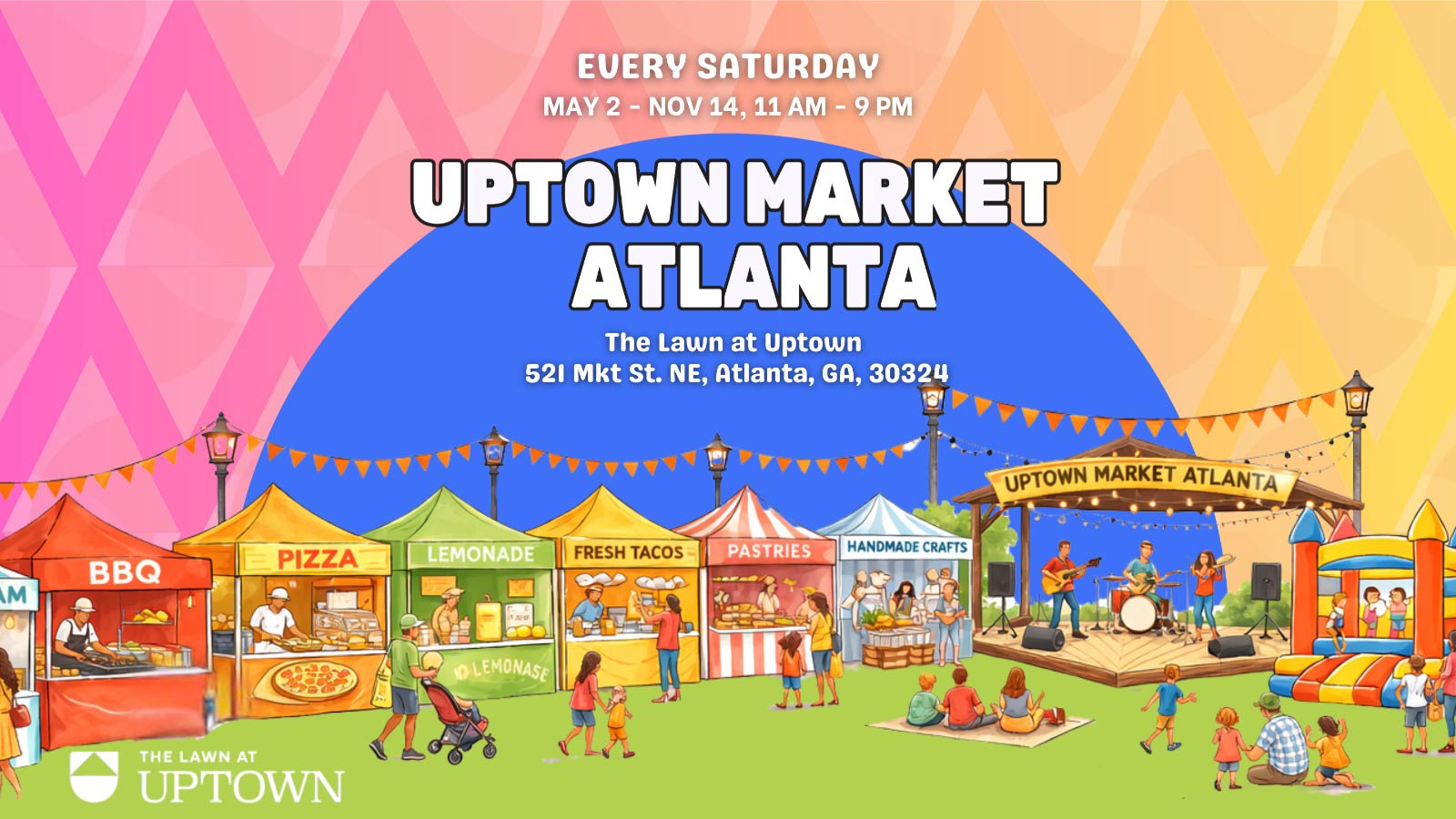
Atlanta’s markets have a sound all their own: the tap of card readers, a DJ’s bass line settling into the afternoon, conversations drifting from stall to stall — “You need the dumplings,” “That artist’s from Cabbagetown.” Uptown Market Atlanta, recently highlighted by ARTS ATL, fits neatly into that rhythm. It arrives less as a novelty than as a natural extension of the city’s creative life — a place where makers, cooks, musicians, and neighbors gather not only to trade goods, but to exchange attention, affirmation, and ideas.
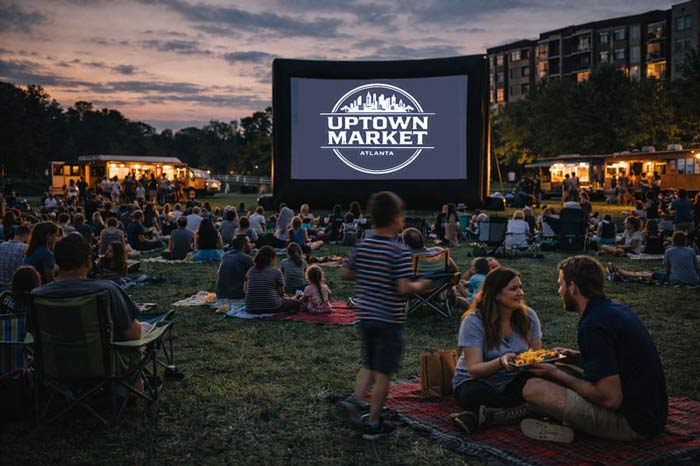
A market shaped like a neighborhood
Markets are never neutral. They function as informal civic stages, revealing who a city makes room for and how people move through shared space. Uptown Market sketches an Atlanta grounded in craft, experimentation, and sociability. As ARTS ATL notes, the market centers local vendors and creative labor, offering a hands-on alternative to the city’s increasingly abstract, online-first economy.
Tables brim with ceramics, screen‑printed tees, block-printed paper goods, and small‑batch foods — work that reflects both Atlanta’s DIY traditions and its ongoing churn of entrepreneurial energy. What stands out isn’t the presence of handmade goods alone, but the way the market folds multiple communities into one place: longtime residents browsing beside recent arrivals, Black-owned businesses neighboring first-time vendors from other cities. That coexistence mirrors Atlanta’s broader negotiations around growth, displacement, and belonging, making the market a low-stakes testing ground for how culture and commerce can share space.
Culture, commerce, and street life
In a metro area defined by rapid development and constantly shifting retail corridors, pop-up markets play a specific and useful role. For small producers, they offer accessible entry points — chances to test products, meet customers face-to-face, and build reputations that extend beyond a single weekend. For neighborhoods, they reanimate streets with foot traffic and attention, reminding residents that public life still thrives off-screen.
ARTS ATL’s reporting emphasizes Uptown Market’s commitment to local talent and independent businesses. That focus carries real weight. For some vendors, a strong market day can fund the next product run or help justify the leap toward a permanent space. Visibility also matters: markets like this help shorten the distance between maker and buyer, reinforcing local supply chains in a city where rising rents often shut small businesses out of traditional retail.
More than a buying-and-selling exercise
Uptown Market’s appeal isn’t purely transactional. Its design reads like an ongoing conversation — murals and signage that nod to place, displays that foreground process as much as product, and programming that punctuates the day. Short musical sets, live demonstrations, and hands-on workshops invite curiosity and linger-time, turning a casual visit into a shared experience.
That participatory energy is where the market’s civic value accumulates. At the same time, its success raises familiar questions for Atlanta: Who gets sustained access to the cultural economy? What support exists beyond occasional pop-ups? And can markets like this scale into something more durable without losing the grassroots texture that makes them work? ARTS ATL captures both the optimism of vendors and the uncertainty baked into pop-up culture in a city moving quickly.
Anchoring a sense of place
Atlanta tells its story through food, art, and the small businesses that stitch neighborhoods together. Uptown Market adds a verse to that narrative — a public forum where creative labor is visible, where entrepreneurs can gather feedback in real time, and where streets briefly become spaces for connection rather than transit.
If the market succeeds, its impact will extend beyond a single weekend’s sales. The real work happens afterward: collaborations formed, contact lists exchanged, and the quiet reassurance that there are others in the city committed to making things by hand. That network effect is how markets seed longer-term cultural infrastructure.
Readers looking for specifics on dates, locations, or vendor lineups can find them in ARTS ATL’s original coverage. Organizers and participants are encouraged to share updates as the market evolves; this piece aims to frame Uptown Market’s broader cultural significance for a citywide audience.
Uptown Market Atlanta is one tile in a larger mosaic — people-powered, relationship-driven, and dependent on trust. Markets like this do more than circulate goods. They circulate ideas, confidence, and the daylight energy that keeps neighborhood life visible and vigorous.
Indakno community note: If you attended Uptown Market — or want to see one in your neighborhood — tell us what you experienced, bought, or wished had been there. We’ll share highlights and help chart where Atlanta’s next pop-up might land.
For anyone keeping an eye on where the city is headed, this is the kind of story worth following. Indakno wants to hear from the people who live it.